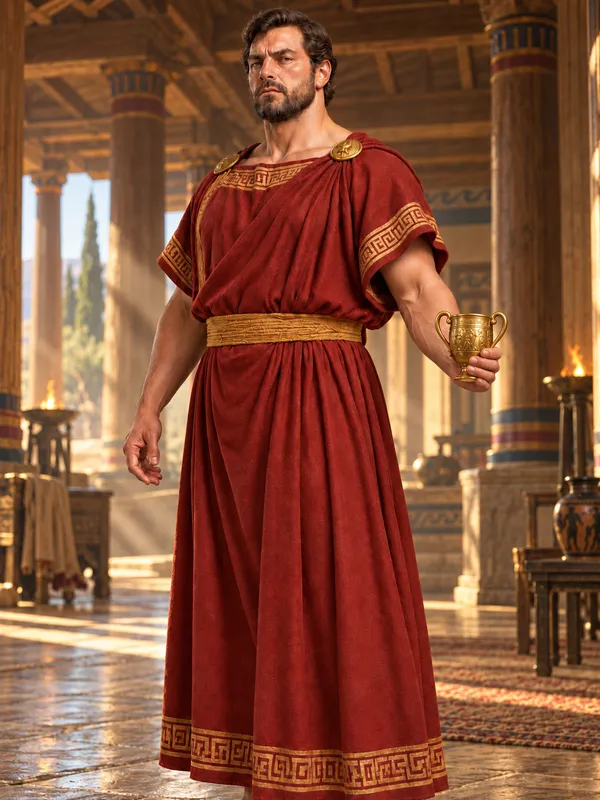
THYESTES (king of Mycenae)
Figure of myth · King of Mycenae and brother of Atreus in Greek mythologie
- Parents
- Pelops, Hippodamia
- Siblings
- Atreus, Chrysippus
- Consorts
- Pelopeia, Laodameia
- Children
- Aegisthus, Tantalus, Pelopeia, Pleisthenes, Orchomenus, Agave, Aglaus
- In the sources
- 43 ancient passages
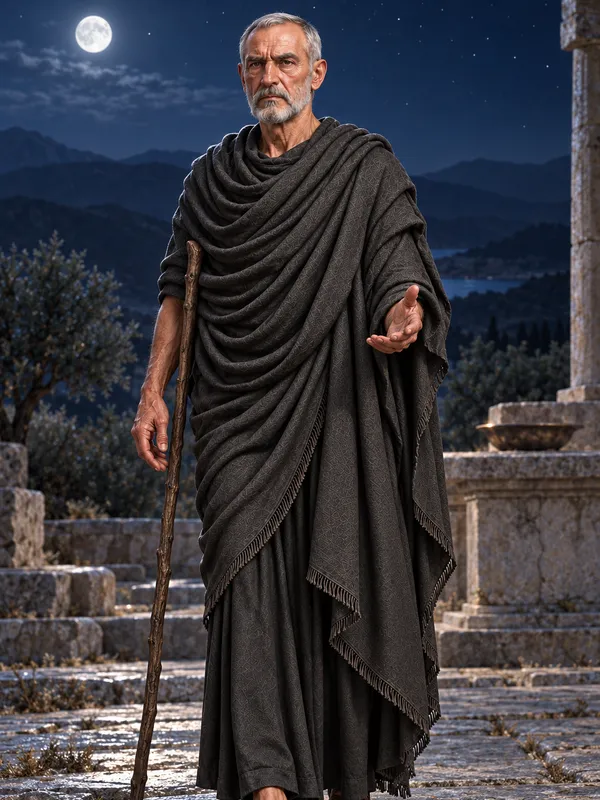
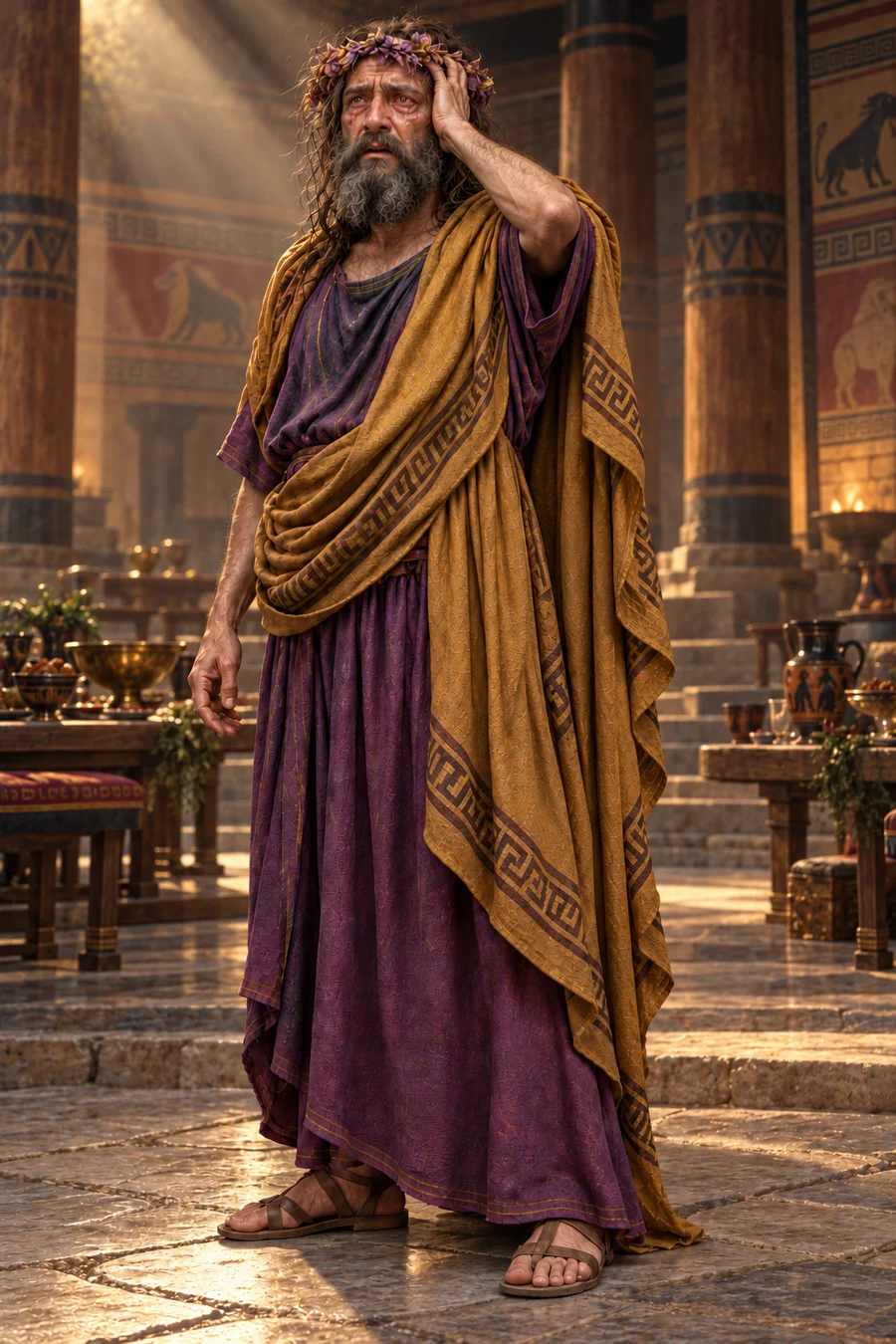
Thyestes, son of Pelops and Hippodamia, was a man rich in flocks who received the scepter from his brother Atreus.1,2 His appearance was often marked by unkempt, matted hair that concealed his face and a foul-looking beard, though at other times he appeared richly decked in gorgeous Tyrian robes and anointed with precious nard.3,4,5,6 He possessed a heroic soul that claimed to stand erect beneath ruined fortunes, yet his senses were frequently dulled by wine, leaving him half overcome and uncertain in mind.4,6,5
The conflict between Thyestes and his brother Atreus began when Thyestes seduced Aerope, Atreus's wife, to gain possession of the golden lamb.1,7,8,9 Thyestes publicly claimed ownership of the golden-fleeced sheep and presented it to the crowd to secure the throne, asserting that the kingdom should go to its owner.8,10 Aerope had given him a box containing a dead lamb.10 In response, Atreus expelled Thyestes and his son Aegisthus from the city and home due to this challenge to his sovereignty.11,12,13
Thyestes was driven away to live in Cytheria, where he was forced to swear an oath at the altar of Hera before his expulsion.14 Seeking retribution, Thyestes consulted an oracle to find a way to punish Atreus, which led him to father a son by having intercourse with his own daughter.15 This son, Aegisthus, later killed Atreus after learning his parentage and restored the kingdom to Thyestes.15
Atreus served Thyestes a banquet made from the flesh of his own children, which he unknowingly ate.11,12 Thyestes had previously offered his innocent sons to Atreus as a pledge of faith, while believing his brother's invitation to the throne was a disguise for treachery.16,17,18 Upon realizing the truth, Thyestes vomited the flesh, kicked the banquet table, and cursed the line of Pelops.11 He experienced physical signs of distress, including weeping and groaning during speech, as he saw the gory heads of his children.4,19,20 A specific banquet was named after him as part of a divine exchange of deaths, marking the depth of his suffering.21
He commanded gloomy clouds of fate and marks of former misery to depart, asking grief why it forbade him to celebrate the festal day.4 His grave was marked by a stone ram to symbolize the golden lamb he had acquired, a lasting testament to the ambition that doomed him.22 Though he had once been richly decked and sat on a couch of tapestry, his legacy remained one of betrayal and the horrors of the house of Pelops.6,23
The codex facts behind this entry
Thyestes was the father of Aegisthus and the brother of Atreus. Aeschylus, Agamemnon 1577-1616 +2
In the myths
Atreus served Thyestes a banquet made from the flesh of his own children, which he unknowingly ate. Aeschylus, Agamemnon 1577-1616 +11 Thyestes seduced his brother Atreus's wife, Aerope of Crete, to gain possession of the golden lamb. Euripides, Electra 713-725 +3 Thyestes returned to his home as a suppliant seeking safety from death. Aeschylus, Agamemnon 1577-1616 +2 Atreus expelled Thyestes and Aegisthus from his city and home due to a sovereignty challenge. Aeschylus, Agamemnon 1577-1616 +1 Thyestes believes his brother's invitation to the throne is a disguise for treachery. Seneca, Thyestes act 3 ¶1 +1 Thyestes experiences physical signs of distress like weeping and groaning during speech. Seneca, Thyestes act 5 ¶3 +1