ATREUS (king of Mycenae)
Figure of myth · king of Mycenae, father of Agamemnon
- Known as
- King of men
- Parents
- Pelops, Hippodamia
- Siblings
- Thyestes, Chrysippus
- Consorts
- Aerope
- Children
- Agamemnon, Menelaus, Astyoche, Anaxibia, Cyndragora
- Foes
- Thyestes
- In the sources
- 260 ancient passages
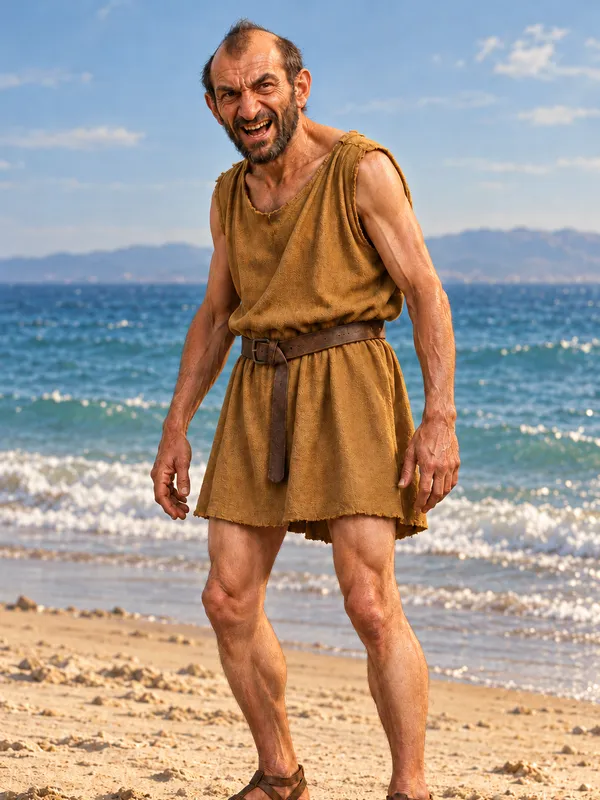
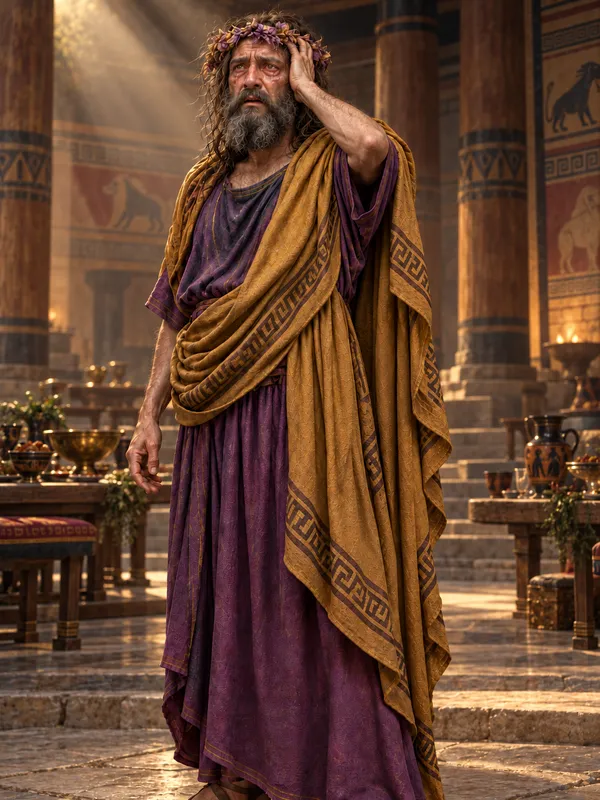
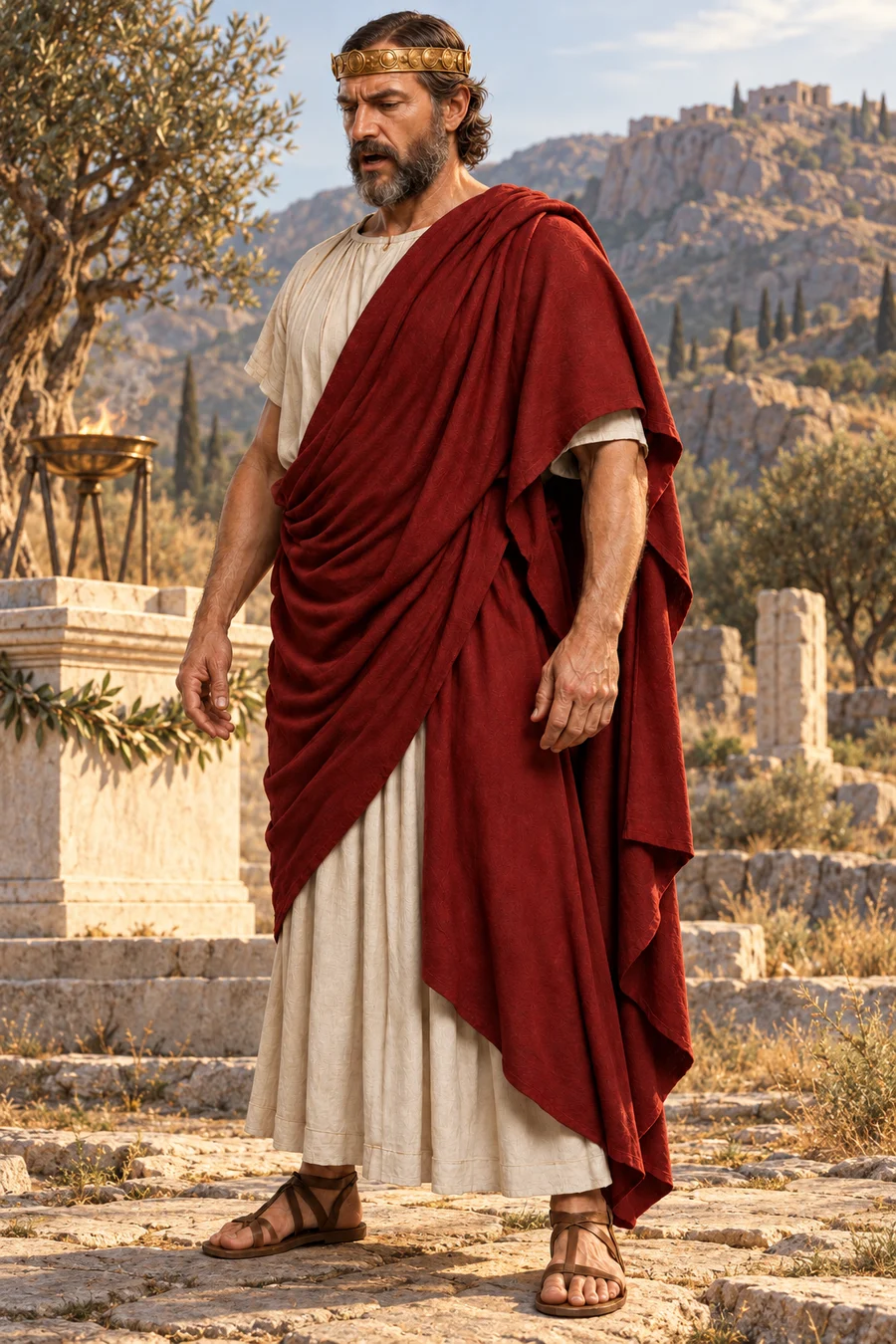
Atreus, son of Pelops and Hippodamia, stood before a shrine with a lowering, sidelong gaze, his hands covered in blood while he shouted.1,2,3,4 He wore a royal crown and grasped a sword that was dripping with blood from previous killings.3,5 Fierce and bold of soul, he was swayed by cruel passions, yet held in dumb amaze upon seeing his brother.6 He felt a mighty rage and desired to be filled by greater horrors, admitting to a fearful, unrestrained tumult in his heart.7 As a grim banqueter associated with an ancient bitter evil spirit, he was described as the shepherd of his people.8,9
Atreus was originally a diviner and soothsayer before becoming a ruler.10 He received the scepter from Pelops, the mighty charioteer.9,11 Atreus assumed the kingship of Mycenae following the death of Eurystheus.12,13 He was involved in a conflict with his brother Thyestes over a golden ram.1,14,6 Zeus sent Hermes to tell Atreus to agree with Thyestes that Atreus would be king if the sun went backward.15,12 Atreus demonstrated the backward movement of the sun in the sky.12,10
Atreus drove his brother Thyestes out of the city and his home.16,12 He passed the scepter on to Thyestes.9,11 Atreus planned to deceive Thyestes into believing he would share his throne at Argos, promising to keep his sons safe and grant any request to ensure his happiness.17,18 He placed the crown on his brother's head and paid victims to the gods, claiming to keep faith and expressing delight at seeing him.6,19 Atreus served his brother Thyestes a meal made from the flesh of his own children, having broken off their toes and fingers before serving them.16,20 He acted as the priest for the sacrifice, chanting the sacrificial song with wild and boisterous words.3
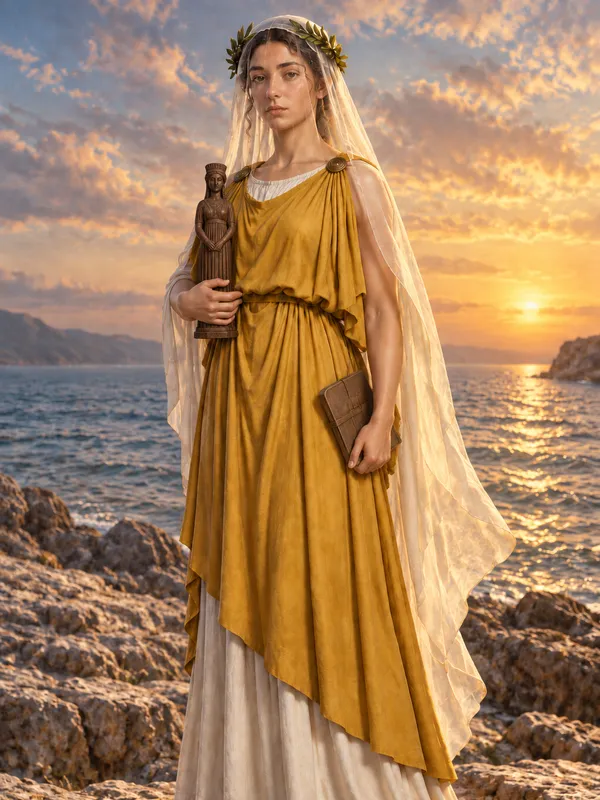
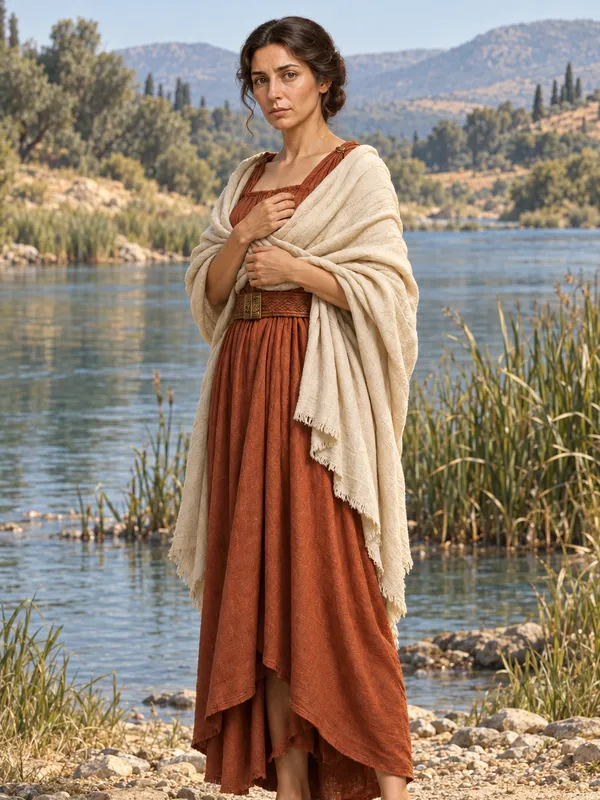
Atreus married Aerope, the daughter of Catreus.1 From this union he begot Agamemnon and Menelaus, two warlike sons who led the army.21,22,23,24,25 He also fathered Iphigenia, Astyoche, Anaxibia, and Cyndragora, while Hesiod names Pleisthenes as his son.2,26 Menelaus married into the family of Tyndareus.27 Atreus was the grandfather of Orestes.28
Though Zeus granted him the honor of being the chief ruler over the Achaeans, the god did not give him valour, which is considered the highest right and might.29,30 He held the highest royal authority among the assembled warriors and was the leader responsible for the welfare and care of his host.31,32,33 Atreus moved among the Danaan soldiers, shouting loudly to urge them to act bravely and avoid the shame of fleeing during the battle.4,34 He commanded the people to purify themselves before the journey and ordered the offering of unblemished bulls and goats on the shore.35 Atreus possesses countless treasures won from Troy, and his underground chambers held the stored treasures of Atreus and his children.36,37 He possessed a golden flagon that featured a figure of a lamb in its center.38 Atreus believed his children were inherently evil, stating that even without instruction, the throne would teach them crime.39 He rejected Piety, commanding it to leave his house and be replaced by furies and fiends at war.7 Atreus desires punishment itself rather than its end, rejects easy-going rule, and views death as a boon in his domain.7
The codex facts behind this entry
Atreus is the father of Agamemnon and Menelaus. Aeschylus, Agamemnon 1577-1616 +28 Agamemnon, the son of Atreus, served as one of the two chief leaders of the Achaean forces and is a leader who gathers his allies and chooses the proper time for fighting. Iliad 1 ¶3 +3
In the myths
Atreus served his brother Thyestes a meal made from the flesh of his own children, having broken off their toes and fingers before serving them. Aeschylus, Agamemnon 1577-1616 +10 Achilles insulted the son of Atreus in front of the Argives for avoiding combat and stealing prizes. Iliad 1 ¶2 +2 Atreus was involved in a conflict with Thyestes over a golden ram. Apollodorus, Epitome 2.10 +2 Atreus plans to deceive Thyestes into believing he will share his throne at Argos, promising to keep his sons safe and grant any request to ensure his happiness. Seneca, Thyestes act 2 ¶6 +2 He moved among the Danaan soldiers, shouting loudly to urge them to act bravely and avoid the shame of fleeing during the battle. Iliad 11 ¶12 +1 Atreus passed the scepter on to Thyestes. Iliad 2 ¶9 +1 Atreus begot Agamemnon and Menelaos from his marriage with Aerope. Euripides, Helen 386-436 +1 Atreus assumed the kingship of Mycenae following the death of Eurystheus. Apollodorus, Epitome 2.12 +1 Atreus drove his brother Thyestes out of the city and his home. Aeschylus, Agamemnon 1577-1616 +1 Atreus demonstrated the backward movement of the sun in the sky. Apollodorus, Epitome 2.12 +1