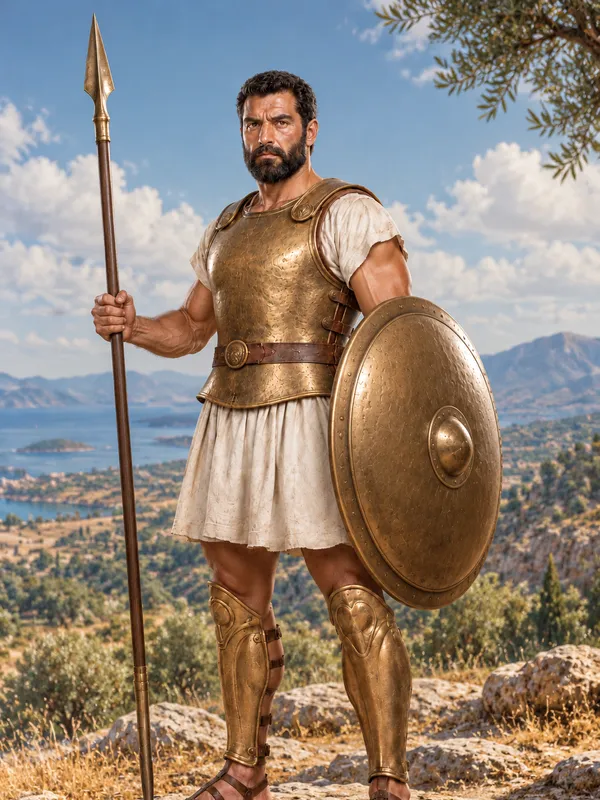
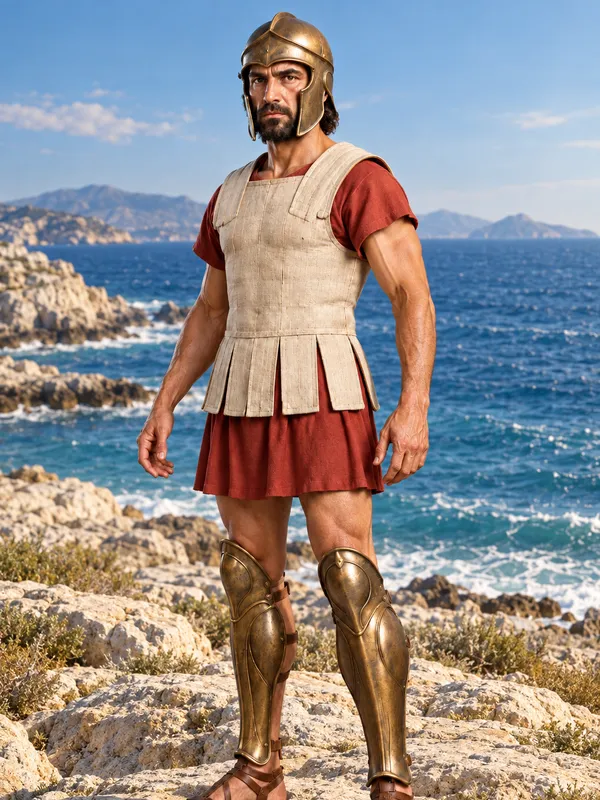
PELOPS (mortal king of Pisa)
Figure of myth · son of Tantalus in Greek mythology, king of Pisa in the Peloponnesus region
- Parents
- Tantalus, Klytia
- Siblings
- Niobe
- Consorts
- Hippodamia, Danais, Axioche
- Children
- Atreus, Thyestes, Pittheus, Epidaurus, Sciron, Alcathous, Troezen, Copreus, Sicyon, Chrysippus, Pleisthenes, Lysidice and 14 more
- Haunts and cult places
- Peloponnese
- In the sources
- 149 ancient passages
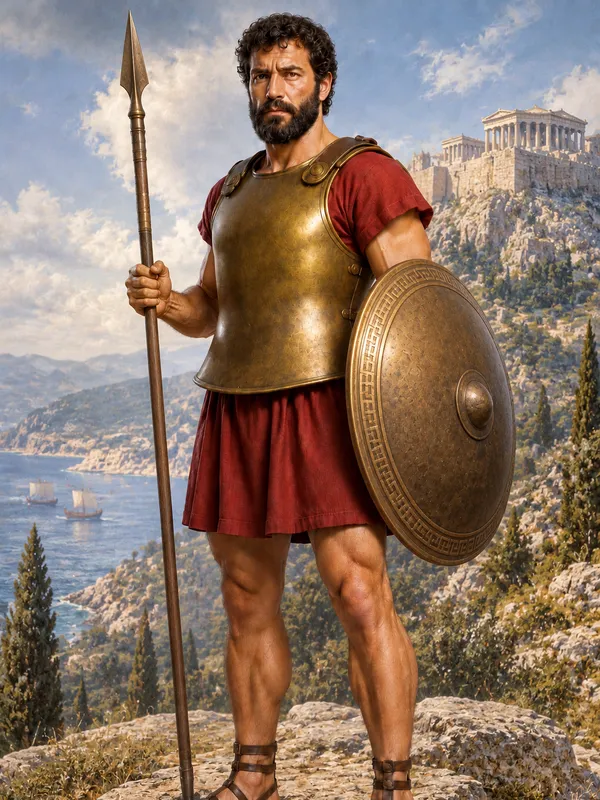
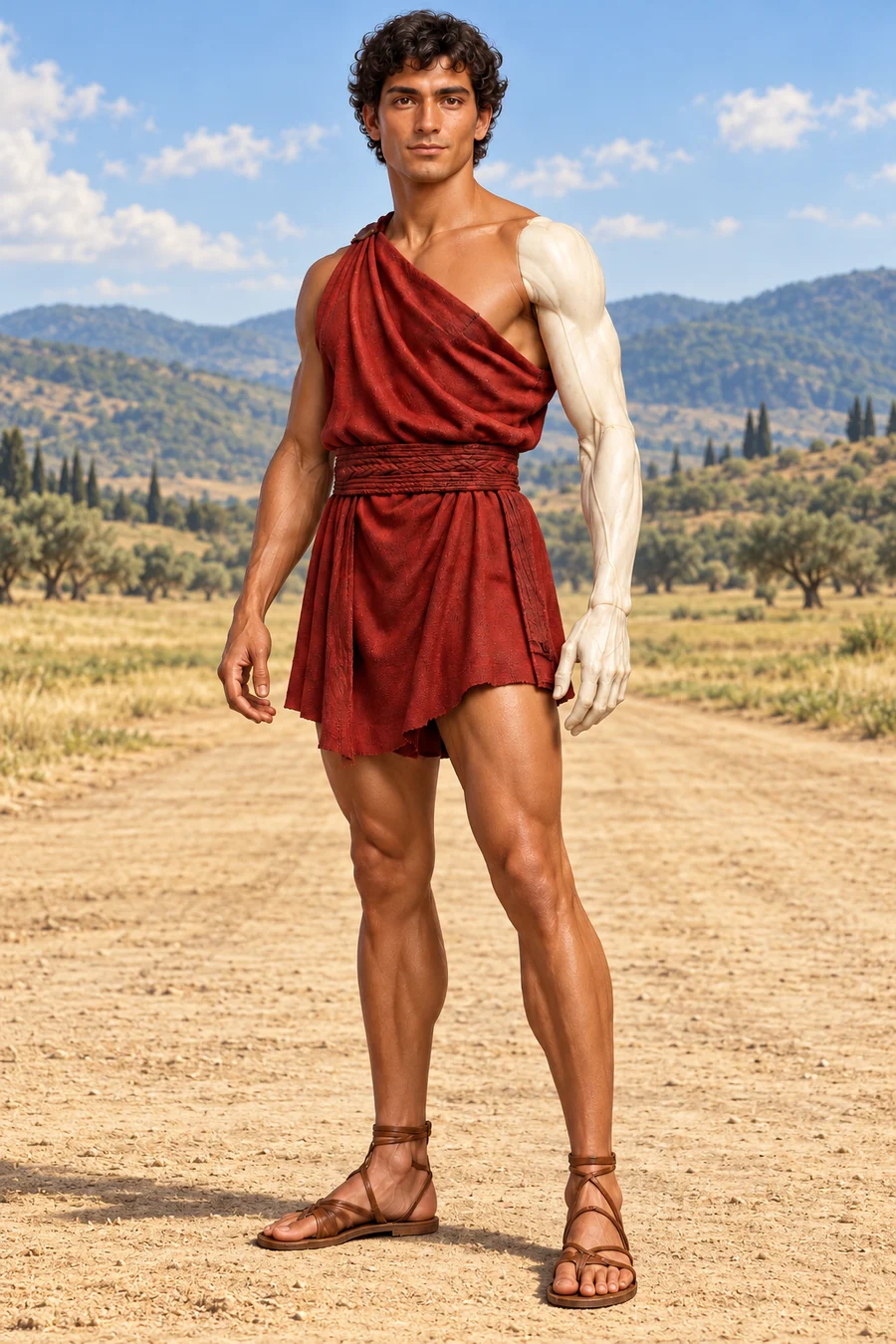
Though originally a barbarian from Phrygia, he possessed an ivory left shoulder where flesh was missing, a mark that did not diminish the light in his eyes that captivated Hippodamia.1,2,3
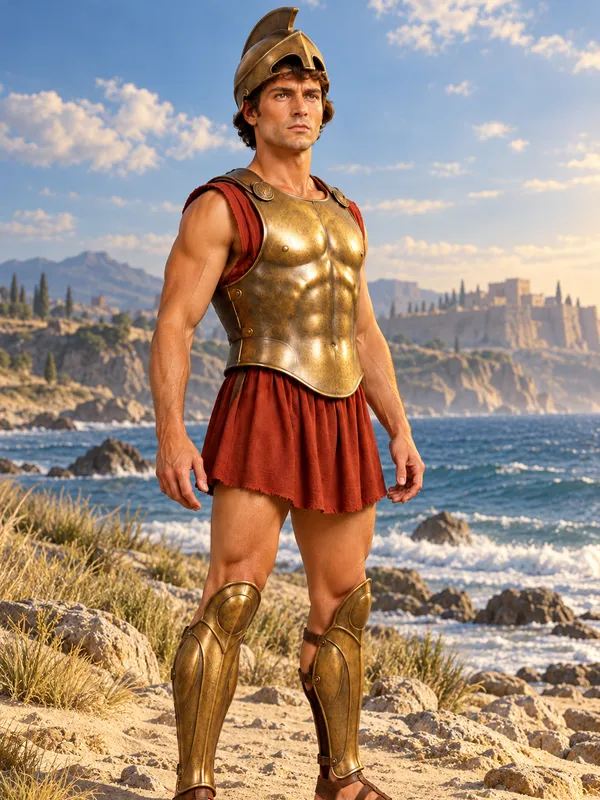
He arrived in the Peloponnesus with colonists from Phrygia, aiming to win the heart of Hippodamia, daughter of Oenomaus.4,5,6,7 To secure her hand, Pelops promised Myrtilus a night with Hippodameia, a betrayal that led to Oenomaus's death during the chariot contest for control of Pisa.8,3,9 After Oenomaus died, Pelops acquired control of Pisa and Olympia, and he won over most of the inhabitants of the Peloponnesus to his side.10,11,6 His chariot could travel through the sea without wetting its axles, and he became a minion of Poseidon.12 When reminded of his oath, Pelops threw Myrtilus out of the ship, and later cast the body of the murdered man into the ocean.13,14,8
Having won the land, he named the Peloponnese after himself and established his rule as a chieftain whose thoughts were ever of brave deeds.15,16,17 He fathered numerous sons, including Atreus, Thyestes, and Pittheus, placing many of them as rulers in various cities, while his sons held the balance of power among three kings in the region.18,19,20,21,17,22,23 Other sons such as Alcathus, Copreus, and Chrysippus joined a long line of descendants that included the Achaeans, Menelaus, Agamemnon, and Heracles.24,25,26,15,27,28,29,30 Accounts differ on the full extent of his progeny, with some claiming Cleones or Epidaurus as his sons, while others name Letreus or Sciron.31,32,33,34 He also had daughters, including Eurydice who married Electryon, and another who became the mother of Alcmene.35,36
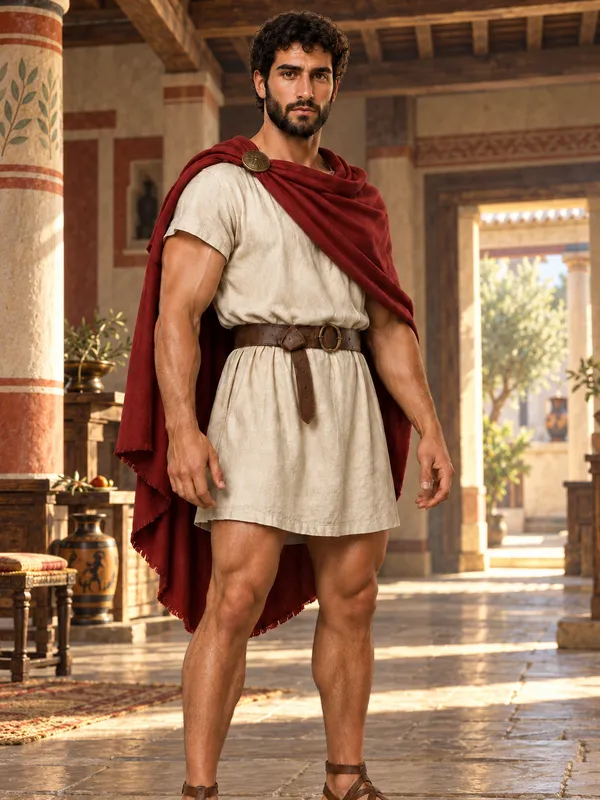
Pelops received the divine scepter from Hermes, a symbol of authority he later passed down to his son Atreus.37,38 His hospitality extended to the exiled Laius, though divine envy eventually seized upon his descendants, marking his line with tragedy.15,39,40,41 He was mourned by his mother, unlike others who hated her, and his beauty was said to have increased after his resurrection, appearing fairer than ever.2,12
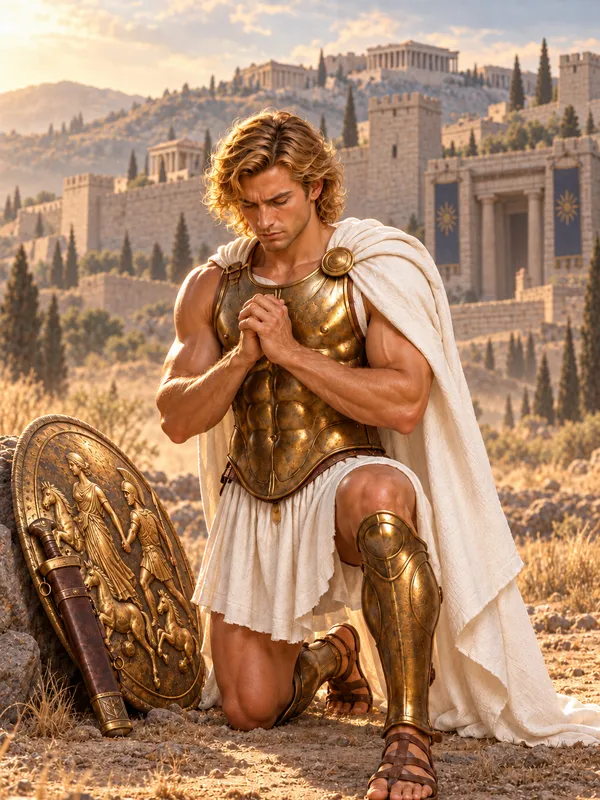
After his death, the Pythian priestess commanded the Eleans to retrieve his bones, and a specific section of the sacred precinct was dedicated to him.42,43,44,45 Heracles established an altar and sanctuary to Pelops after conquering Elis, ensuring his memory remained honored.46,30 Annual magistrates continued to sacrifice a black ram to him at his grave, where he received blood-offerings as an ancestor of noble houses.30,17,47 Bronze arms were considered a fitting tribute to his lineage, and a shoulder-blade of Pelops was brought from Pisa to the Greek camp at Troy.48,49 An old spear belonging to him was kept in Agamemnon's house, a relic of the king who guided chariots with skill and shook the reins with authority.50,51
The codex facts behind this entry
Pelops is identified as the son of Tantalus, a godlike descendant referred to by the ancients as a Phrygian. Diodorus 4.73 +4 Pelops was the father of Pittheus. Apollodorus, Epitome 2.10 +1 Pelops is identified as the reputed grandsire of Menelaus and Agamemnon. Euripides, Iphigenia in Aulis 471-505 +1
Appearance
Pelops had an ivory shoulder that was originally flesh at birth. Georgics 3.1 +1
In the myths
Pelops defeated Oenomaus in a chariot race for control of Pisa and killed him during the contest for Hippodamia. Apollodorus, Epitome 2.6 +8 Pelops passed the scepter down to Atreus. Iliad 2 ¶9 +1 He fathered six sons who were chieftains focused on brave deeds and placed many of them as rulers in various cities. Pindar, Olympian 1 ¶13 +1 Pelops hospitably received the exiled Laius. Apollodorus 3.5.5 +1 The Pythian priestess commanded the Eleans to retrieve the bones of Pelops. Apollodorus, Epitome 5.11 +1 Pelops brought colonists from Phrygia to the Peloponnesus. Athenaeus 14.21 +1 He won over most inhabitants of the Peloponnesus to his side and named the land after his own name. Apollodorus, Epitome 2.9 +1 Pelops acquired control of Pisa and Olympia after Oenomaus died. Apollodorus, Epitome 2.9 +1 Pelops threw the body of the murdered Myrtilus into the ocean. Apollodorus, Epitome 2.8 +1
Worship
Annual magistrates continue to sacrifice a black ram to him at his grave, where he receives blood-offerings. Pausanias 5.13.2 +1 Heracles established an altar and dedicated a sanctuary to Pelops after conquering Elis. Apollodorus 2.7.2 +1
Fate
The race of Pelops will perish unless the statue of the goddess is retrieved. Aeschylus, Agamemnon 1577-1616 +1 Menelaos wishes Pelops had died during that banquet before having children. Apollodorus, Epitome 2.3 +1 Divine envy seized upon the descendants of Pelops. Euripides, Orestes 971-981 +1