TYNDAREUS (king of Sparta)
Figure of myth · King of Sparta

- Parents
- Oebalus, Perieres, Batea, Gorgophone
- Siblings
- Aphareus, Leucippus, Icarius of Sparta
- Consorts
- Leda
- Children
- Clytemnestra, Timandra, Phoebe, Phylonoe, Castor
- Haunts and cult places
- Sparta, Pellana
- In the sources
- 121 ancient passages
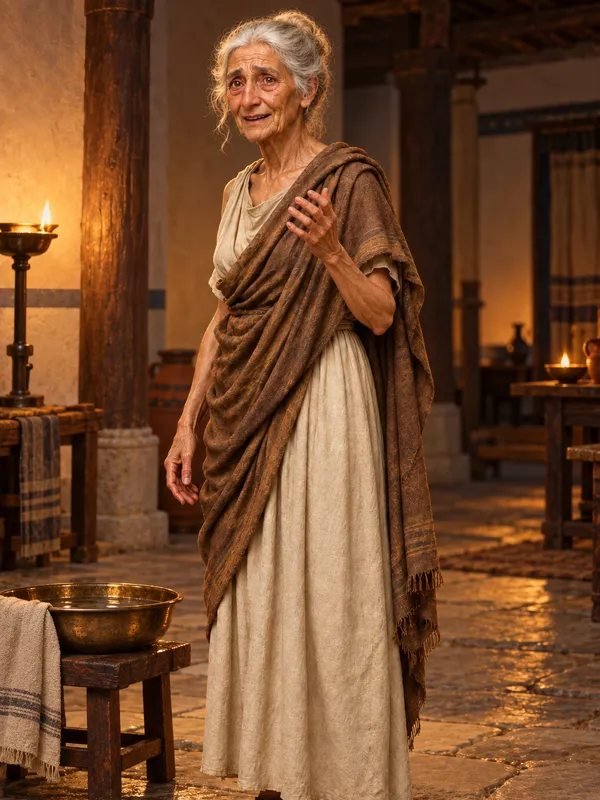
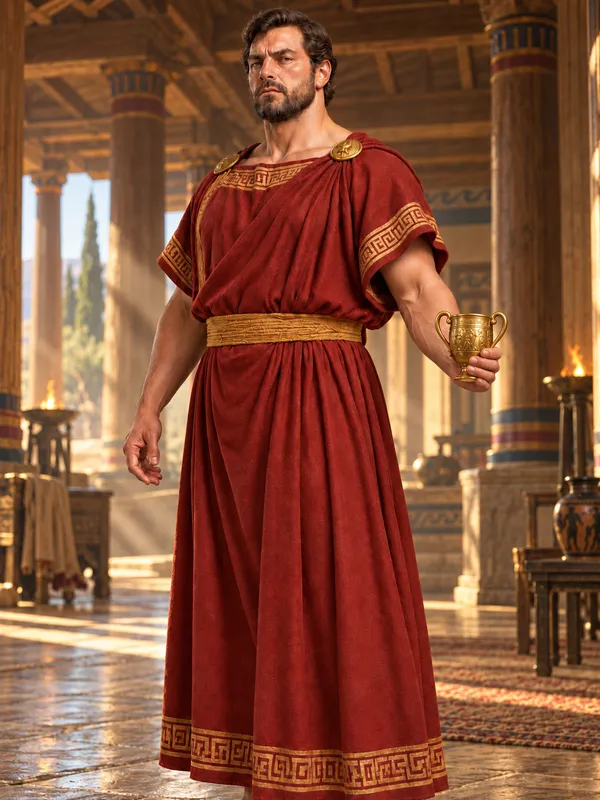
Accounts differ on his parentage, with some naming Perieres and Gorgophone as his parents, while others cite Oebalus, and a few list the nymph Batia or Icarius and Gorgophone.1,2,3,4,5 He was the brother of Icarius, and his maternal uncle was Aphareus.1,2,5 In his later years, he moved with a slow, aged step, wearing black mourning robes and keeping his hair cut short as a sign of grief for his daughter.6 Other descriptions likened him to a bright star in the night sky, and he owned a closely-woven mantle given by a Lemnian maiden.7
Hippocoon forced Tyndareus to flee his kingdom in Lacedaemon, driving him from his home.8,9 He sought refuge with Thestius, king of the Pleuronii, and later resided in Pellana while in exile from Sparta.8,10,5,11 Heracles eventually restored Tyndareus to his position as king after subjugating the city and killing Hippocoon and his sons.12,8 Upon his return, Tyndareus married Leda, the daughter of Thestius.8,13 On the same night that Zeus visited Leda in swan form, Tyndareus slept with her.8,13
From this union, Leda bore Castor and Polydeuces in the house of Tyndareus.14 Tyndareus kept Argive Helen in his home in Sparta.15,14 Fearing that the choice of one suitor would provoke the others to fight, he required all suitors to swear an oath with unmixed libations to defend the chosen bridegroom.16,17,18 He commanded that if any man took a maid by force, others should follow to punish him, and he bade suitors swear that no one else should act apart from him regarding the marriage.18
Tyndareus gave Clytemnestra in marriage to Agamemnon, and his other daughters found husbands, including Timandra who married Echemus according to one account.19,20,21 He agreed to help Odysseus win Penelope's hand in marriage and asked Icarius to give Penelope to Odysseus.16 His sons took part in Jason's expedition, and two of them killed the warriors Megalossaces and Phlogius during the battle.22,23 Polydeuces won a boxing match, and the sons of Tyndareus marched against and captured the city of Aphidna.24,25 They also restored Menestheus to his kingdom and are thought to have erected the hero-shrine of Amphiaraus.25,26
Tyndareus was angry with Orestes because of his daughter and expressed strong loathing for him, calling him a matricide and a viper.27,28 He suggested arguments to another speaker to urge the death of Orestes and his brother.29 Tyndareus punished the goddess with fetters because he thought shame of his daughters came from her, symbolizing the faithfulness of wives to their husbands.30 He began the construction of the sanctuary of Athena, leaving a mark on the religious landscape of Sparta.31 In the end, Tyndareus transferred the kingdom of Sparta to Menelaus, his son-in-law.32,15,33
The codex facts behind this entry
Tyndareus is the father of Helen, who was the fairest of all. Euripides, Hecuba 251-298 +3
In the myths
Heracles restored Tyndareus to his position as king of Lacedaemon after subjugating the city and killing Hippocoon and his sons. Apollodorus 2.7.3 +4 Hippocoon forced Tyndareus to flee his kingdom in Lacedaemon. Apollodorus 3.10.5 +4 Tyndareus required all suitors to swear an oath to defend the chosen bridegroom, fearing that choosing one would cause the others to fight. Apollodorus 3.10.9 +2 Tyndareus fled to Thestius, king of the Pleuronii, for refuge after being expelled. Apollodorus 3.10.5 +1 Tyndareus gave Clytemnestra in marriage to Agamemnon. Euripides, Electra 998-1034 +1 Tyndareus was angry with Orestes because of his daughter and expressed strong loathing for him, calling him a matricide and a viper. Euripides, Orestes 470-506 +1 He transferred the kingdom of Sparta to Menelaus. Apollodorus 3.11.2 +1