JOCASTA (mythological queen of Thebes)
Figure of myth · mythological queen of Thebes
- Parents
- Menoeceus
- Siblings
- Creon, Euryganeia
- Consorts
- Oedipus, Laius
- Children
- Oedipus, Polynices, Antigone, Eteocles, Ismene, Laonytus
- Haunts and cult places
- Thebes
- In the sources
- 47 ancient passages
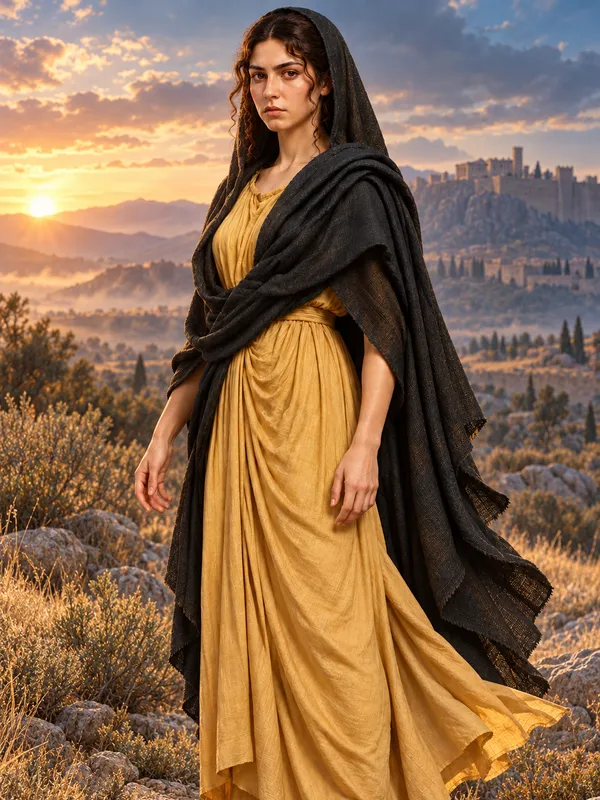
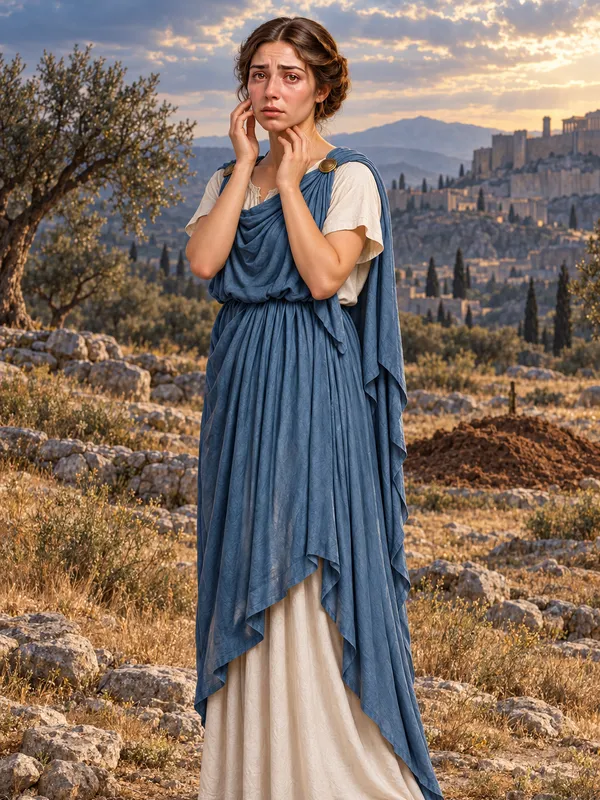
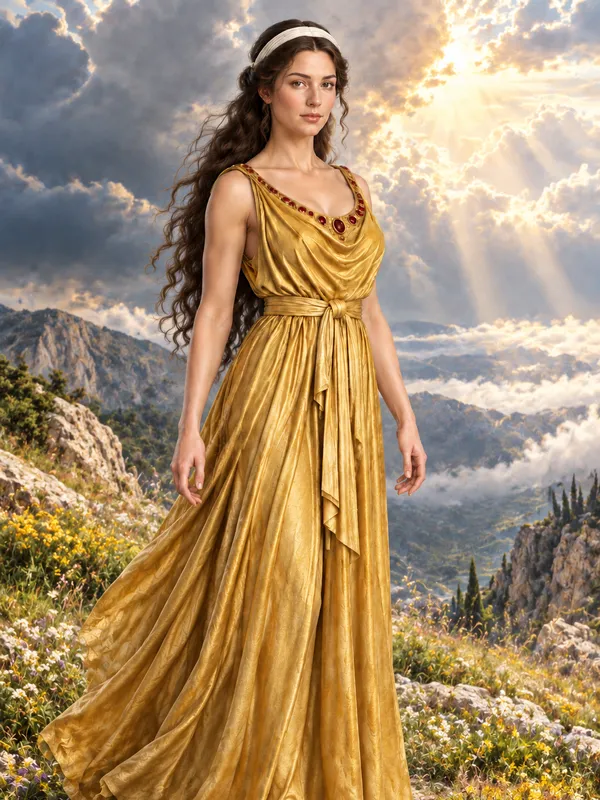
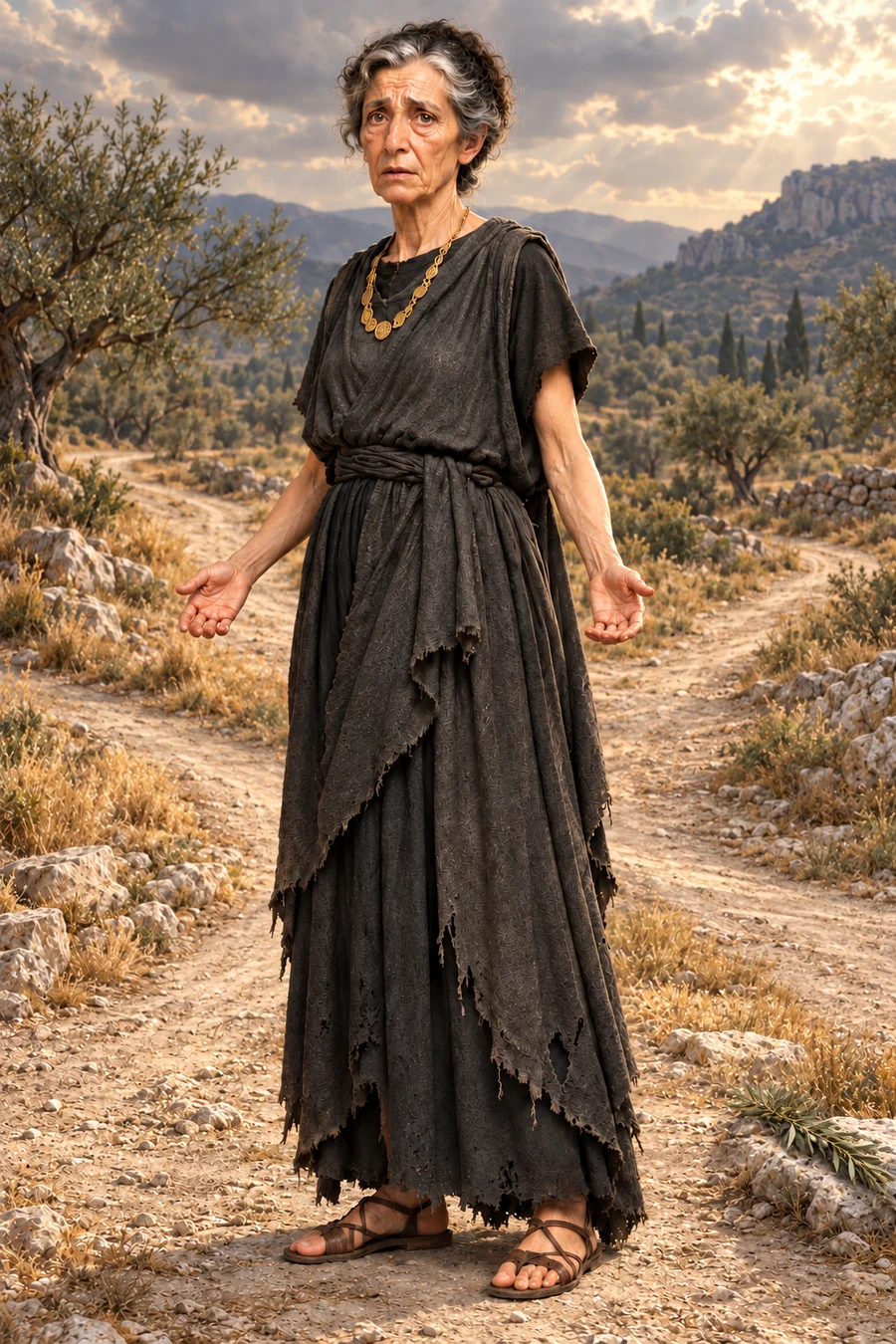
Jocasta, daughter of Menoeceus, was the sister of Creon.1,2,3 Some accounts identify her as the daughter of Menoeceus, while others name Creon or Laius as her father.4,2,5,6 Her father named her Jocasta, a name that marked her lineage before her royal status.2 She possessed dark, curly locks that overshadowed her neck, though in later accounts her hair appeared hoary and unkempt.7,8 Her feet were old and tottering, and she wore dark rags instead of white robes due to her sorrow.7 In one description, she had wild eyes, a haggard face, and a bruised bosom, holding a branch in her hand.8 She was known for a faltering tongue and a temperament that wavered between grief and the desire to speak.9
Jocasta married Laius, the king of Thebes, a union that remained childless for a long time.4,5,2 Laius consulted Phoebus because they had no children, and the oracle delivered to Cadmus applied specifically to her and her future sons.2,6 Polybus' wife suckled the child and claimed to be his mother.2 She later married Oedipus without him knowing she was his mother, a union that caused Creon private grief.5,10,11,12 Jocasta described this marriage as occurring in an evil hour and claimed that an evil god was destroying the family line.13
From her marriage to Oedipus, she bore two sons, Eteocles and Polyneices, and two daughters, Antigone and Ismene.5 Jocasta solved the riddle of the Sphinx and used trickery to prevent her brothers from claiming the throne.14,6 She was promised as a reward to whoever solved the Sphinx's riddle.5 Jocasta urged her sons to try to escape the curse placed by their father and to ignore past quarrels.15,16
Jocasta persuaded Polyneices to enter the city under a truce and instructed him to speak first regarding his grievances.1,16 Jocasta warned that the goddess of ambition ruins the homes and cities of her worshippers.17 She prayed to Zeus to save her sons and reconcile them, planning to kneel before them to prevent their combat.18,19,20 Jocasta instructed Antigone to leave the house and hurry to the army to stop the battle between her brothers.19,3
She asked the messenger if her son Eteocles was alive or dead, and if her son Polyneices was alive.21 Jocasta expressed fear of asking Polyneices questions that might hurt him, though he urged her to question him without omission.13 She was missed by her friends and the city of Thebes during her absence, and she intended to go inside to comfort the old blind man.7,21 Jocasta ended her life by hanging herself out of grief, using a noose to take her own life.22,14
The codex facts behind this entry
Jocasta is the mother and wife of Oedipus. Euripides, The Phoenician Maidens 1067-1103 +2 Jocasta is the mother of Antigone. Euripides, The Phoenician Maidens 1625-1671 +1 Some sources identify Jocasta as the daughter of Menoeceus. Apollodorus 3.5.7 +1
In the myths
Jocasta persuaded Polyneices to enter the city under a truce. Euripides, The Phoenician Maidens 261-292 +2 Jocasta unknowingly married her own son, Oedipus. Odyssey 11 ¶22 +2 Jocasta instructed Antigone to leave the house and hurry to the army to stop the battle between her brothers. Euripides, The Phoenician Maidens 1242-1283 +1 Jocasta solved the riddle of the Sphinx and used trickery to prevent her brothers from claiming the throne. Euripides, The Phoenician Maidens 1340-1389 +1 Jocasta plans to kneel before her sons to prevent their combat. Euripides, The Phoenician Maidens 1242-1283 +1 Jocasta is asked by her sons to mediate their conflict and restore peace. Euripides, The Phoenician Maidens 426-468 +1 Jocasta states that her childbearing was unholy. Euripides, The Phoenician Maidens 355-386 +1
Fate
Jocasta ended her life by hanging herself out of grief. Apollodorus 3.5.9 +2