CREON (king of Thebes)
Figure of myth · king of Thebes in Greek mythology

- Parents
- Menoeceus
- Consorts
- Eurydice of Thebes, Henioche
- Children
- Megara, Haemon, Menoeceus, Lycomedes, Henioche, Pyrrha, Megareus of Thebes
- Haunts and cult places
- Thebes
- In the sources
- 130 ancient passages
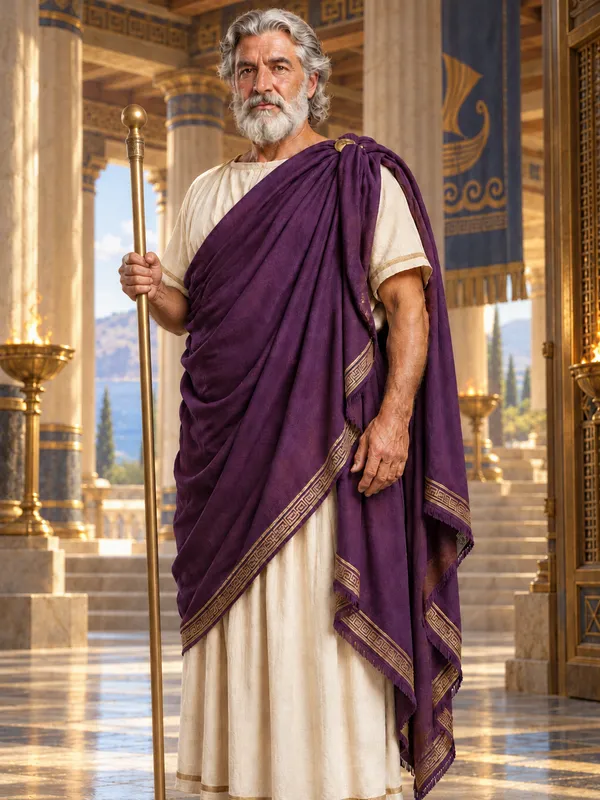
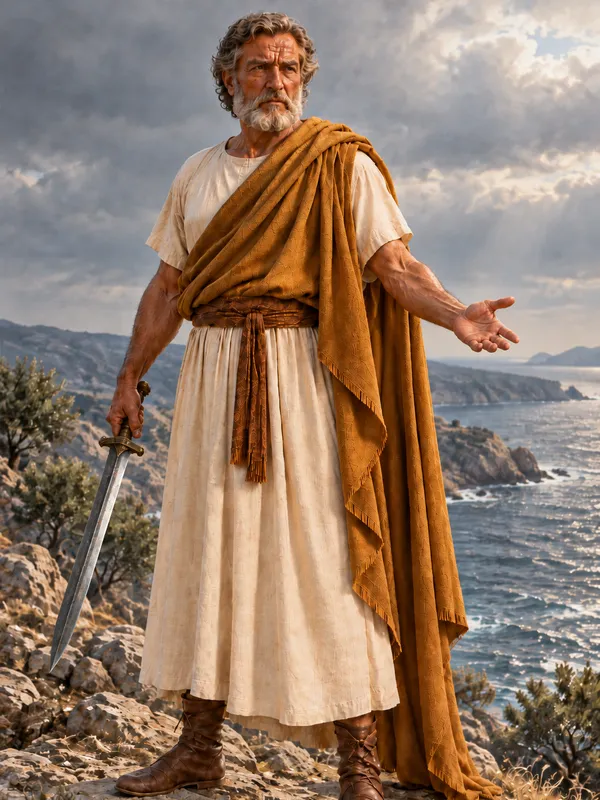
He was a man of high birth, distinguished by his deeds, who claimed significant influence and power within the city.1,2 His appearance was often marked by a clouded brow, and he was described as a trustworthy old friend of Oedipus.3,4,5 Accounts of his character vary, with some viewing him as just and blameless, while others saw a cruel and merciless sovereign.6,7,8
Creon promised the throne and Laius's wife to anyone who solved the Sphinx's riddle.9,10 He reported Apollo's command to expel pollution from the land, acting as a conduit for divine will.11,12 In a violent argument, Oedipus accused Creon of plotting to seize the throne and using wicked craft to banish him.13,14,15,16 Creon denied being an enemy or acting out of insult, swearing oaths against the charges while describing Oedipus as undiscerning and insane.15,16,17,18
After the war, Creon ordered Eteocles to receive an honorable burial with full funeral honors and sacred offerings.19,20 He issued an edict forbidding the burial of Polyneices, ordering his body left unburied beyond the city borders for animals.21,22 Creon decreed that anyone burying Polyneices would be executed by stoning, and he forbade the relatives of the fallen Argive warriors from retrieving their dead.21,22,23,24 He appointed watchmen to enforce the ban and commanded his servants to take axes to the burial site.23,24,25,26
Creon served as the regent and guardian for the young king Laodamas, son of Eteocles.27,28,24 He summoned Teiresias to seek advice on saving the city, insisting on hearing the prophecy despite warnings.29,30 Creon refused to sacrifice his son Menoeceus to save Thebes, instead urging him to flee to Aetolia and Thesprotia with money for his escape.31,32 He was informed that his sister's sons had died, and he experienced private grief over the loss of his son.33,34,35
Creon received Amphitryon kindly, performing ritual purification for the suppliant in Thebes.36,37 He gave his younger daughter to Iphicles, weaving his family into the wider tapestry of heroic lineage.38 He considered himself a dead man, miserable and filled with anguish, with a crushing fate leapt upon his head.39,26 Creon blamed his own reasonings and actions for Haemon's death, not the boy's foolishness.40 He was killed by Lycus, a stranger from Euboea, ending the life of a king who had held the throne by kinship.41,42,20
The codex facts behind this entry
Creon is identified as the son of Menoeceus. Apollodorus 3.5.8 +7 Creon is the king of Thebes. Euripides, The Phoenician Maidens 1625-1671 +6 Creon is described as a trustworthy old friend of Oedipus. Sophocles, Oedipus Tyrannus 1446-1477 +1
Powers
Creon held sole and total dominion over the land as an autocrat whose powers must be obeyed, possessing the power to make use of every law in the city. Sophocles, Antigone 1155-1182 +2
In the myths
Creon issued an edict forbidding the burial of Polyneices, ordering his body left unburied beyond the city borders for animals, and decreeing that anyone burying him would be executed by stoning. Euripides, The Phoenician Maidens 1625-1671 +3 Creon sent a herald to Theseus's city to deliver a threatening message, after which Theseus requested that Creon send a different, less talkative messenger in the future. Euripides, The Suppliants 334-364 +3 Creon refuses to allow the burial of the fallen dead. Euripides, The Suppliants 494-548 +3 Creon forbade the relatives of the fallen warriors from retrieving and burying their bodies, ordered the Argive dead to remain unburied, and appointed watchmen to enforce the ban. Apollodorus 3.7.1 +1 Creon served as the regent and guardian for the young king Laodamas, who was the son of Eteocles. Pausanias 9.10.3 +1 Creon was killed by Lycus, a stranger from Euboea. Euripides, Heracles 1-59 +1 Creon received Amphitryon kindly, honored him, provided him with fitting things for a suppliant, and performed the ritual purification for him in Thebes. Apollodorus 2.4.6 +1 Creon promised the throne and Laius's wife to anyone who solved the Sphinx's riddle. Apollodorus 3.5.8 +1 Creon refuses to sacrifice his son Menoeceus to save Thebes, instead urging him to flee to Aetolia and Thesprotia with money for his escape. Euripides, The Phoenician Maidens 911-959 +1 Creon attempts to compel Athens to act according to his will and spurned its lawful authorities during a violent assault. Euripides, The Suppliants 494-548 +1
Fate
Creon considers himself a dead man, miserable and filled with anguish, with a crushing fate leapt upon his head. Sophocles, Antigone 1306-1316 +2