AEGEUS (mythical king of Athens)
Figure of myth · mythical king of Athens
- Parents
- Pandion II, Pylia
- Siblings
- Nisos, Lycus
- Consorts
- Medea, Aethra, Chalciope, Meta
- Children
- Theseus, Medus
- In the sources
- 81 ancient passages
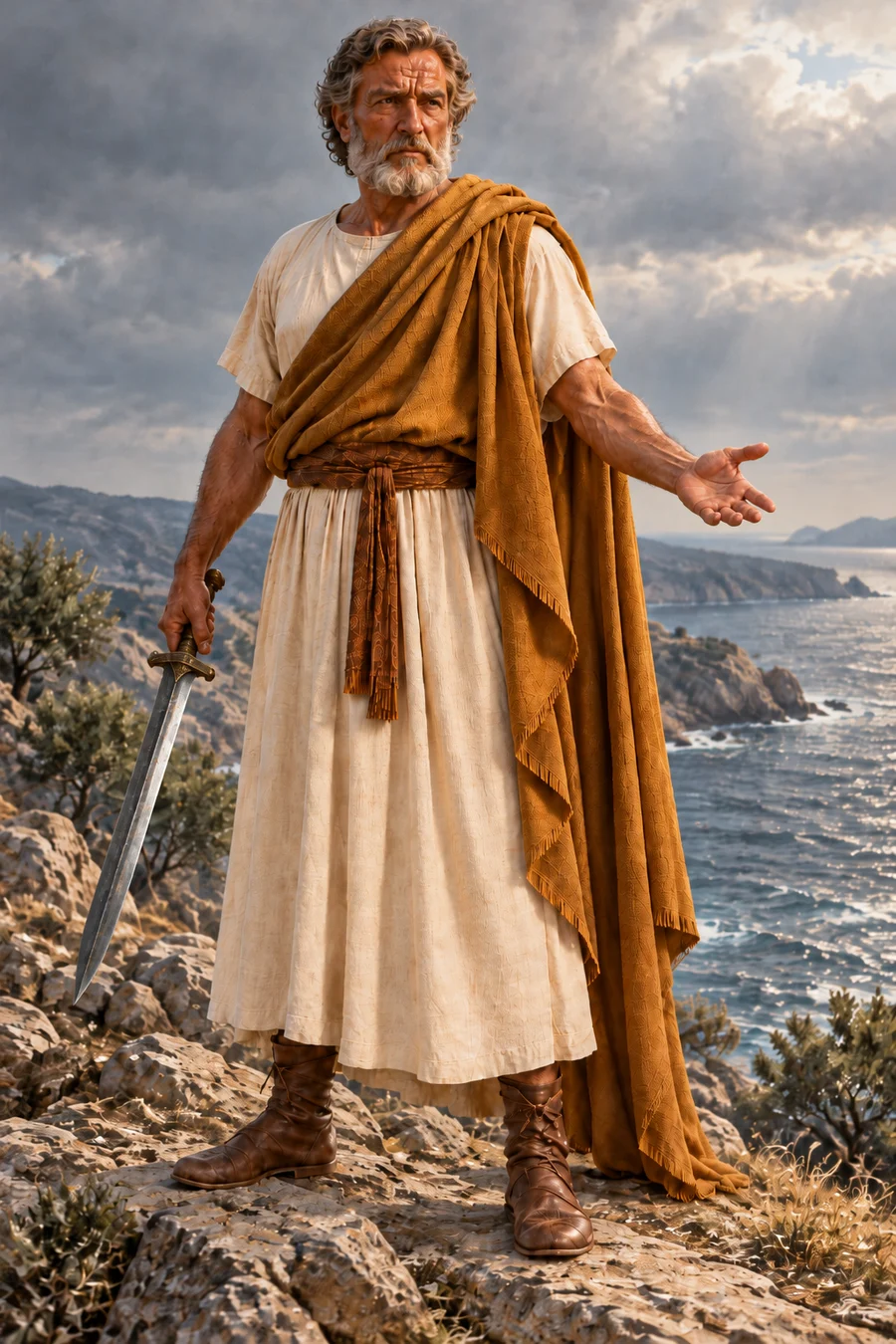
Aegeus, son of Pandion, ruled the city of Athens as its king and held the entire power of the government despite the division among his brothers.1,2,3,4,5 As the eldest of the four Pandionidae brothers who ruled Attica, including Pallas, Nisus, and Lycus, he received the best part of the land.1,5,6,7,8 He was known as a generous man, supported by the aid of valiant young men, yet his joy was not undisturbed due to interposing anxiety, and he was afraid of everything owing to city faction.9,10,11,12 Possessing a pair of boots and a sword, he established the cult of Heavenly Aphrodite among the Athenians.13,14,15
Before his rule was secure, Aegeus expelled the Metionidae from their position in Athens along with his brothers.4,8 His early life was marked by childlessness, a condition attributed to the visitation of a god, which left him completely lost in respect of this misfortune.4,16,17 To seek a remedy, he traveled to the oracle of Phoebus at Pythia and later to Troezen to consult King Pittheus, whom he considered the dearest of all his warrior friends.4,3,16 The god instructed him not to untie the neck of a wineskin, a command he failed to understand, prompting his return journey to Athens.16,4 During this time, he married Meta, the daughter of Hoples, and later Chalciope, the daughter of Rhexenor.4
When Medea arrived in Athens to seek refuge, Aegeus resided in the city and promised to keep her safe within his own territory, which was distinct from Corinth.18,19,17,20 Believing Medea possessed spells that could end his childlessness, he agreed to her marriage, and they had a son named Medus.17,12,18,21,19 However, Medea persuaded him to poison a guest named Theseus, though Aegeus knocked over a cup of poison that had been offered to him.21,22,23 He eventually provided Medea with an escort to leave Athens.22,19 In accordance with an oracle from Loxias, Aegeus married Aethra, who identified herself as his wife.24,25
Aegeus deposited the boots and sword under a rock for his son to claim later, instructing Aethra to raise any son without revealing his paternity, and sailed away to Athens.26,27,13,14 He sent Androgeus to fight the bull of Marathon.26,21 He returned to Athens to participate in the Panathenian festival games.26
Tragedy struck when Aegeus agreed with the ship's captain to use white sails if Theseus survived the Minotaur, though he had designated a scarlet sail dyed with holm-oak flower as a sign indicating the safety of the travelers.28,29,30 Aegeus laments the loss of his son and recalls his own harmful actions, asking his son to endure a little longer before dying.31 Overcome by grief over his son, Aegeus climbed the acropolis and threw himself to his death from the heights.32,29 A herald announced the death of Aegeus to the crowd, marking the end of the king who gave his name to a tribe in Athens following a Delphic oracle.33,34
The codex facts behind this entry
Aegeus was the son of Pandion. Bacchylides 18 +2
In the myths
Aegeus threw himself to his death from the Acropolis after seeing his son's ship with black sails. Apollodorus, Epitome 1.10 +5 Aegeus deposited the boots and sword under a rock for his son to claim later, and sailed away to Athens. Apollodorus 3.15.7 +3 He was persuaded by Medea to poison a guest named Theseus. Apollodorus, Epitome 1.5 +2 Aegeus expelled the Metionidae from their position in Athens along with his brothers. Apollodorus 3.15.6 +1 Aegeus traveled to Pythia to consult the oracle about having children. Apollodorus 3.15.6 +1 Aegeus traveled to Troezen to consult King Pittheus about the oracle's instructions. Euripides, Medea 663-688 +1 Aegeus sent Androgeus to fight the bull of Marathon. Apollodorus 3.15.7 +1 Aegeus provided Medea with an escort to leave Athens. Apollodorus, Epitome 1.6 +1 Aegeus knocked over a cup of poison that had been offered to him. Apollodorus, Epitome 1.6 +1 Aegeus agreed with the ship's captain to use white sails if Theseus survived the Minotaur. Apollodorus, Epitome 1.7 +1
Fate
Aegeus had no children from his marriages due to the visitation of a god. Apollodorus 3.15.6 +2 Aegeus climbed the acropolis and threw himself to his death from grief over his son. Apollodorus, Epitome 1.10 +2