HAEMON (son of Creon)
Figure of myth · Greek mythical character, son of Creon
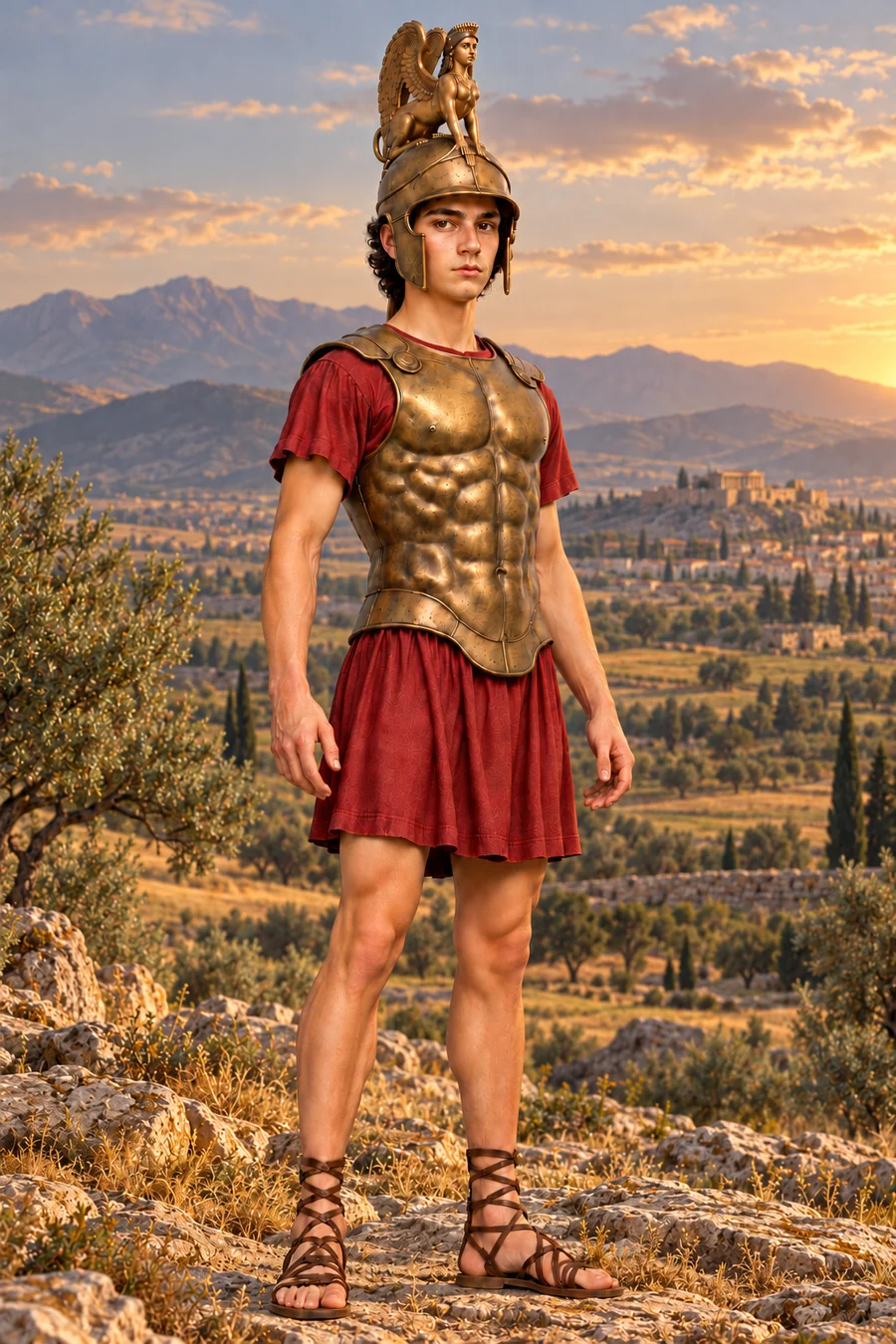
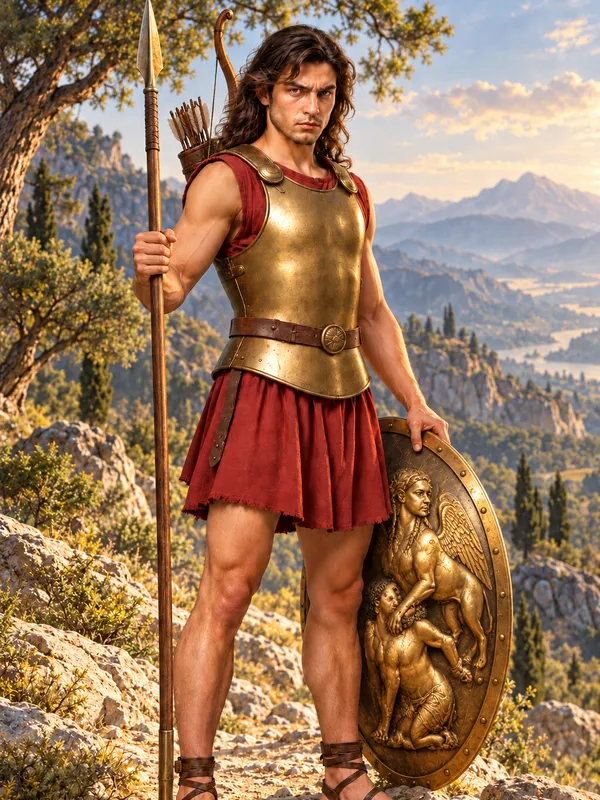
Haemon, the youngest and final son of Creon, was a noble and dear figure renowned as the most handsome and lovely of boys.1,2,3,4 As a Cadmean warrior, he wore a towering crest featuring a brazen Sphinx.5,6 He was betrothed to Antigone, the daughter of Oedipus and sister of Eteocles, a union that Eteocles formally ratified.7,8 Through this marriage, Haemon received the land of Thebes as a dowry from Eteocles.7
In one account, Haemon was killed by the Sphinx after failing to solve her riddle, and the creature snatched and devoured him.9,4 In other accounts, his fate was different, for he died by his own hand after living a short life.10,11,3 He arrived on stage grieving over Antigone's impending doom after hearing the final judgment regarding his betrothed, feeling bitter about the hope of their marriage being deceived.1,2 Creon declared he would end the marriage between Haemon and Antigone, stating that Haemon had other women available for marriage.12 Antigone claimed that Creon was wronging Haemon by his actions, while Haemon argued that his father should learn from him if his words were appropriate and judge his conduct rather than his age.12,13
Haemon advised his father to listen to the people's opinions rather than ignoring them, asserting that a city belonging to one man was not a true city.14,13 He reported that the city mourned Antigone and considered her death shameful, claiming it was his duty to monitor what citizens said about his father.14 Haemon accused his father of making a mistake and committing injustice, asserting that his father disrespected divine honors by trampling them.13 He declared he would never submit to shamelessness and warned that if the woman died, she would destroy another in death.13
In the heat of the argument, Haemon refused to allow Antigone to die in his presence and declared he would never let Creon see his face again.15 Creon stated that Haemon would not save the two girls from death, and Haemon left the scene in anger and haste.15 He killed himself out of anger at his father for a murder, and his body was shrouded and carried by Creon.10,11
In the wars of the Seven against Thebes, Haemon led a host of warriors into battle, marching out from the mighty Homoloian gates.16,6 He was assigned to defend the lofty Homoloian gate, where he killed and drove back the Danaan forces with the aid of Pallas.17,5 He actively fought against his Inachian enemies and met Tydeus in combat, though he felt the god had abandoned him, causing his strength and skill to weaken.18,19 An Acheloian hero attacked him while he was giving ground, and a spear aimed at his throat was diverted to strike his left shoulder instead.19 Wounded by an Inachian spear, he was carried by his bearers who were told to carry him gently, groaning in pain from his battle injury.20 The Argives had already captured him after he fell in battle, and he was left alone with his unhappy father while others were called to battle.20,21 Described as wavering and refusing the challenge to battle, he was accused of devising a second oracle to bring woe to his father.21 As an ancestor of the comrade Alcimedon, Haemon was a potential rival who might prevent the warrior's action, and Theseus moved toward him to engage him in combat.22,23,24
The codex facts behind this entry
Haemon is the son of Creon, whom he addresses as his father, and is identified as his final child. Sophocles, Antigone 626-630 +3
In the myths
Haemon arrives on stage grieving over Antigone's impending doom after hearing the final judgment regarding his betrothed. Sophocles, Antigone 626-630 +1
Fate
Haemon died by his own hand after living a short life. Sophocles, Antigone 1155-1182 +2 Haemon was killed by the Sphinx after failing to solve her riddle. Apollodorus 3.5.8 +1