SISYPHUS (king of Ephyra)
Figure of myth · king of Ephyra in Greek mythology
- Parents
- Aiolos, Enarete
- Siblings
- Perieres
- Consorts
- Tyro, Merope, Anticlea
- Children
- Glaucus, Ornytion, Almus, Thersander, Metapontos
- In the sources
- 49 ancient passages
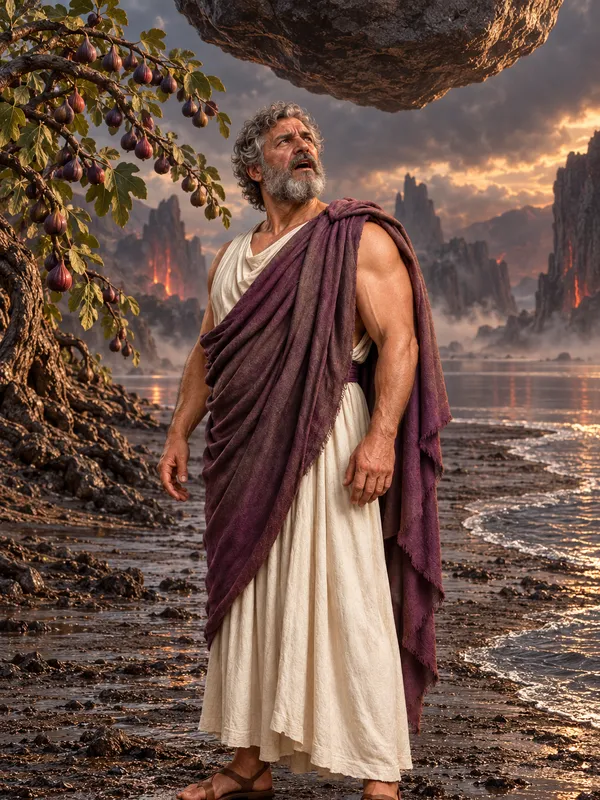
Sisyphus, son of the horse-loving king Aeolus, was regarded as the most cunning of all human beings. {1, 3}1,2,3,4 His craftiness was so exceptional that it was compared to that of a god, marking him as the cleverest among men. {18, 52}5,3 He resided in Ephyra, a city he established in the heart of Argos, which later became Corinth. {27, 36}2,4 This land, situated where two oceans bathe the shore, is the place where Medea plans to bury her sons.6,7 As a hero from Corinth, he possessed wealth that was described as ill-gotten, stemming from his reputation for thefts and fraud. {35, 21, 30}5,8,9
Sisyphus married Merope, the daughter of Atlas and one of the Pleiades. {8}2,10 He fathered several children, including Glaucus, who later fathered Bellerophontes, as well as Thersander, Almus, Ornytion, and Metapontos. {4, 13, 15, 16, 57}2,4,11,12 Thersander went on to become the father of Proetus, Haliartus, and Coronus. {13, 24}11,13 Sisyphus was the brother of Cretheus, Athamas, Salmoneus, Deion, Magnes, and Perieres, as well as Canace, Alcyone, Pisidice, Calyce, and Perimede.1,14
Sisyphus informed Asopus that Zeus had abducted the river god's daughter, Aegina. {5}2,15 He refused to reveal this secret until he received the spring on the Acrocorinthus as payment. {26, 20}16 This betrayal of Zeus's secret resulted in his punishment in the underworld. {28}2 Some accounts state that his punishment in Hades was specifically for informing Asopus. {40}16 In the underworld, Sisyphus is located in an accursed prison area among the silent shades. {6}17,18 Hera looks upon him with a stern expression after viewing Ixion. {25}18
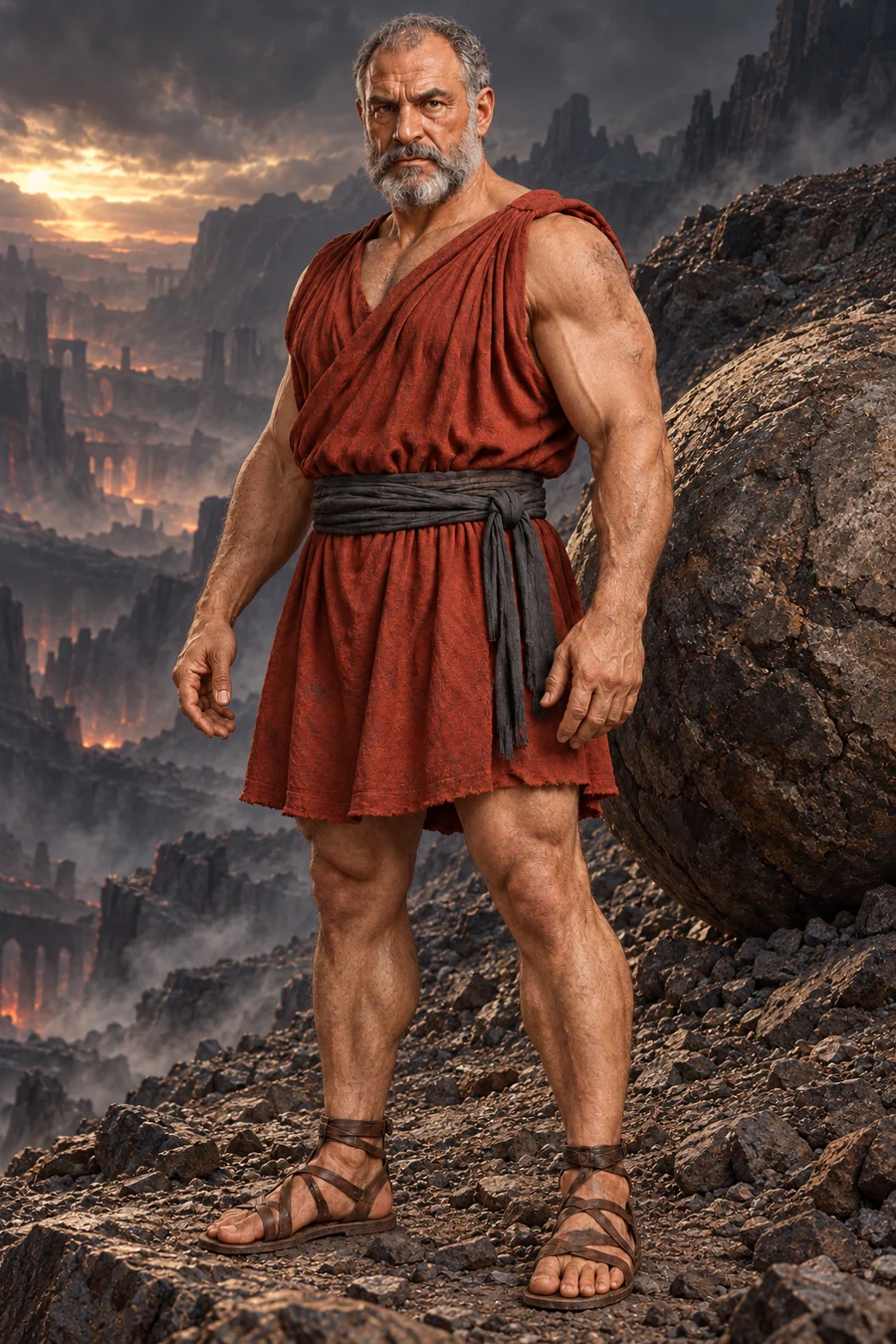
His eternal task involves rolling a massive stone up a hilltop. {10, 39}19,18,2 He raises the prodigious stone with both hands and tries to push it up with his feet. {50, 46}19 However, the heavy stone forces him downward, rolling back before he can push it over the edge. {2, 10}17,20,19,18 He then begins trying to push the stone up the hill again. {47}19 In one instance, his rock was moved to follow Orpheus during the musician's song in the underworld. {32}21 At another time, he sat down on his stone while listening to music. {29, 49}22
Before his doom, Sisyphus discovered the boy Melicertes lying on the shore. {11}23,24 He buried the boy on the Isthmus and established the Isthmian games to honor his memory. {11, 48}23,24 Sisyphus was buried on the Isthmus, and few Corinthians knew the location of his grave during his lifetime. {33, 41}25 He refused to reveal the location of Neleus's tomb to Nestor, keeping it unknown to everyone. {22}25 Medea, who referred to him as a foul robber, claimed her children were his sons. {12, 14}26 After leaving Corinth, Medea transferred control of the kingdom to Sisyphus. {23}27 She commanded that he be hurled backward over the rocks. {31}28
The codex facts behind this entry
Sisyphus was the son of the horse-loving king Aeolus and was considered the most cunning of all human beings. Athenaeus 11.84 +2
In the myths
A heavy stone forces Sisyphus downward in his punishment. Ovid Met. 13.1-438 +3 Sisyphus informed the river god Asopus that Zeus had abducted his daughter Aegina. Apollodorus 1.9.3 +2 Sisyphus endlessly attempts to roll a massive stone up a hilltop, but the stone repeatedly rolls back down before he can push it over the edge. Odyssey 11 ¶52 +1 Sisyphus discovered the boy Melicertes lying on the shore, buried him on the Isthmus, and established the Isthmian games to honor his memory. Apollodorus 3.4.3 +1 Sisyphus is depicted making a strenuous effort to push a rock up a cliff, with sweat and steam rising from his body as he exerts effort. Odyssey 11 ¶52 +1