AEGINA (nymph, eponym of the island Aegina)
Figure of myth · Greek island of the Saronic Gulf
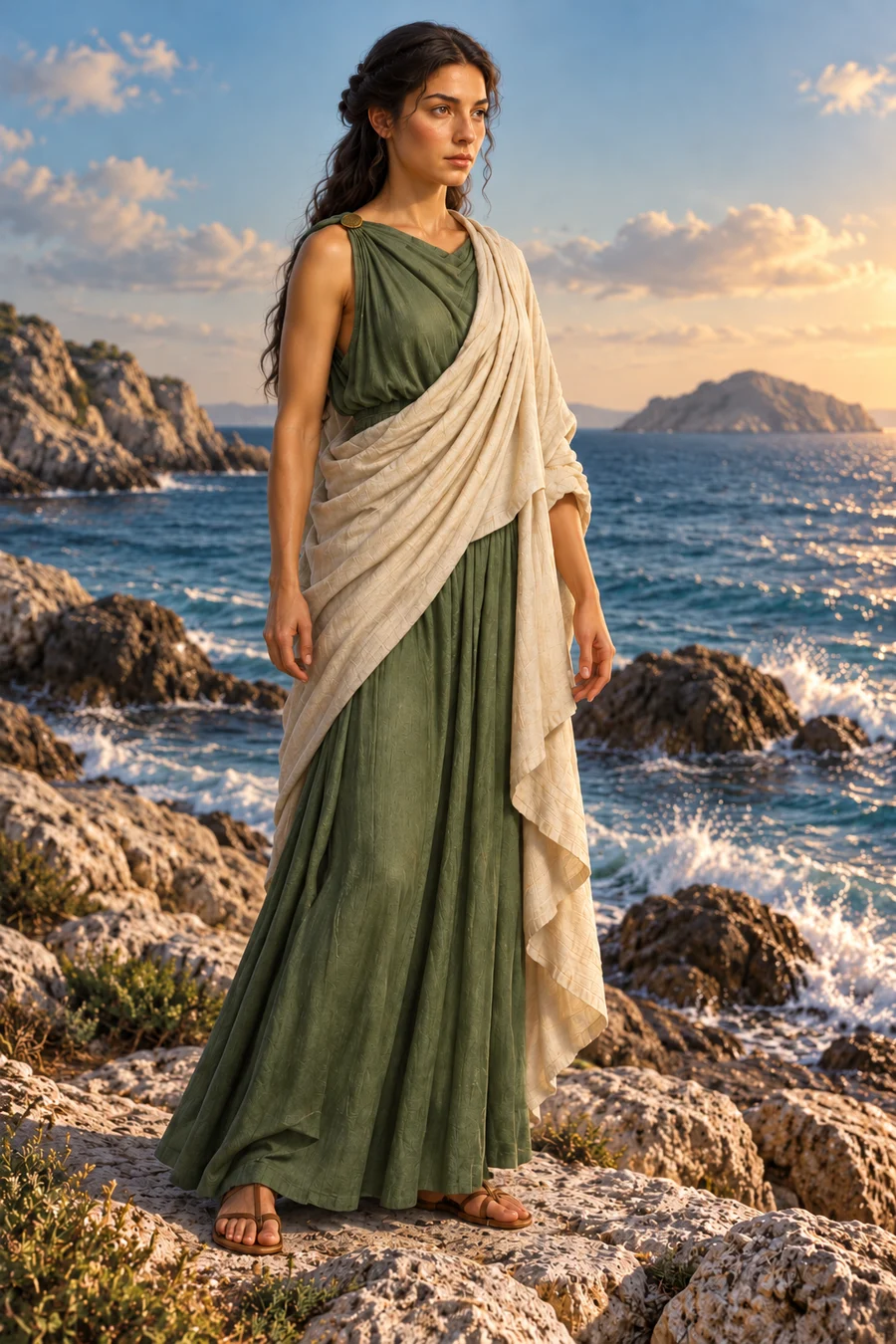
- Haunts and cult places
- Thyrea, Belbina, Sinope, Piræus
- In the sources
- 85 ancient passages
Aegina, the celebrated island kingdom ruled by Æacus, lay in the Saronic Gulf, its stony surface giving it a bare appearance.1,2,3 Personified as a kindly daughter of a whirling river, the island gave great honor to the victor by shining his victory among Greeks.4
Originally known by the names Œnopia or Oenone, the land was renamed Ægina by Æacus after his mother, while Zeus was reported to have taken Ægina into his embraces.1,2,5 Achilles, described as the grandson of Zeus and Ægina, was sprung from this root and glorified the island by pointing the way to the house of Persephone for Trojan chiefs.6,7 The inhabitants, known as Myrmidones for their ant-like digging habits, were successively Argives, Cretans, Epidaurians, and Dorians.2 Minos threatened war against the island, which lay to the left of his route, but chose not to fight it.1,2
The Argonauts stopped at the beach of Aegina to fetch water for their ship on their return journey.8,9 At one point, the navy of Aegina became superior to the fleet of Athens, and the Aeginetans were the bitterest foes of the Athenians, denying any connection to them.10,2,11,12,13 The women of Aegina wore longer brooch-pins due to a feud with the Athenians.11 The oracle told the Athenians to establish a precinct for Æacus before waging war.14 A sudden thunderstorm and earthquake struck the forces present on the island.15
The Athenians planned to cause mischief against the island and prepared to march against the Aeginetans, who fought them in a naval battle using seventy ships.16,14,17 Aeginetans provided a significant naval force for the engagement against Xerxes, and a phantom woman appeared to them, shouting commands and reproaching them for backing water.18,19 The Aeginetans claimed that a ship sent to Aegina started the sea fighting.19 Samians under King Amphicrates attacked Aegina and caused harm to its people, but the Aeginetans inflicted injuries upon the attacking Samian forces and defeated the enemy in a naval battle during the sixth year.20,21 The Aeginetans enslaved the defeated opponents after the sea-fight and dedicated cut-off ship prows in the local temple of Athena.21 The Aeginetans aided the Boeotians at the request of the Thebans.11
The Athenians depopulated the island, forcing its people to relocate to Thyrea in Argolis, where the Lacedaemonians granted them permission to live.10,22 The Athenians harassed the remaining inhabitants from their new settlement, and the wealthy citizens of Aegina captured and executed those who rebelled against them.22,10,23 Nicodromus, who had been banished, agreed to betray the island to the Athenians, and Cleomenes advanced to arrest influential citizens who had shown Persian sympathies.16,24,25 Ships from Aegina were forcibly taken by Cleomenes and landed on the Argolid coast, and crews from Aeginetan ships landed with Lacedaemonians on the Argolid coast.17 Demaratus slandered Cleomenes while he was in Aegina, and Cleomenes returned home after his time there.26 The islanders recovered their home island after Athenian warships were captured in the Hellespont, and the Lacedaemonians deprived the Athenians of the island, restoring it to the ancient inhabitants.10,2 The Athenians divided the island among their own settlers by lot, and the Aeginetans requested assistance from the Argives after their naval defeat, which was refused due to a previous grudge.2,17 The island performed common sacrifices with other cities for the temple of Poseidon, and Æacus allegedly created the dangerous reefs around the island to deter pirate attacks.27,28 Praxidamas, a boxer who won at the fifty-ninth festival, was from this island.29
The codex facts behind this entry
The island was formerly known by the name Œnopia. Ovid Met. 7.469-613 Æacus renamed the island Ægina after his mother. Ovid Met. 7.469-613 Aigina is identified as the root from which Achilles was sprung. Pindar, Isthmian 7 ¶11
Powers
The island once held significant power at sea, with its navy becoming superior to the fleet of Athens at one point. Pausanias 2.29.5 +1
In the myths
Cleomenes advanced to the island to arrest influential citizens who had shown Persian sympathies. Herodotus 6.50.1 +1 Samians under King Amphicrates attacked Aegina and caused harm to its people. Herodotus 3.59.4 The Aeginetans inflicted injuries upon the attacking Samian forces. Herodotus 3.59.4 Aeginetans dedicated cut-off ship prows in the local temple of Athena. Herodotus 3.59.3 The inhabitants of Aegina followed Diomedes, son of Tydeus, into battle. Of the Origin of Homer and Hesiod, and of Their Contest (83) The Aeginetans aided the Boeotians at the request of the Thebans. Herodotus 5.89.1 Demaratus slandered Cleomenes while he was in Aegina. Herodotus 6.61.1 Minos threatened war against the island but chose not to fight it. Ovid Met. 7.469-613 Aegina performed common sacrifices with other cities for the temple of Poseidon. Strabo 8.6.14 Argive settlers under Deiphontes crossed to the island and settled among its existing population. Pausanias 2.29.5
Worship
Youths of the Myrmidons still race to carry full water jars on their shoulders there. Argonautica 4 ¶108
Fate
The inhabitants were expelled from their island until the goddess showed mercy. Herodotus 6.91.1 Engineers warned that cutting the Isthmus of Corinth would submerge the island completely. Strabo 1.3.11 An oracle instructed the Athenians to wait thirty years before attacking Aegina. Herodotus 5.89.2 A fable claims ants were metamorphosed into men by Aeacus's prayer during a famine. Strabo 8.6.16