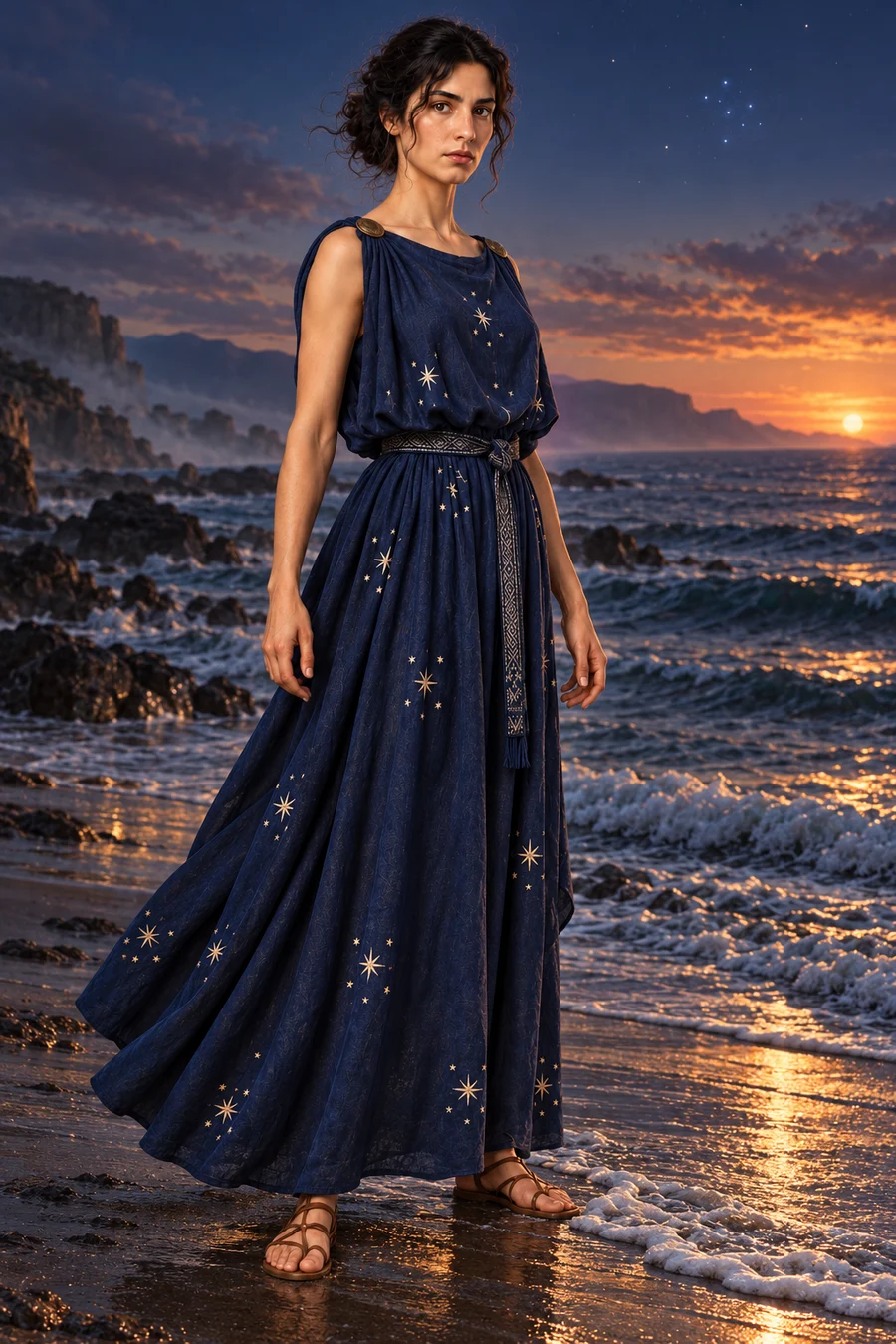
PLEIADES (celestial nymph of the stars)
Power of sky and light · celestial nymphs in Greek mythology
- Foes
- Orion
- Symbols and gear
- goblet, bowl
- Haunts and cult places
- Cyllene
- In the sources
- 50 ancient passages
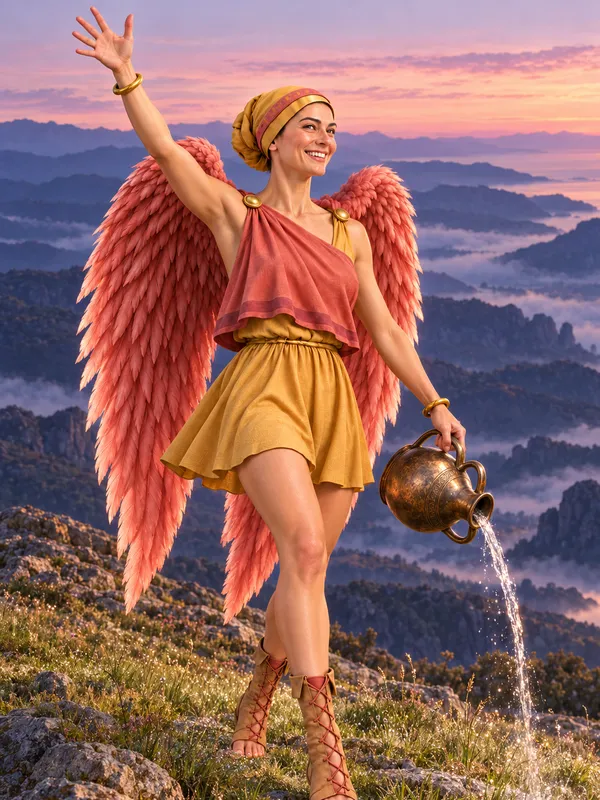
Pleiades, the seven daughters of Atlas and Pleione, stood as a group of celestial nymphs associated with specific stars in the heavens.1,2,3,4 These maidens were renowned for their exceptional beauty and chastity, possessing dark hair that marked them as striking figures among the divine.5,6,7 In the sky, they appeared as small, dim stars clustered closely together, forming a central position near Orion and listed among the celestial signs that adorn the heavens.3,2,8,9 The seven named members of this shining-tressed group were Haleyone, Merope, Celaeno, Electra, Sterope, Taygete, and Maia, with Maia described as the queenly figure among them.10,3 Mortals often called these celestial nymphs Peleiades, while the author of the Astronomy consistently referred to the group by that name.11
Their existence in the firmament was not without peril, as Orion was described as having a rude strength that the Pleiades sought to escape.2,7 To flee from Orion's aggressive power, the maidens dove into the misty sea, plunging beneath the stream of tireless Ocean to hide from his pursuit.12,13 This descent into the waters marked the beginning of violent gales, a change in the weather that signaled the arrival of a stormy winter to those below.12,13,14 However, the accounts differ regarding their ultimate fate in the sky; while some say they remained hidden for forty days and nights before reappearing annually, others note that Zeus substituted a new figure to keep the total number of Pleiades undiminished after one was lost.15,16,4 Zeus regulated their tranquil motions in the sky, ensuring that their presence continued to mark the turning of the year.2
The Pleiades served as essential guides for agriculture, with their beginning to set indicating the time when ploughing should occur.15,17 Their reappearance marked the time to sharpen the sickle, while their rising signaled the appropriate time to begin harvesting crops.15,16 As surest harbingers of winter and summer, their rising and setting indicated the correct times for various agricultural activities, helping humans manage the changing seasons.7,2 They circulated to manage the changing seasons of winter, spring, summer, and autumn, dancing around the mansion's doors to whirl the wheels of the years.3,10 Odysseus used them as a fixed point for navigation, while their setting brought severe winter conditions that could harm trees and crops.18,14
Maia gave birth to Hermes in the mountains of Cyllene, while Celaeno bore a son named Lycus to Poseidon.1,19 Alcyone bore a daughter named Aethusa and sons Hyrieus and Hyperenor to Poseidon, further extending their divine lineage.1 Other members also took mortal husbands; Sterope was married to Oenomaus, and Merope was married to Sisyphus.1 Zeus consorted with the remaining daughters of Atlas, ensuring their place in the divine hierarchy.1
The Pleiades were also warders of the sun's paths, night, and dawn, serving as part of a heavenly chorus of stars that attended the Lady of the Morn.20,10 They were considered a fearful threat to ships and the sea, their movements capable of bringing severe conditions to the waters.21 In a moment of profound grief, the Pleiades descended from heaven to mourn the death of Memnon, wailing alongside the Dawn and other maidens for the fallen hero.10
The codex facts behind this entry
The Pleiades are the seven daughters of Atlas and Pleione. Apollodorus 3.10.1 +4 The Pleiades are a group of celestial nymphs associated with specific stars. Aratus, Phaenomena ¶11 +3 The Pleiades are described as part of a heavenly chorus of stars. Euripides, Electra 464-475
Powers
They serve as warders of the sun's paths, night, and dawn. Quintus 2 ¶34 They dance around the mansion's doors to whirl the wheels of the years. Quintus 2 ¶34 They are considered a fearful threat to ships and the sea. Seneca, Hercules Furens act 1 ¶1 The setting of the Pleiads signals the arrival of a stormy winter. Aratus, Phaenomena ¶46 Their rising and setting indicate the correct times for agricultural activities. Athenaeus 11.79 They signal the beginning of winter and summer to humans. Athenaeus 11.79 Zeus regulates their tranquil motions in the sky. Athenaeus 11.79
In the myths
The Pleiades begin to set at the time when ploughing should occur. Hesiod's Works and Days ll. 383-404 +2 The Pleiades dive into the misty sea to flee from Orion's aggressive power. Hesiod's Works and Days ll. 618-640 +1 Their reappearance marks the time to sharpen the sickle. Hesiod's Works and Days ll. 383-404 +1 Their rising signals the appropriate time to begin harvesting crops. Hesiod's Works and Days ll. 383-404 +1 They circulate to manage the changing seasons of winter, spring, summer, and autumn. Aratus, Phaenomena ¶11 +1 The Pleiades carry ambrosia to Zeus. Athenaeus 11.79 +1 The Pleiades descended from heaven to mourn the death of Memnon, wailing alongside the Dawn and other maidens for the fallen hero. Quintus 2 ¶34 The birth of Dardanus took place at the cave associated with their adventures. Strabo 8.3.19 They brought defeat to the eyes of Hector. Euripides, Electra 464-475 Mortals are stated to call the celestial nymphs Peleiades. The Astronomy fr. 1
Fate
They remain hidden for forty days and nights before reappearing annually. Hesiod's Works and Days ll. 383-404 +1 After their death, they attained immortal honour among men. Diodorus 3.60 The daughters of Atlas were transformed into the constellation of Pleiades. Athenaeus 11.79 One Pleiad was destroyed by sharp rocks, according to a poetic interpretation. Athenaeus 11.82