MIDAS (king with the golden touch)
Figure of myth · king with the power to turn whatever he touches to gold
- Parents
- person, Seul
- Consorts
- Hermodike II
- Children
- Lityerses, Aegisteas, Anchurus
- Haunts and cult places
- Pactolus
- In the sources
- 27 ancient passages
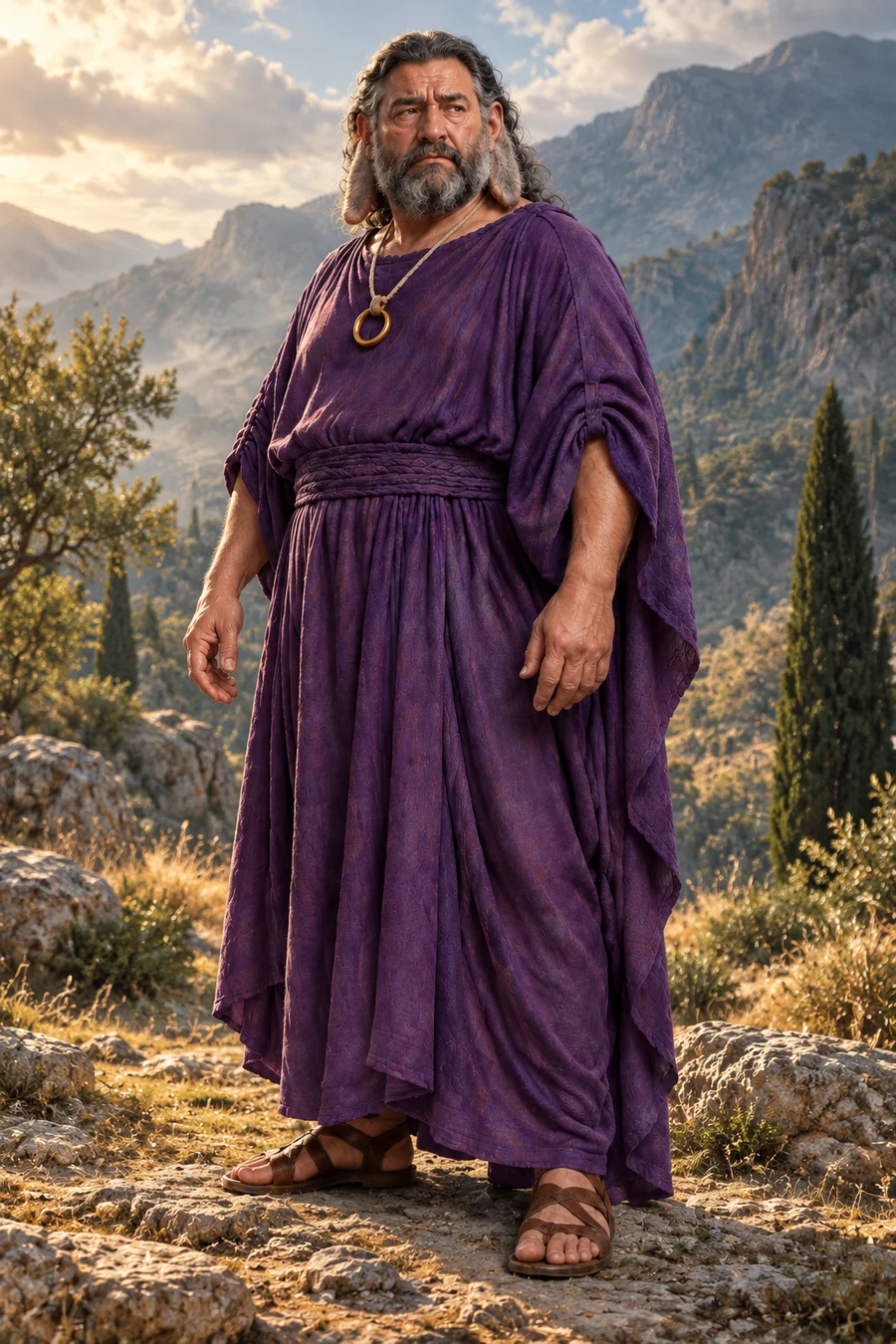
Midas, son of Gordias, ruled the Phrygian region where the Pactolus river flowed.1,2,3,4,5,6 His lineage also connects him to the person Seul, while his children included horse/">Xanthus, Gorgus, Lityerses, Aegisteas, and Anchurus.7,5 The king possessed ears drawn out to great length, filled with grey hairs, and unsteady at the lower part.8 During his period of indulgence, he wore a purple robe and resided in a setting characterized by effeminacy and luxury.9
Midas’s wealth was said to have come from mines near Mount Bermium, and he founded the Phrygian city of Ancyra in former times.10,11 The king also possessed an anchor kept in the sanctuary of Zeus and a ring that granted invisibility when its collet was turned inward.11,12 Ancient dwellings attributed to him stood on the banks of the river Sangarius near the mountain Dindymus, though these villages did not retain the physical traces of cities.13
Orpheus had previously entrusted the mysteries of Dionysus to Midas, who later mixed wine with spring water to capture Silenus.6,14,11 Phrygian rustics captured Silenus and brought him to Midas, who used water from a spring named after him to mix with wine.6,11 Midas hosted a ten-day festival to honor the arrival of Silenus.6 He was present by chance while Tmolus played his reeds and was delighted by the uncouth music, becoming the only person who called the judgment of Tmolus unjust.8 Apollo punished Midas for his stupid ears, stretching them to a great length.8
Midas participated in building a costly temple for Cybele in Pisinus and establishing honours out of his devotion to beauty.1 He brought roses from the Odonian hills of Thrace to the Emathian lands after leaving the realms of Asia, where he cultivated roses with sixty petals.15 The king is credited with inventing the transverse flute and worked at the loom in the company of women.16,9 A noble Lydian man rose up against Midas’s government, and according to report, the king died after drinking bull's blood.9,17
Midas is buried in a mournful tomb where a bronze figure of a maiden bewailing his death remains.18,19,7 In the underworld, he is located among other ancient kings and attempts to mourn his past wealth and luxury.20,21 He complains to Hades about the Cynic Menippus disturbing their community, and is mocked by Menippus for his previous life of luxury.20 A location named the garden of Midas is situated in Macedonia, where the sons of Temenus settled, and he was a common name used for Phrygian slaves in Attica.4,22
The codex facts behind this entry
Midas was the king of Phrygia. Diodorus 3.59 +2
In the myths
Midas mixed wine with spring water to capture Silenus. Athenaeus 2.23 +1
Fate
Midas is buried in a mournful tomb where the bronze maiden remains. Homer's Epigrams (3) +1