TMOLUS (mountain)
Figure of myth · mountain
- Haunts and cult places
- Sardis, Lydia, Pactolus, Larisa, Hyde, Nysa
- In the sources
- 34 ancient passages
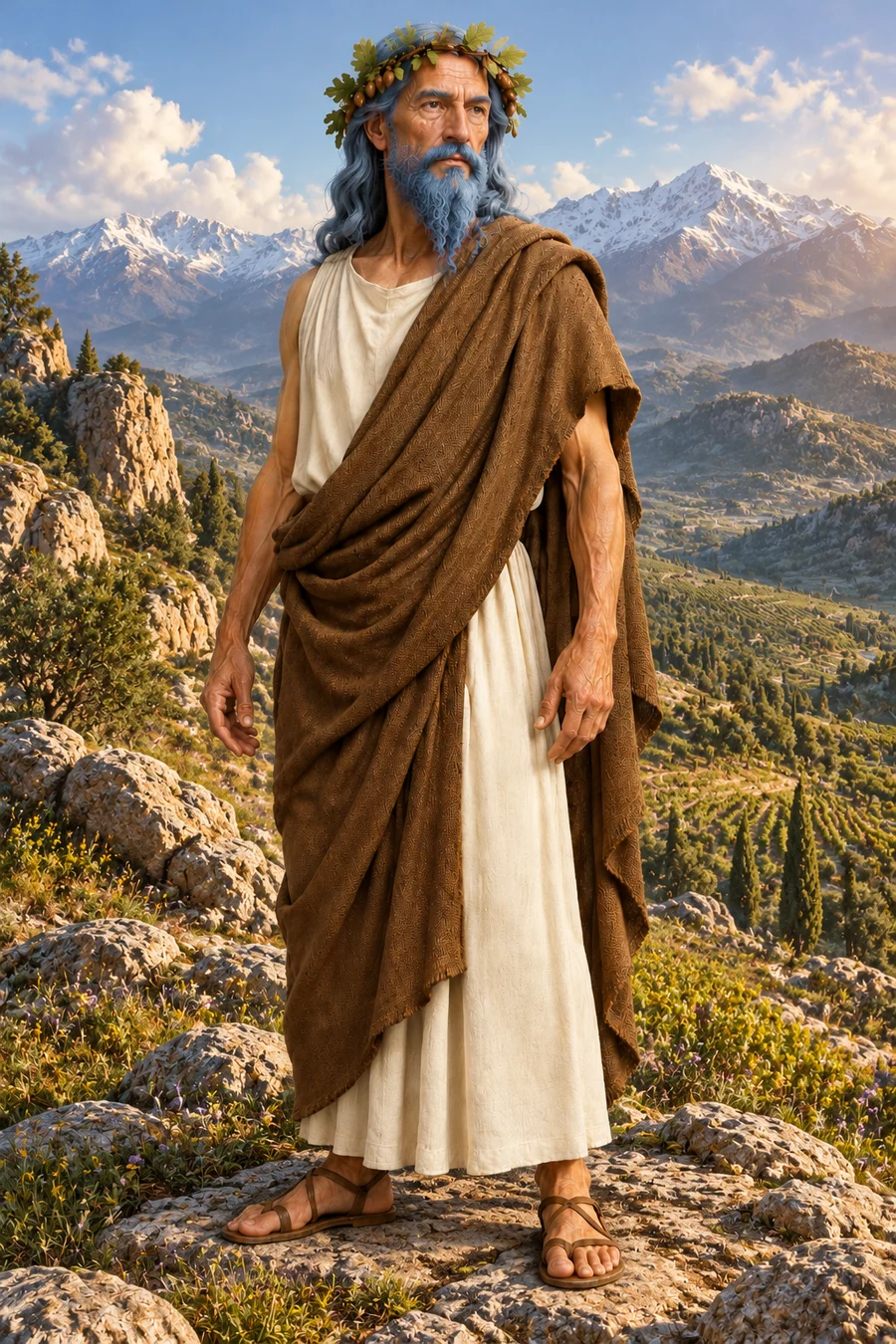
Tmolus, a well-compacted mass of mountain with a moderate circumference, stood as a fertile and flowery bulwark in Lydia.1,2,3,4,5,6 This sacred peak formed a natural boundary for the region, situated in the land of Asia and near the lands of the Phrygians.6,4,5,7 Its steep and lofty ascent featured a descent extending on both sides of the peak, which was specifically named Tempsis.8,9
The river Pactolus rose from the mountain, carrying gold dust from its mines, which were nearly exhausted by the time of later writings.10,11,12,13,2 The mountain was described as flowing with gold, and a substance resembling silver was found in the vicinity.14,15 The river Tarnus also flowed from this mountain, while the river Tmolus was once the only known source of the stone coticula.13,16
The city of Sardis was situated on the side of Tmolus facing the mountain, which surrounded and bounded the city.17,3,2 The small town of Hypæpæ bounded the mountain on the other side, while a place named Hyda lay at its foot.8,18,19 The Meonians lived beneath the slopes, and Lydians, Mysians, and Macedonians inhabited the area around it.20,13,2 A large mound built by Gyges was situated inside the mountain, and a white marble seat built by Persians sat on its summit.17,2
During the global conflagration caused by Phaethon's chariot, Tmolus caught fire.21 The son of Leto departed from this mountain after taking revenge, and the Maenads left Tmolus to join the speaker in Thebes.22,4 The Ionians retreated to this mountain when they feared their approaching enemies, and later the Ionian army crossed it while marching inland toward Sardis.23,24 The people living by this mountain pledged to enslave the Greeks.25
The wine from Tmolus was valued for its unique sweetness and was mixed with other wines to soften harsh flavors, making them appear older than they were.26 This wine was considered suitable for both pleasure and medical purposes, and saffron fragrance was said to originate from the mountain.27,28 In the southern parts, located thirty stadia from Nysa, the meadow called Leimon hosted festivals where the Nysaeans and surrounding people gathered.29 A temple dedicated to two heroes stood near the meadow, close to the river Caÿster, and people living on the peak were said to live one hundred and fifty years.29,9
The codex facts behind this entry
Tmolus is described as a well-compacted mass of mountain with a moderate circumference. Strabo 13.4.12 The mountain was formerly known by the name Timolus. Pliny, Nat. Hist. 5.30 ¶1
In the myths
The river Pactolus flows out from Tmolus and formerly carried down a large quantity of gold-dust. Pliny, Nat. Hist. 5.30 ¶1 +1 Tmolus caught fire during the global conflagration caused by Phaethon's chariot. Ovid Met. 2.1-303 (10) Wine from this mountain is mixed with other wines to soften their harsh flavors and make them appear older than they actually are. Pliny, Nat. Hist. 14.9 ¶1 The sources of the river Tarnus flow from this mountain. Pliny, Nat. Hist. 5.30 ¶1
Worship
Tmolus is described as a sacred place. Euripides, Bacchae 64-72