HECUBA (spouse of King Priam)
Figure of myth · spouse of king Priam
- Parents
- Sangarius, Dymas, Cisseus, Eunoë, Telecleia
- Siblings
- Theano, Asius (mythology)
- Consorts
- Apollo, Priam
- Children
- Hector, Paris, Cassandra, Deiphobus, Helenus, Polyxena, Polydorus, Polites, Troilus, Laodice, Creusa, Antiphus and 4 more
- Haunts and cult places
- Troy
- In the sources
- 105 ancient passages
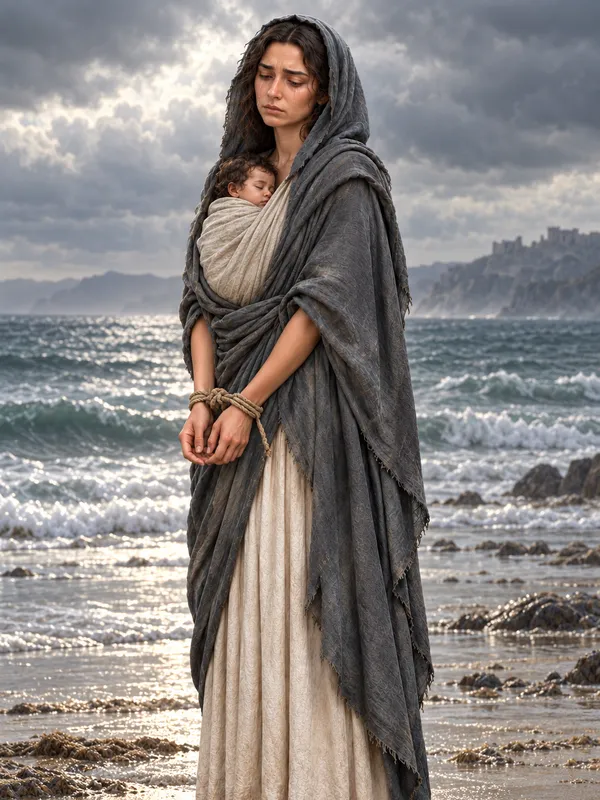
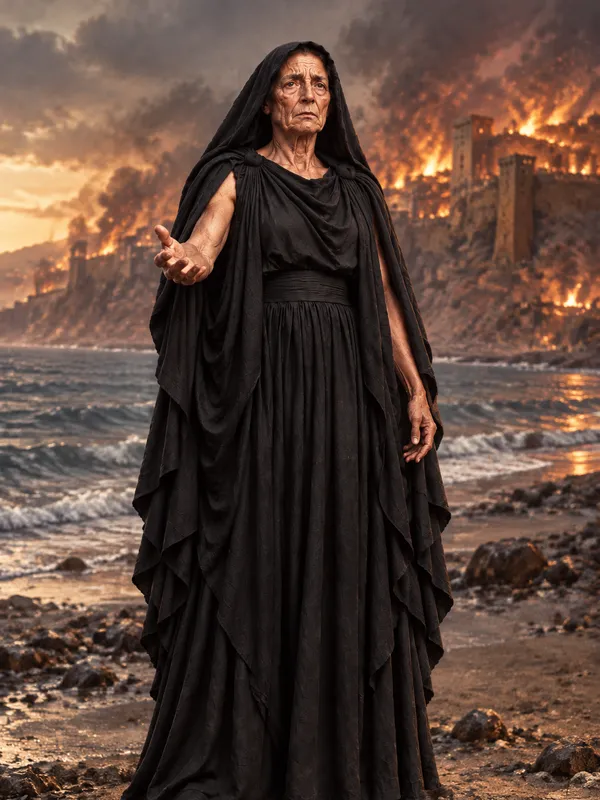
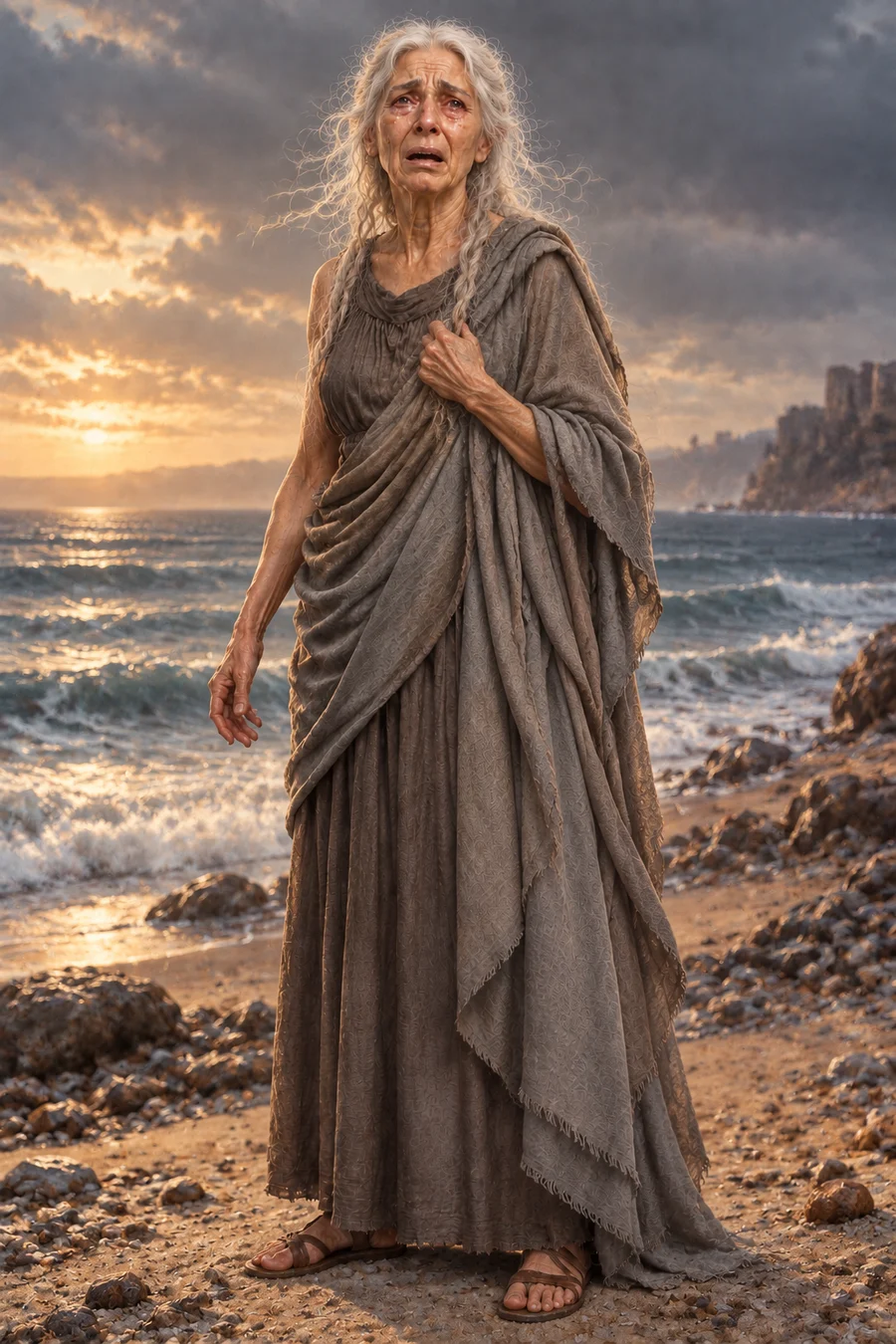
Hecuba, daughter of Dymas and sister to the warrior Asius, was formerly the queen of the wealthy land of Phrygia and is identified as the proud mother of a lineage of kings.1,2,3,4 Though some accounts name Cisseus or the river Sangarius and Metope as her parents, she became the second wife of King Priam after he gave his first wife, Arisbe, to Hyrtacus.5,6 Her hoary tresses were rent and besprent with the ashes of the hearth, cut off her head in a display of profound grief.7,8 Aged and physically frail, she required a staff to support her walking, her white hair streaming down to the ground as tears poured from her eyes like water from a spring.9,10,11,8
Before the fall, Hecuba bore sons to Priam, including Hector, the first son, who defeated many Argive warriors in battle.12,5,13,14 She also gave birth to daughters Creusa, Laodice, Polyxena, and Cassandra, as well as sons Deiphobus, Helenus, Pammon, Polites, Antiphus, Hipponous, Polydorus, and Troilus.5 The infant exposed on Ida, later named Paris, was also a child of Hecuba, and she owned a fragrant store-room containing robes made by Sidonian women, one intended for Hector’s wedding day.5,15,16 In happier times, she once used Priam’s staff while dancing in Phrygian time and held a golden goblet filled with wine in her right hand.7,17
Hecuba dreamed she gave birth to a firebrand that spread and burned the entire city.18,5 She wept ceaselessly as grief encompassed her.11,19 Her limbs trembled and her heart was fear-frenzied as she stretched her aged limbs upon the ground and beat the earth with both hands.8,20
After the fall, Odysseus dragged Hecuba to his ship, and she was assigned by lot to become the slave of Odysseus, king of Ithaca.21,8,10,22 She begged Agamemnon to punish the Thracian king Polymestor for murdering her guest-friend and son, Polydorus, who had been entrusted to him with a large amount of gold.23,24,25,26 In an act of vengeance, Hecuba led Polymestor and his children into the tent where the captive women lived, then blinded Polymestor and killed his children with their help.27,25,28 She blamed Helen for the fall of Troy, her own suffering, and the destruction of her son’s life, claiming Helen possessed potent witcheries that ensnare men’s eyes.29,30,31
Hecuba laments that all her sons have died and her daughter is enslaved, with Polyxena dying piteously at Achilles’ tomb.24,32,33,13 Despite surviving a previous death that was rightfully due to her, she remains a mock of fate, bereft of her children, husband, and city.34,35,4,36 She states she will continue to live as a slave after her daughter’s death, identifying herself as the grey-haired mother of Priam’s race.29,37,38 According to some reports, Hecuba was transformed into a bitch in the Chersonese, her voice compared to a dog’s short sharp cries and long howling.21,4,11
The codex facts behind this entry
Hecuba is the former queen of Troy who is now a slave. Euripides, Hecuba 59-97 +3 Hecuba is the wife of King Priam and the mother of Hector. Euripides, The Trojan Women 462-510 +3 Hecuba is the mother of Polyxena and Polydorus. Euripides, Hecuba 35-58 +1
Appearance
Her white hair was torn, covered in ashes from the hearth, and cut off her head due to her grief. Euripides, The Trojan Women 122-152 +2 Hecuba is described as aged and physically frail, needing a staff to support her walking. Aeneid 2.469 +2
In the myths
Hecuba lamented the fall of Troy, the departure of its children, and the destruction of her city and temples. Euripides, The Trojan Women 122-152 +4 Hecuba personally saw her husband Priam killed at his own hearth and threw ashes on herself. Euripides, The Trojan Women 1302-1316 +3 Hecuba blames Helen for the fall of Troy, her own suffering, and the destruction of her son's life and house. Euripides, Hecuba 402-443 +2 Hecuba laments the sorrow, calamity, and piteous end of Andromache. Euripides, The Trojan Women 577-581 +2 Hecuba blinded Polymestor and killed his children with the help of captive women. Euripides, Hecuba 1035-1055 +2 Hecuba wept tears on the tomb of her son Hector. Ovid Met. 13.1-438 (22) +2 Hecuba dreamed she gave birth to a firebrand that spread and burned the entire city. Aeneid 7.286 +2 Hecuba stated that Achilles would sell her captured children at Samos and Imbros. Iliad 24 ¶53 +1 Hecuba's son was entrusted to Polymestor with a large amount of gold, and she instructed him to keep it safe and tell his children about it in case he died. Euripides, Hecuba 767-811 +1 Hecuba led Polymestor and his children into the tent where the captive women lived and then confronted the blinded Polymestor. Euripides, Hecuba 1035-1055 +1
Fate
Hecuba's daughter Polyxena died piteously at Achilles' tomb, a shameful death that Hecuba laments. Euripides, The Trojan Women 1-47 +1 All of her children are dead. Euripides, Hecuba 484-517 +1 Hecuba states she will continue to live as a slave after her daughter's death. Euripides, Hecuba 402-443 +1 According to some reports, Hecuba was transformed into a bitch in the Chersonese. Apollodorus, Epitome 5.23 +1