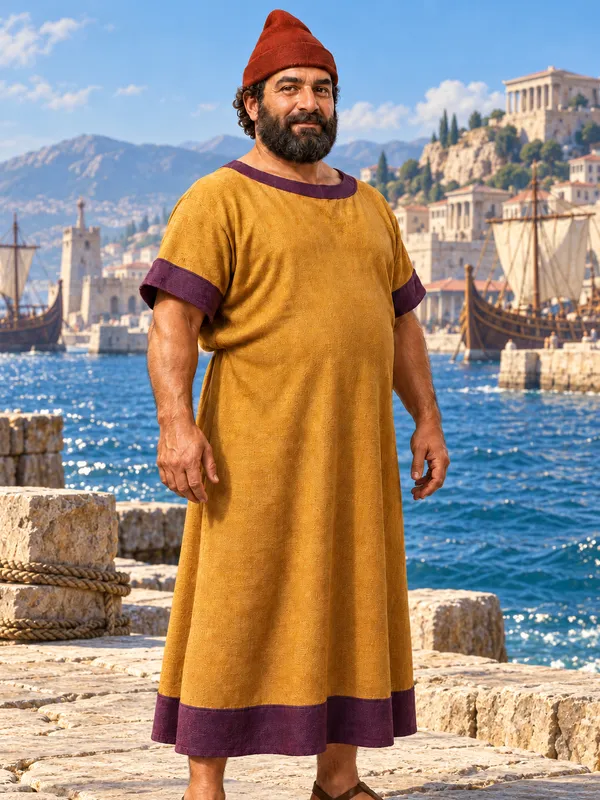
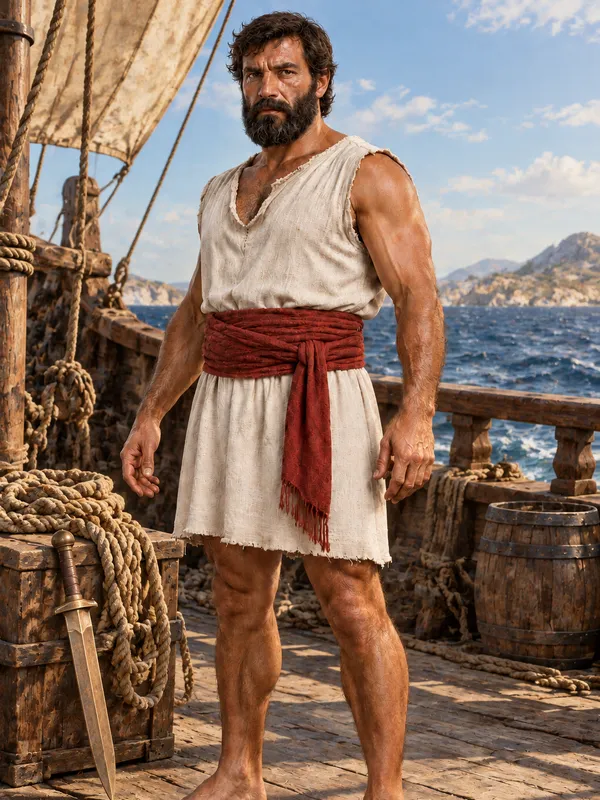
COLCHIAN WARRIOR (soldier of Colchis)
People and soldiers · historical polity and region of Antiquity
- Symbols and gear
- Golden Fleece
- Haunts and cult places
- Aea, Phasis, Cappadocia, Themiscyra, Heniochi, Tibareni, Trapezus, Amisus
- In the sources
- 76 ancient passages
Colchis, situated on the eastern end of the Black Sea coast, was the destination for the expedition to retrieve the golden-fleeced ram's skin.1,2,3 His home lay on the right-hand side of the Euxine Sea when looking north, a fertile land that produced good crops.1,2,4,5 The region possessed a fiery, brazen bull that was parched by fierce heat, and the palace featured golden arches, silver supports, columns, and pilasters.6,7
Jason and the Argonauts sailed to Colchis to obtain the golden fleece, which hung on an oak tree in a grove of Ares.8,9,10,7 A sleepless dragon guarded the fleece, while Aeëtes, son of Helius, served as king during the time of Phrixus's arrival.10,11,12 Aeëtes ordered strangers to be sacrificed to deter them from landing and built a wall around the sacred precinct with stationed guards.12 In one variant, the attendant Crius was sacrificed and his skin nailed to a temple, which Aeëtes gilded so guards would consider it worthy of careful protection.12
The river Phasis received water from the Glaucus and Hippus rivers, flowing from the mountains through the territory to empty into the Pontus sea.4,13 A city sharing the river's name sat on the banks and served as a market for the local people, while the city of Aea lay close to the Phasis river.4,13,14,15 Workers retrieved minium from the rock using darts, while Saulaces extracted large amounts of gold and silver from virgin earth in the Suani country.16,7 Saulaces acquired the palace's silver and gold decorations after conquering the Egyptian king Sesostris.7
Medea, identified as being from this region in the context of the golden fleece, killed Perses to restore the kingdom of Colchis to her father Aeëtes.17,18,19 The region is associated with the creation of love potions, and the temple of Leucothea was plundered by Pharnaces and later by Mithridates of Pergamus.20,4 Mithridates Eupator conquered Colchis after it was ceded to him by Antipater, using the region to supply most of his naval equipment.21,22 He built seventy-five strongholds in Colchis to store his treasure after fleeing into the region when besieged by Pompey.22
After Mithridates' overthrow, the country was divided among several different persons, and Polemon eventually obtained possession of Colchis.21 Pythodoris reigned over the Colchians after the death of her husband Polemon.21 The sons of Tyndareus participated in Jason's expedition to this region, and the Egyptians conducted an expedition into Ethiopia and Colchis.23,24
The codex facts behind this entry
In the myths
Mithridates Eupator conquered Colchis after it was ceded to him by Antipater, expanding his territory to include the country under his dominion. Strabo 11.2.18 +1 Medea killed Perses to restore the kingdom of Colchis to her father Aeetes. Apollodorus 1.9.28 The sons of Tyndareus participated in Jason's expedition to this region. Pausanias 3.24.7 A sleepless dragon guarded the Golden Fleece in this location. Apollodorus 1.9.16 The Egyptians conducted an expedition into Ethiopia and Colchis. Strabo 1.3.21 Insurrections by the people beyond Colchis result from a lack of Roman attention. Strabo 6.4.2 part 3 After Mithridates' overthrow, the country was divided among several different persons. Strabo 11.2.18 Polemon eventually obtained possession of Colchis. Strabo 11.2.18 Pythodoris reigned over the Colchians after the death of her husband Polemon. Strabo 11.2.18 The temple of Leucothea was plundered by Pharnaces. Strabo 11.2.17