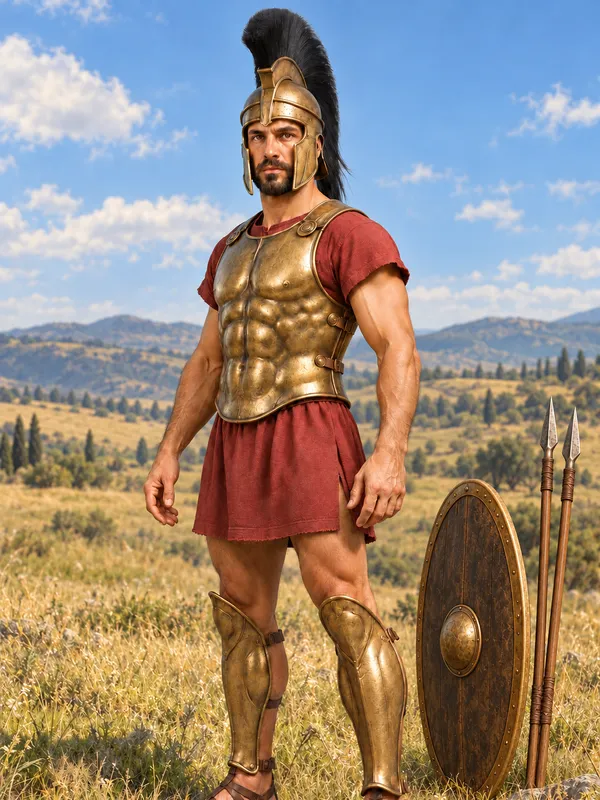
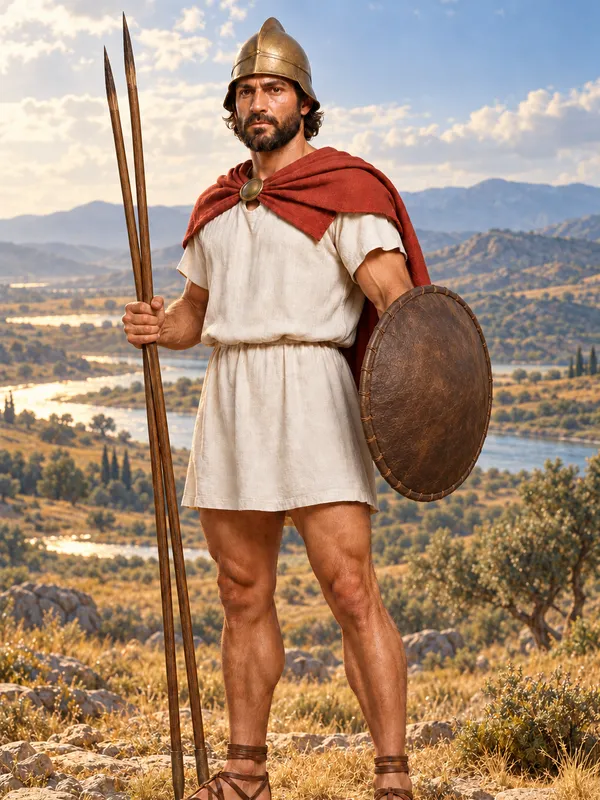
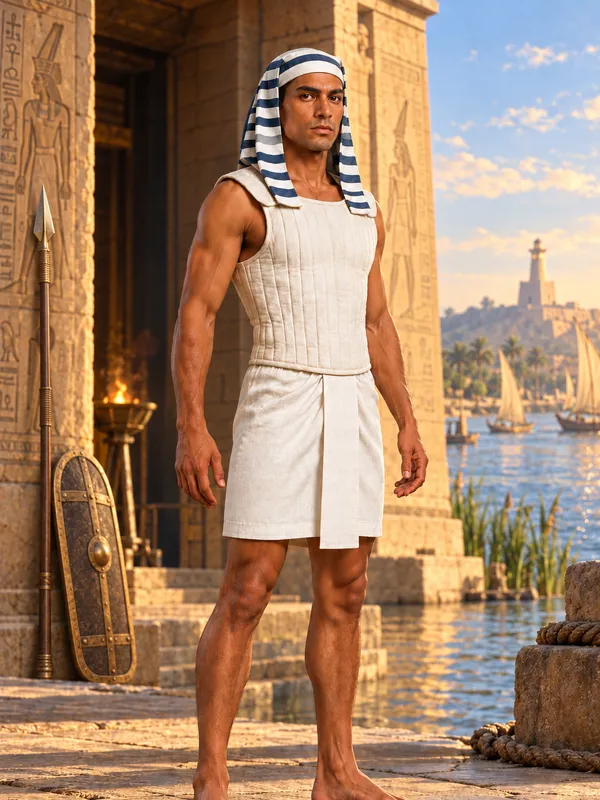
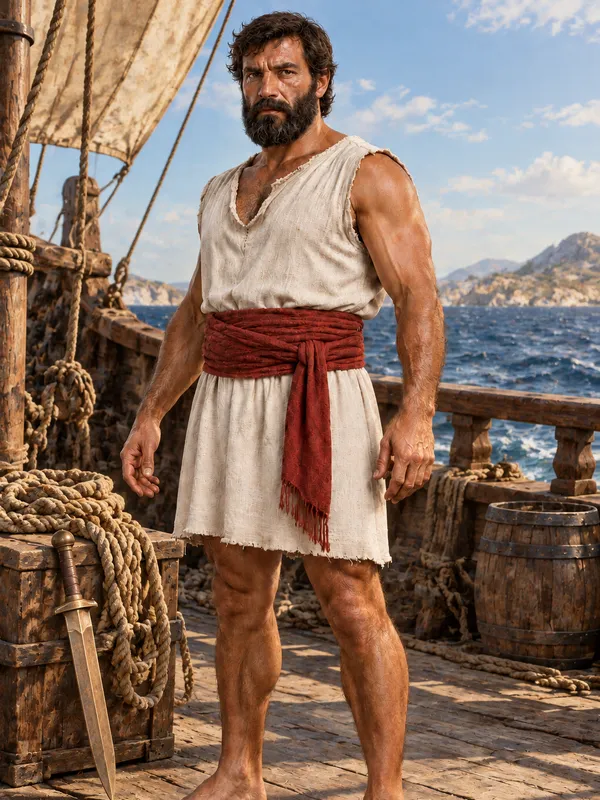
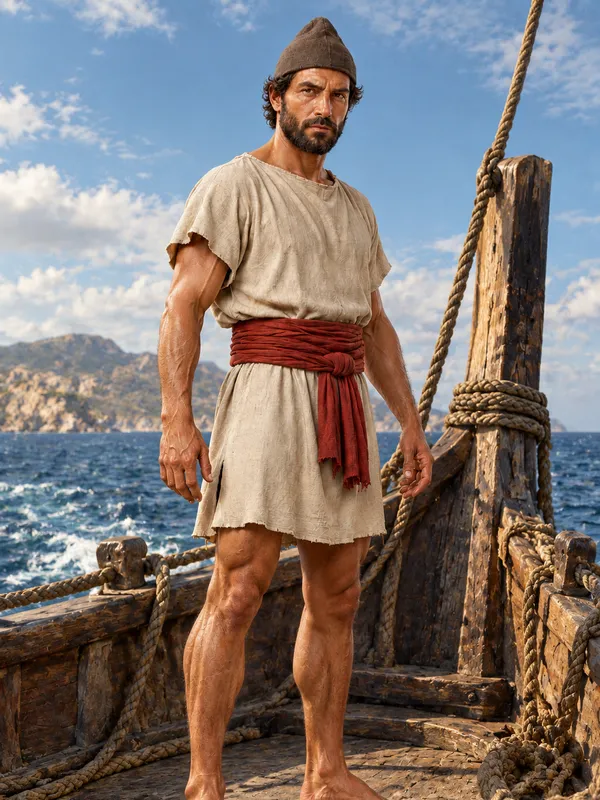
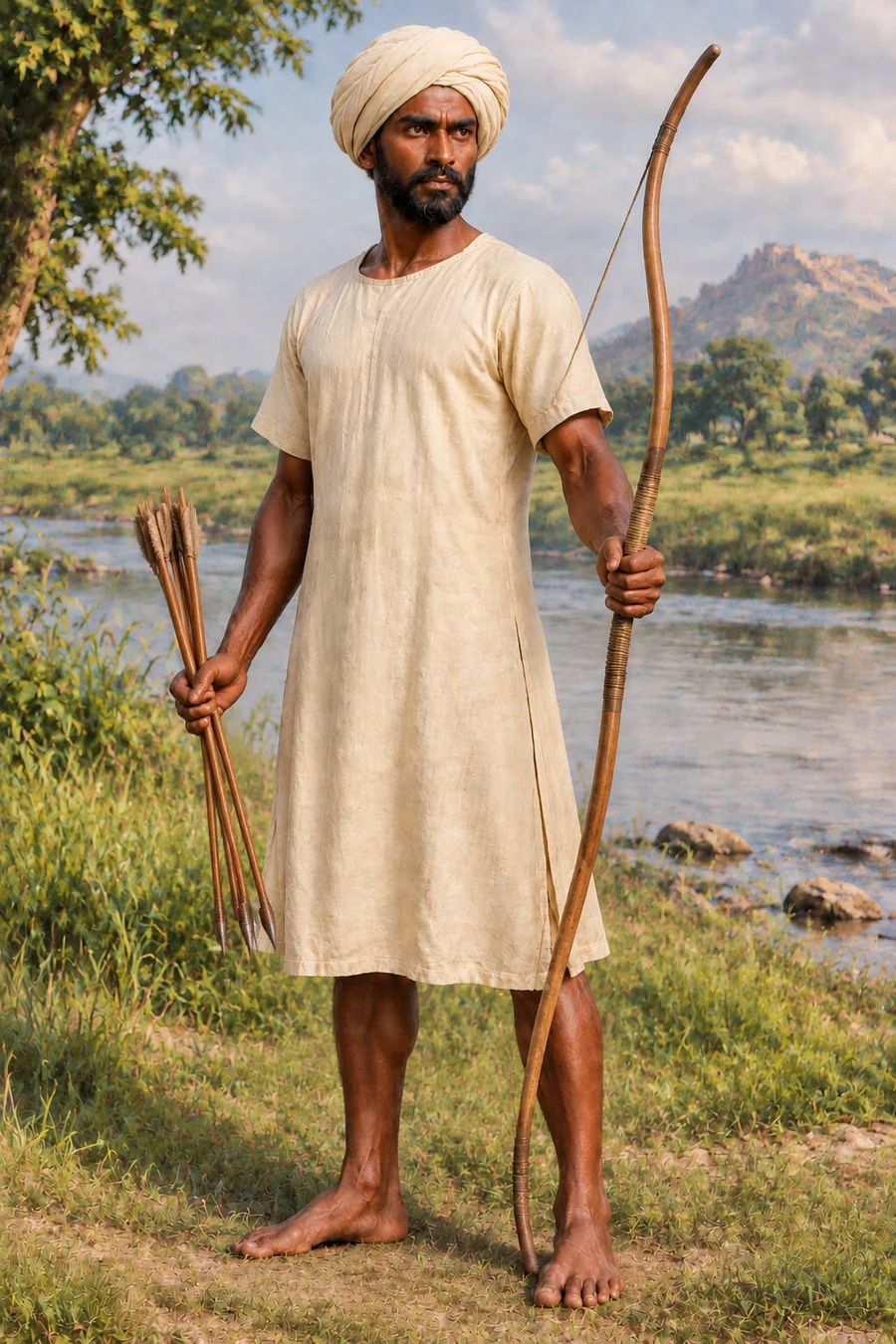
INDIAN WARRIOR (mortal archer from the Indian contingent)
People and soldiers · view of India in Herodotus' Histories
- Haunts and cult places
- Ariana, Rhodes, Taxila
- In the sources
- 274 ancient passages
His people inhabited a territory described as rhomboidal in shape, extending from the mountains down into a plain that resembled Egypt in its expanse.1,2,3 In the south, the inhabitants possessed skin coloring similar to Ethiopians, though their facial features differed, and the humid air kept their hair straight.4 In the north, the people physically resembled the Egyptians, marking a clear distinction between the regions of their country.4
The land itself was immense, considered by some to be one-third of the inhabited world, with its eastern border marked by desolate sand.3,5,6,7 To the west, the Indus River separated India from Ariana, which was under Persian control at the time.8,9,10 The Taurus mountain chain ran in a straight line from the Pillars of Dionysus to India, reaching shores inhabited by Indians and neighboring Scythians.11,12,13,14 Dionysus had campaigned in India, traversing the territory and setting up pillars there, while Heracles was said to have released Prometheus at the Caucasus, the farthest eastern point known to Greeks.11,12,15
The region was rich in natural resources, producing precious stones such as crystal, carbuncles, and pearls, as well as colors of great beauty.16,17 Natives collected aromatics and precious stones from river pebbles or dug them from the earth, and gold and silver mines were located in mountains near the territory of Sopeithes.18,17 The country possessed abundant amounts of gold and bronze, and the people used brass that was cast rather than wrought.19,16 Trees in India grew to such heights that arrows could not fly above their tops, and some were so large that four hundred horsemen could shelter beneath a single one.20,21,22
The Persians hired mercenary troops from this region but did not invade it, while Cyrus only approached the area while marching against the Massagetae.23,24 According to prevailing reports, Cyrus escaped from the region with about seven men.23,24 After becoming powerful, Greeks from Bactriana invaded India, and Apollodorus claimed that Bactrians controlled more of the territory than the Macedonians.25 A bridge was constructed at Peucolaïtis, a city located near the Indus river, to allow an army to cross the water.26,27
Herodotus notes that Indian animals are larger than those in other lands, while Strabo attributes this to the humidity and fertility of the region.28,29 Parrots and other creatures were brought from India, and the region produced a root and leaf that were highly valued.30,31,32 Though Homer was not acquainted with India and likely had no knowledge of the existence of the Indians, the region remained a subject of geographic inquiry.33,34
The codex facts behind this entry
Homer was not acquainted with India and likely had no knowledge of the existence of the Indians. Strabo 1.2.32 +1 India is described as the first and largest country situated towards the east. Strabo 1.2.32 +1
In the myths
Dionysus campaigned in India, traversed the territory, and set up pillars there. Apollodorus 3.5.2 +2 These people are sent to collect gold from their region. Herodotus 3.102.1 +1