SINON (Trojan spy)
Figure of myth · son of Aesimus in Greek mythology
- Parents
- Sisyphus, Aesimus
- In the sources
- 19 ancient passages
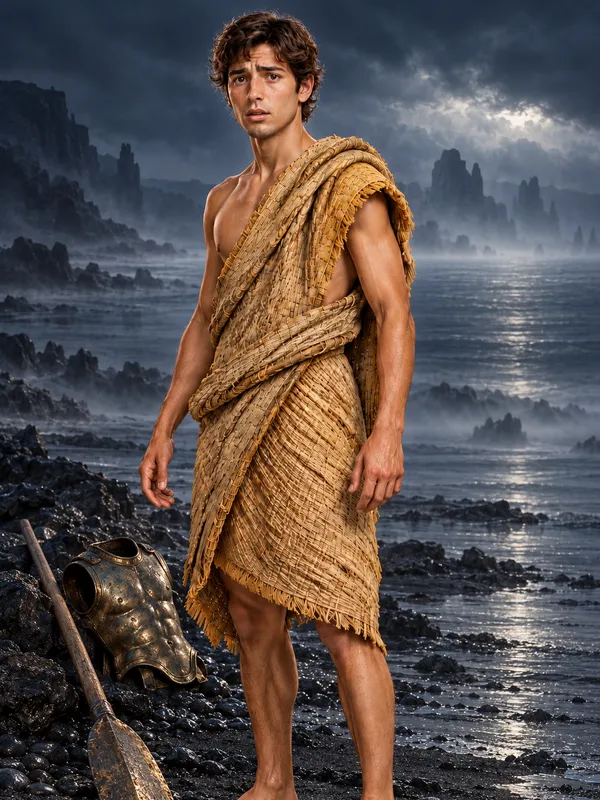
Sinon, a Greek from Argos and son of Aesimus, was a man of great fame who answered when others were afraid.1,2,3 His father was a grey-haired man, and Sinon described himself as a fellow voyager of the Argives.2,4 Though he possessed a resolved soul and was loyal of heart, he was also known as a deceitful hero who maintained honor and truth despite cruelty.5,3,6,1 He appeared with streaming blood over his shoulders from wounds he had purposely made, his limbs voluntarily scarred with stripes.6
Sinon claimed that the Greeks built the horse to appease Athena's anger, a plan advised by Calchas.7 He stated that the Greeks left him behind because they feared Zeus's daughter, and that Odysseus selected him to be sacrificed to the sea gods.7 Sinon said he fled before the sacrifice was completed and hid in the horse.7,6 He approached the Trojans as a suppliant, appealing to Priam for protection while concealing a hidden snare intended to bring sorrow to the city.4,6 The king ordered Sinon to put on a cloak and a tunic, and Sinon advised the Trojans to move the horse to the acropolis as an offering to Athena.2
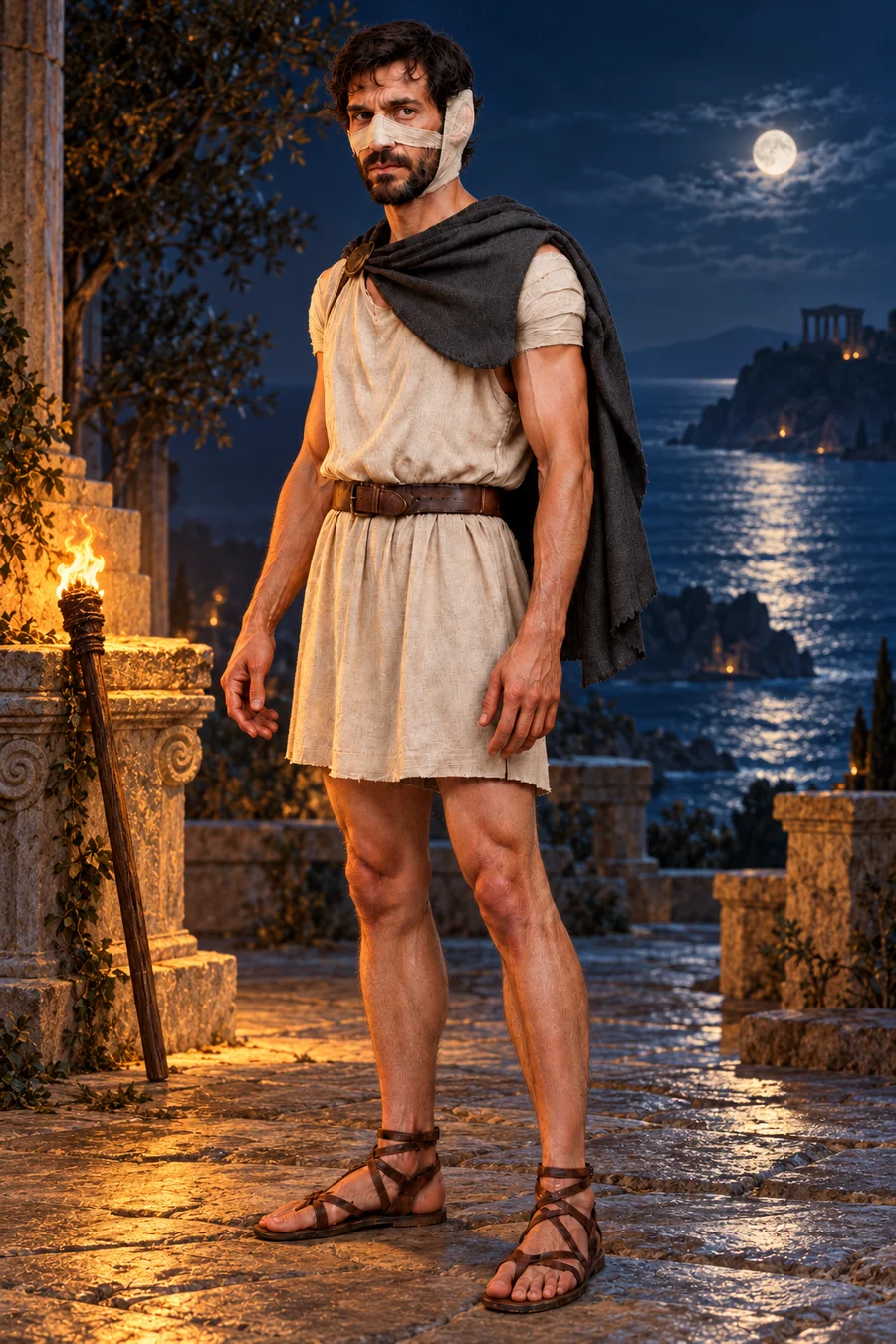
The Trojans captured Sinon on the shore near the wooden horse and questioned him about the Greek ships and the horse.7 They tortured him for a long time to force him to speak the truth, cutting off his ears and nose during their interrogation.7 Hera breathed strong endurance into Sinon to help him withstand the pain, and he refused to reveal the true location of the Greeks.7,5 Sinon promised to perform the requested work even if tortured or burned alive, showing a fixed heart that refused to escape.3 He was destined to complete a significant task for the Achaean chiefs, and he spoke in the midst of the group.3
Sinon secretly displayed a signal light to the Greeks as previously arranged, holding up a bright torch to guide the Argive soldiers.8,9 He raised a fire signal to alert the Achaeans, and lit a beacon on Achilles' grave to guide the approaching Greeks.10,11 The Greek fleet departed from Tenedos after seeing his signal, and Sinon worried the Trojans might notice the light and expose the scheme.9 He ensured his voice was only heard by the Achaean chiefs and not the Trojans, approaching the wooden horse to call out softly to the Greek leaders.12 Sinon released the Greek warriors trapped inside the wooden horse, allowing them to exit and attack the sleeping city.13 He was protected by Heaven during the release of the Greeks, and he displayed his message to the Argives next to the tomb of Achilles.13,14
Sinon participated in carrying off Laomedon's corpse alongside Anchialus, and he was celebrated for his role in the ambush involving the wooden horse.15,5 The Argives sang praises and gave him endless honors for his actions, calling him far-famed.3,5 Sinon felt glad-hearted joy for the Argives' victory and did not sorrow for his own misfortune.5 He confessed the unvarnished truth and did not hide his birth, stating that Argos was his native city.1,2 Though Odysseus and Atreus' sons paid a reward for his execution, Sinon vowed to avenge Palamedes if he returned to Greece.1
The codex facts behind this entry
Sinon is a Greek from Argos, son of Aesimus, who used a clever scheme to deceive the Trojans. Aeneid 2.77 +1
In the myths
Sinon endured severe torment and torture from his enemies but refused to reveal the true location of the Greeks. Quintus 12 ¶21 +1 Sinon said he fled before the sacrifice was completed and hid in the horse. Quintus 12 ¶21 +1
Worship
The Argives sang praises and gave him endless honors for his actions. Quintus 12 ¶11 +1