CALCHAS (mythical seer)
Figure of myth · mythical seer
- Parents
- Thestor
- In the sources
- 67 ancient passages
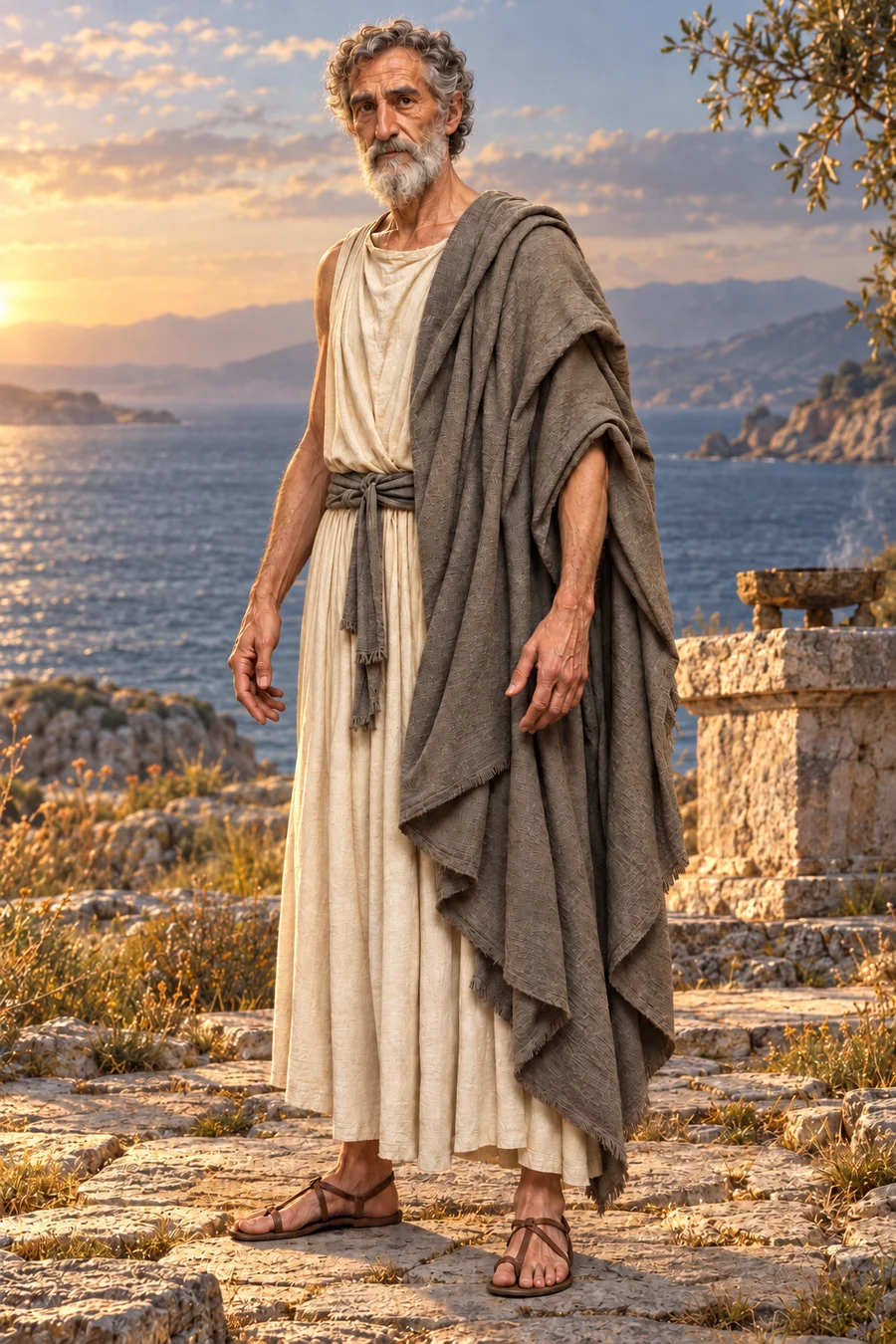
Calchas, son of Thestor, stood as the wisest of the augurs, a seer whose words dictated the actions of the Greek army.1,2,3,4 Inspired by Phoebus Apollo, who guided his heart with divine commands, he possessed the unique ability to read the fates and interpret the will of Heaven through the flights of birds and the positions of the stars.1,5,6,7 His knowledge spanned past, present, and future events, allowing him to deliver oracles and prophesies to the assembled Achaean army regarding the outcome of the war against Troy.1,8,9 Though he spoke with all sincerity and goodwill, he was often scowled at by Agamemnon, who addressed him as a seer of evil things.1,10
Agamemnon visited Calchas to convince him to join the expedition, and the seer claimed Apollo punished the Greeks because Agamemnon refused a ransom for Chryses’ daughter.11,10 He was one of only four people who knew the true reason for the maiden’s summons, and he crowned her head with the sword.4,12 Calchas then declared that the Greek fleet would sail after the sacrifice occurred, urging the sailors to leave the bays of Aulis and cross the Aegean.13,14
During the siege, Calchas gathered the Greek leaders together to discuss their next military strategy and interpreted Zeus’s thunder and birds flying right as signs to stop besieging Troy.5,15 He predicted the capture of the city in the tenth year and stated that Troy could not be conquered without Achilles.16,17,18 As the war wore on, Calchas counseled the construction of a wooden horse and advised the warriors to return to their ships, praising Odysseus for devising a cunning plan to secure victory.19,20,15 He also warned that divine Athena’s anger would lash at Ajax for a specific day, a prophecy whose accuracy proved his skill if Ajax survived the day as predicted.21
After the fall of Troy, Calchas returned and traveled to Clarus alongside the seer Amphilochus, the son of Amphiaraus.22,23 There, he competed with Mopsus in a divination contest that also involved a dispute over sovereignty, where some accounts say Calchas asked about the sow while Mopsus asked about figs.24,25,22 Calchas answered Mopsus’s question about the size of a sow’s litter with a single word.26 He died of vexation after encountering this superior seer, collapsing when his luck deserts him and dying of a broken heart after his divination was proven wrong.27,26,28
In his final days, Calchas traveled overland to Colophon with Leontes and Polypoetes, where he helped bury Teiresias, who had died in that place.29 He is also said to have founded the city of Selge at an early period and led a group of displaced Trojans who settled in Pamphylia.30,31 Though mild toward captives and a faithful seer to the Greeks, he shuddered at his own dread words and the backward-shrinking fires.6 The Messenger believed his prophecies contained wisdom, and his prophetic abilities were proven to be accurate and not in vain, leaving a legacy of a man who could clearly read the truths proclaimed by sacrificial viscera.32,33,7
The codex facts behind this entry
Calchas is identified as a seer consulted by the Greek army whose words dictate the army's actions. Euripides, Iphigenia in Aulis 1255-1275 +4 Calchas is identified as a priest, seer, diviner of omens, and prophet. Euripides, Iphigenia in Aulis 1532-1577 +3 Calchas is identified as the son of Thestor. Iliad 1 ¶10 +1
Powers
Calchas possessed the ability to deliver oracles and prophesies to the Greek warriors and the assembled Achaean army regarding the outcome of the war against Troy. Euripides, Iphigenia in Aulis 506-542 +2 Calchas interpreted the will of Heaven through the flights of birds and the positions of the stars. Quintus 12 ¶1 +2 Phoebus Apollo inspired Calchas's prophetic abilities and guided his heart with divine commands. Iliad 1 ¶10 +1
In the myths
Calchas declared that Agamemnon must sacrifice Iphigenia to Artemis to release his ships. Apollodorus, Epitome 3.21 +4 Calchas competed with Mopsus in a divination contest that also involved a dispute over sovereignty. Apollodorus, Epitome 6.3 +2 Calchas prophesied that the Greeks must sacrifice Iphigeneia to appease the deity. Pausanias 9.19.6 +1 Calchas returned from Troy and traveled to Clarus alongside the seer Amphilochus, the son of Amphiaraus. Strabo 14.1.27 +1 Calchas stated that Agamemnon had previously vowed to sacrifice the most beautiful creature born that year to Artemis. Euripides, Iphigenia Among the Tauri 1-41 +1 Calchas predicted the capture of the city in the tenth year. Apollodorus, Epitome 3.15 +1 Calchas counseled the construction of a wooden horse. Aeneid 2.145 +1 Some accounts say Calchas asked about the sow while Mopsus asked about figs. Apollodorus, Epitome 6.3 +1
Fate
Calchas died of vexation after encountering a superior seer named Mopsus near Clarus. Apollodorus, Epitome 6.2 +3