CAPANEUS (son of Hipponous in Greek mythology)
Figure of myth · son of Hipponous in Greek mythology
- Parents
- Hipponous, Alector, Astynome
- Consorts
- Evadne
- Children
- Sthenelus son of Capaneus
- In the sources
- 68 ancient passages
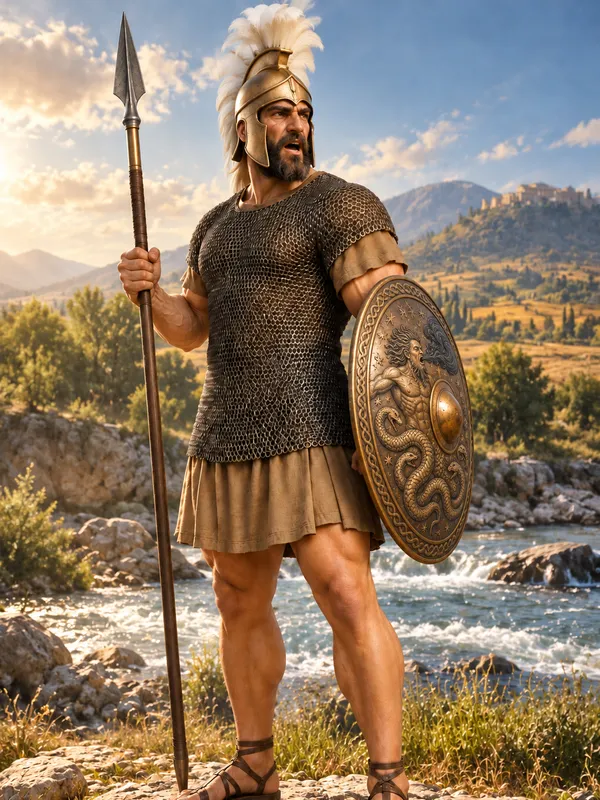
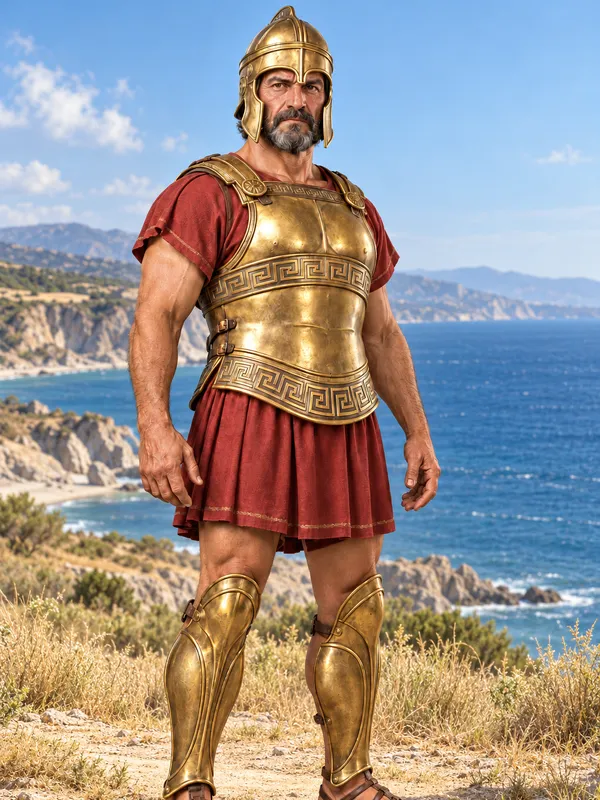
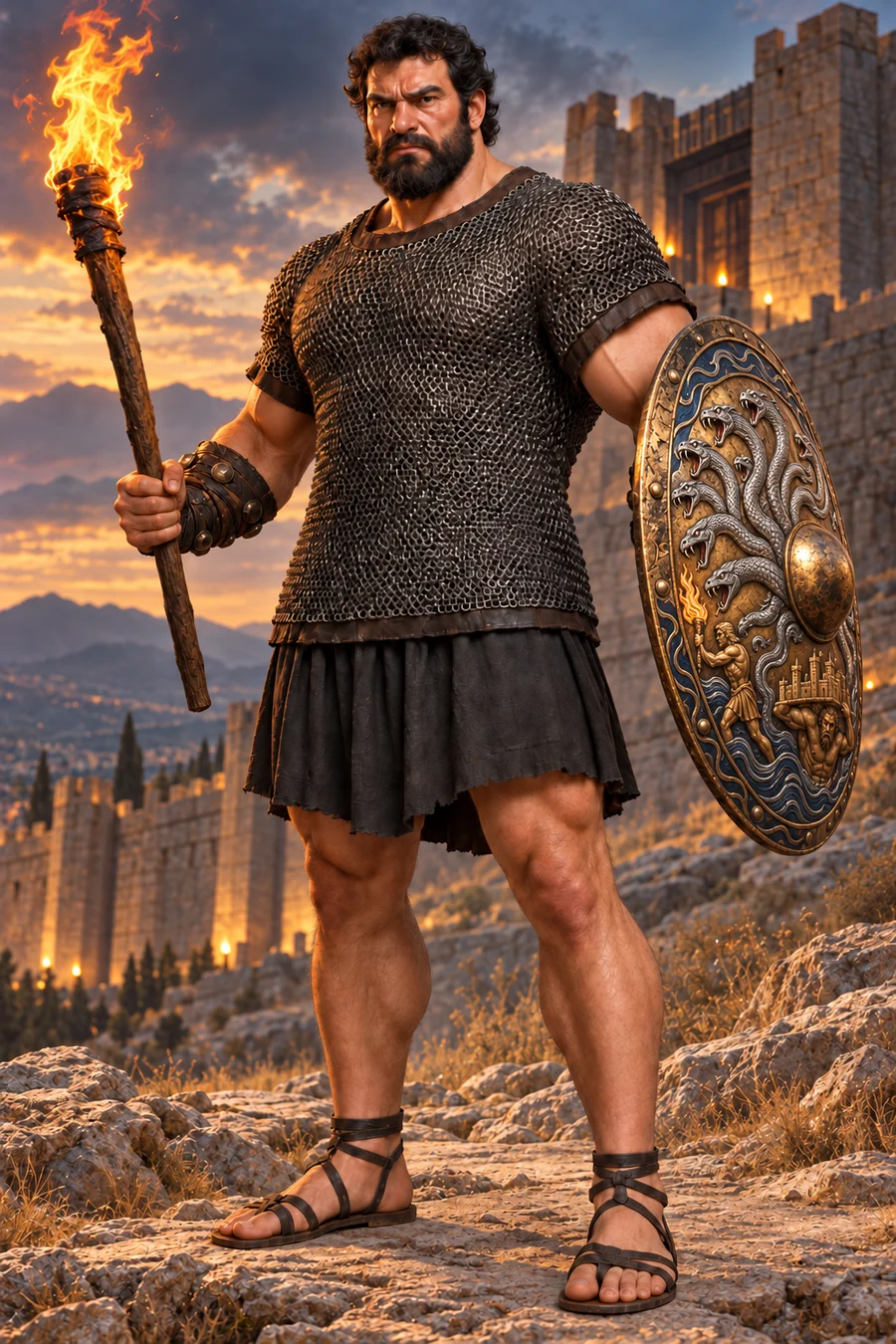
Broad in every limb and terrible in the size of his bone, he was compared to the giant Tityos in his vast bulk and awful aspect.1,2 Mail-clad and wielding a shield made of four hides from untamed steers stiffened with massy bronze, he possessed a fiery spirit and a great-hearted nature.3,4,5,6 Though he possessed abundant riches, he did not boast about his prosperity, instead displaying a contented spirit and keeping every promise made to his household and fellow-citizens.7,8
Joining Adrastus in mustering an army to wage war on Thebes, Capaneus served as one of the captains who fought against the city alongside Polyneices.9,10 His prowess surpassed that of his ancestors, and he was described as unable to be overcome by anyone except Zeus.11,12 As he prepared for the fight, his neck swelled with anger, and he bound raw ox-hide covered in lead lumps onto his arms.1 He measured the city walls to plan how to climb the towers, his back stained with blood from the wound of the man he carried.13,14
Capaneus carried a long scaling ladder while boasting he would destroy the city regardless of divine will, claiming that even Zeus cannot stop him from conquering it.3,15 He gave his tongue full exercise in wicked glee, sending a loud and swollen boast to Zeus in heaven, comparing the god’s lightning and thunderbolts to the heat of midday.3 His shield bore golden letters declaring he would burn the city, and displayed an unarmored man carrying fire, or in some accounts, an earth-born giant carrying a city on his shoulders.16,3
Capaneus raised the ladder against the gates and climbed it under a hail of stones while sheltering behind his shield.15,17,18 While attacking the fortifications of Thebes, he was struck by a scorching thunderbolt thrown by Zeus.18,19,17,20,21 His body was charred on the ladder and flung into the air with his head pointing toward Olympus, his limbs spinning like Ixion's wheel before he fell.15,17 A scowl remained on his face as he lay dead, his body compared to a giant lying outstretched in a river, still holding a piece of a broken tower.22
Theseus buried Capaneus separately as a consecrated corpse and provided votive offerings for him outside the shrine.23,24 His wife Evadne, daughter of Iphis, held him while they were both on the funeral pyre, throwing herself onto the flames to be burned to death alongside him.25,24,26 The Argives watched Evadne and Capaneus burning together on the pyre, a final testament to his impetuous spirit and the tragic end of the mightiest of the Argive host.14,27,28
The codex facts behind this entry
Capaneus is identified as the son of Hipponous. Apollodorus 3.6.3 +1
Appearance
Capaneus was a giant man, greater than the previous defender, and was mail-clad. Aeschylus, Seven Against Thebes 422-451 +1
In the myths
Capaneus carried a long scaling ladder while boasting he would destroy the city regardless of divine will, claiming that even Zeus cannot stop him from conquering it. Aeschylus, Seven Against Thebes 422-451 +2 Capaneus was reduced to ashes by a scorching thunderbolt thrown by Zeus while he was on a ladder. Euripides, The Suppliants 494-548 +2 Theseus buried Capaneus separately as a consecrated corpse and provided votive offerings for him outside the shrine. Euripides, The Suppliants 925-954 +1 Capaneus claims he will set Thebes on fire, destroy it completely, and utters dreadful insults against the city. Euripides, The Phoenician Maidens 145-192 +1 He raised a ladder against the gates of the city he intended to sack and climbed it under a hail of stones while sheltering behind his shield. Euripides, The Phoenician Maidens 1153-1201 +1
Fate
Capaneus was killed by a thunderbolt from Zeus while he was scaling the city wall of Thebes using a ladder. Apollodorus 3.6.7 +6 Capaneus was cremated on a funeral pyre, and his wife Evadne threw herself onto the pyre and was burned to death alongside him. Apollodorus 3.7.1 +2 His body was charred on the ladder, flung into the air with his head pointing toward Olympus, and his limbs spun like Ixion's wheel before he fell. Euripides, The Phoenician Maidens 1153-1201 +1