MANTO (mythical daughter of Teiresias)
Figure of myth · mythical daughter of Teiresias
- Parents
- Tiresias
- Siblings
- Daphne
- Consorts
- Apollo, Alcmaeon, Rhacius
- Children
- Mopsus, Amphilochus, Ocnus, Tisiphone
- In the sources
- 25 ancient passages
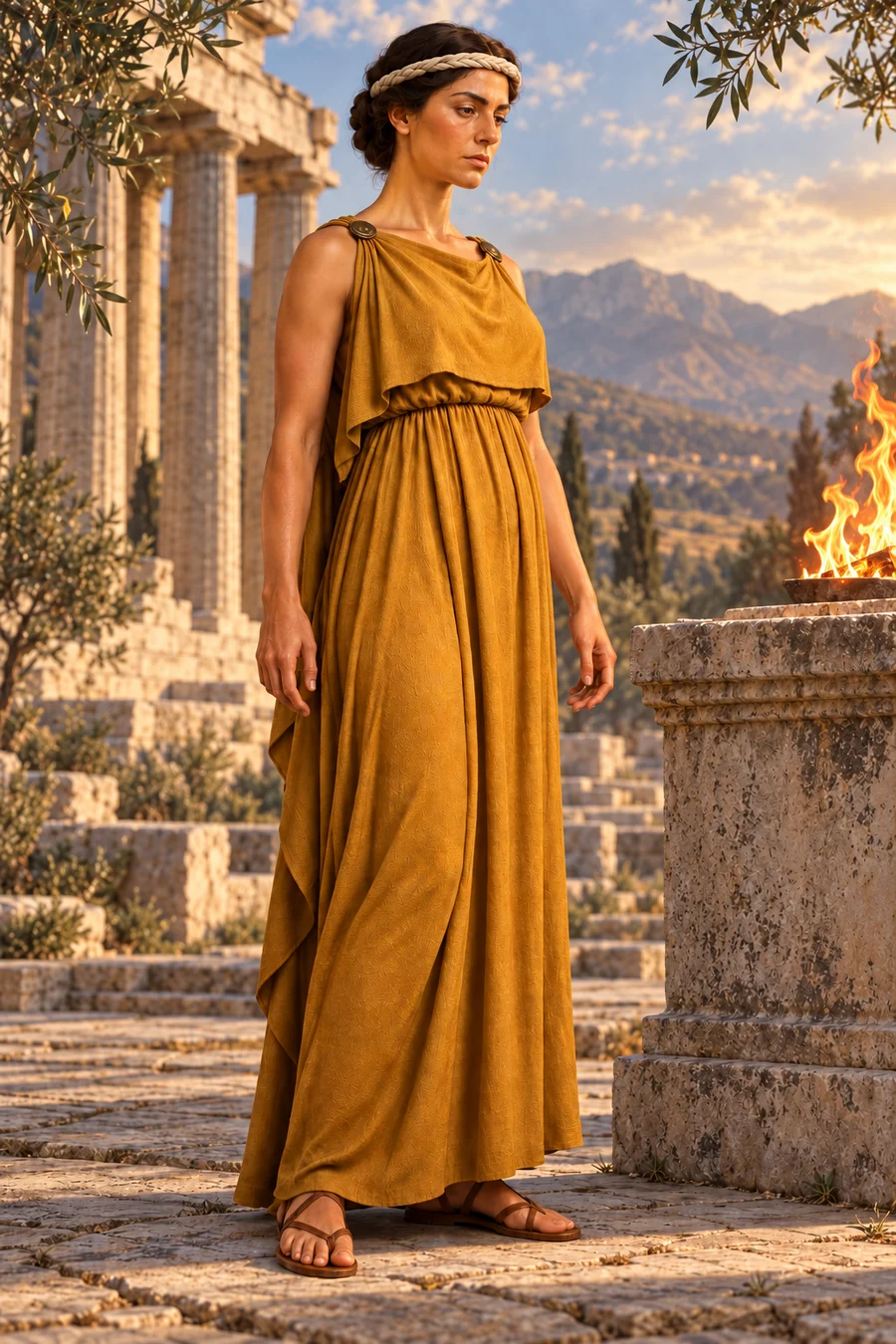
In one guise, she wore a robe reaching her feet and bound wool on her brow instead of laurel, laying aside her sword for a prophet's wand.1 Despite this disguise, her grave expression and superhuman strides revealed her divine nature, for she was a goddess who descended from the heavens to walk upon the earth.1
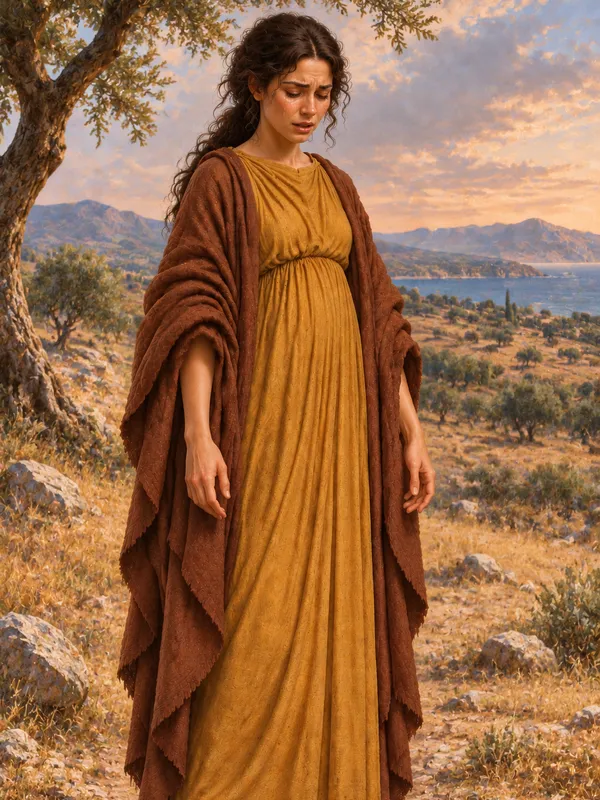
In Thebes, Manto guided her blind father Tiresias by the hand to the scene of events, obeying the commands of her holy sire.2,3,4 She performed intricate rituals, catching the blood of sacrificed animals in bowls and making libations, while moving three times around the pyres as commanded.4 Manto offered half-dead tissues and living entrails to the fire and set fire to the dark foliage on the altars, heaping frankincense onto the sacred fire.4,3 She reported that the sacrificial victim was perfectly prepared, describing the flame leaping into the air and then falling again without a single consistent appearance.3 Manto also described the bull's head being lifted toward the eastern sky, the heifer falling to the ground after striking the steel, and the bull wandering in pain after receiving two deadly blows.5 She noted that blood flowed from the bull's eyes and mouth, the entrails throbbed strongly instead of quaking gently, and the veins appeared with a livid hue.5 Manto explained that the sickly heart was shriveled and hidden deep in the breast, while the wasting liver oozed a stream of black corruption.5
Manto proclaimed a divine command in the streets of Thebes, urging the women of Ismenus to offer frankincense to Leto and wreathe their hair with laurel, claiming that Leto commanded these actions through her mouth.6 She taught the daughters of Thebes to worship the Delian gods, possessing the ability to foreknow the future that defined her prophetic role.6,7 When Thebes fell to Thersander and the Argives, Manto was captured as a prisoner and sent to Apollo at Delphi as part of their spoils.8,9 Manto was dedicated to Apollo at Delphi.8 Lampus attempted to defile the bed of the priestess Manto, but Phoebus killed him with his own hand using holy arrows.10
Manto married Rhacius, son of Lebes, after the oracle commanded her to marry whoever she met, and he allowed her and her people to settle in his land.11,12,13 Manto and Rhacius had a son named Mopsus, who was a son of Apollo, making Manto the mother of the seer Mopsus.14,15,11 Manto also bore children to Alcmaeon during his period of madness, including a son named Amphilochus and a daughter named Tisiphone.16 She was also the mother of Ocnus, who led a war-host, and her children included Mopsus, Amphilochus, Ocnus, and Tisiphone.17 Manto sailed to the Colophonian land in Ionia on Apollo's command, continuing her role as a prophetess.12
In a dramatic encounter, the warrior identified Manto as a deity who had called him, and Manto touched the warrior's hand to calm his mind and inspire him.18 Manto left her presence within the warrior's heart after speaking to him, and before the warrior's eyes, she rose from the earth into the clouds.18 A stone located before the temple entrance is still referred to as Manto's chair, where people say she used to sit.19
The codex facts behind this entry
Manto is identified as the daughter of Teiresias. Apollodorus 3.7.4 +6 Manto is a prophetess and priestess. Aeneid 10.185 +1
In the myths
The Argives sent Manto to Apollo at Delphi as part of their spoils. Apollodorus 3.7.4 +3 Manto met Rhacius, son of Lebes, in accordance with an oracle of Apollo, and he allowed her and her people to settle in his land. Pausanias 7.3.2 +1 Manto guided her blind father Tiresias by the hand to the scene. Seneca, Oedipus act 2 ¶4 +1