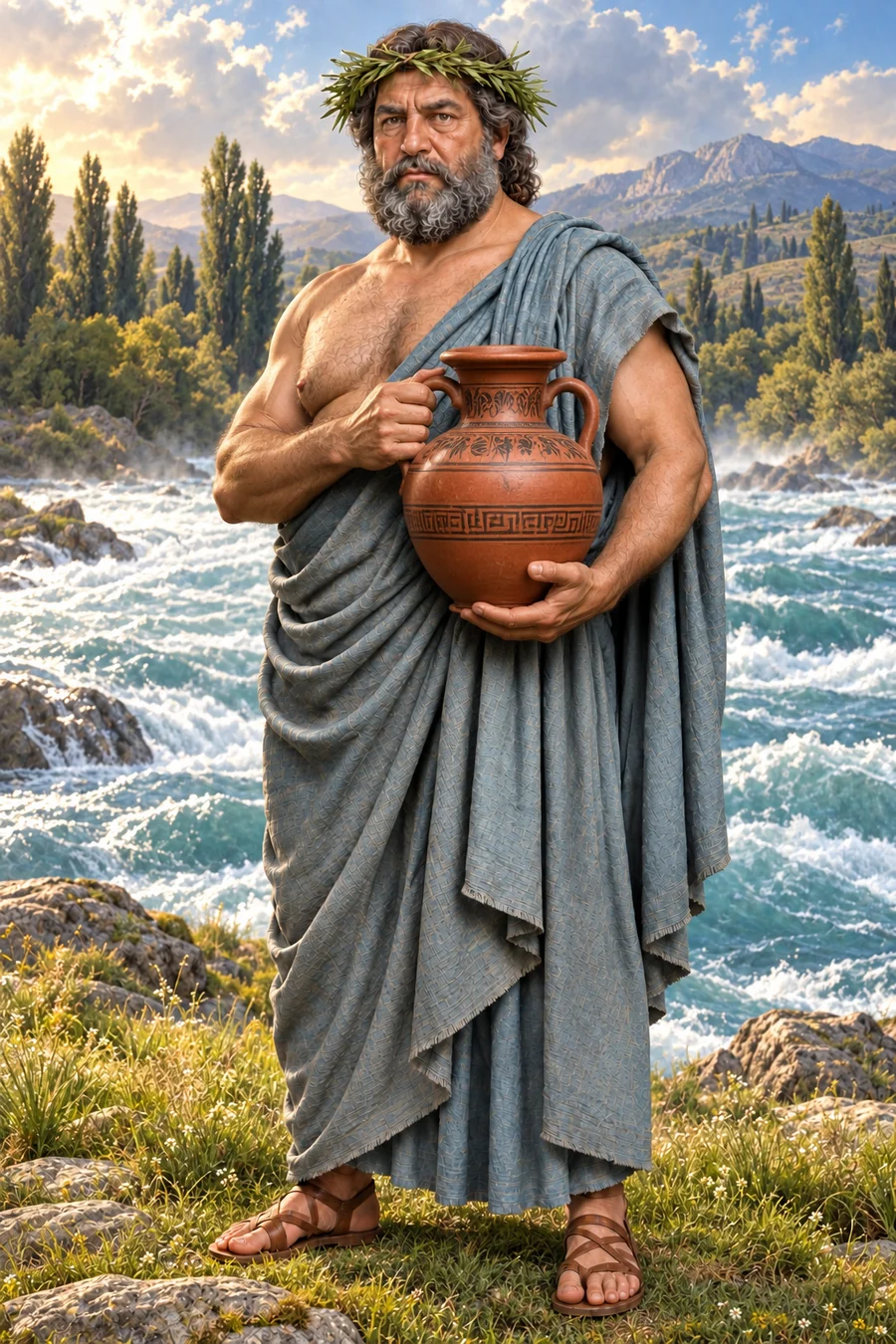
ISMENUS (river god of ancient Greece)
Divine power · river god of ancient Greece
- Parents
- Oceanus, Asopus, Metope, Tethys
- Children
- Dirce, Crocale, Ismenis, Strophia
- Haunts and cult places
- Thebes, Boeotia
- In the sources
- 34 ancient passages
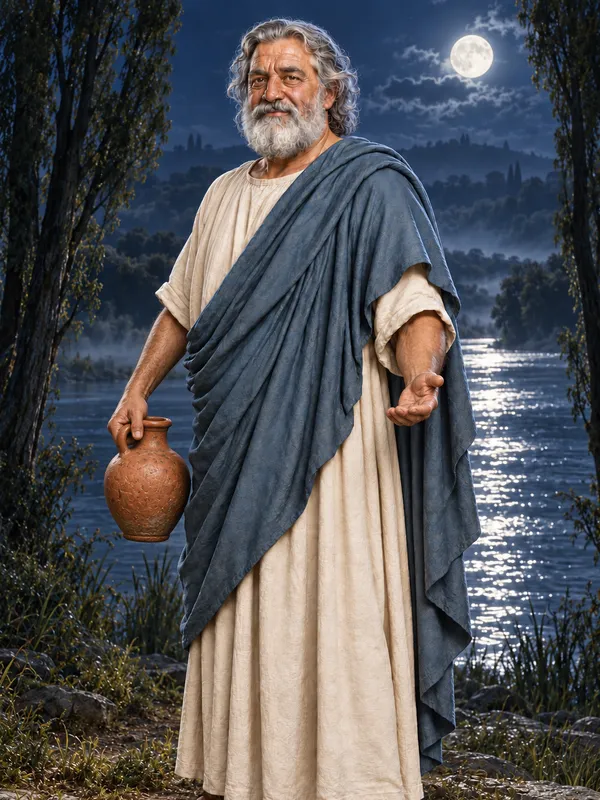
He possessed a moss-grown neck, ice-weighted hair, and a dark blue beard, reclining in a secret cavern where winds and clouds drank.1 Among his siblings were Pelagon and twenty sisters, one of whom was Aegina, while his children included the nymph Crocale.2,3
The river flowed through the city of Thebes, which was associated with paved streets and seven gates, and lay near the river Dirce and the Proetid gates.4,5,6,7 The river was rapid in its flow, and its banks were previously accustomed to being dry.8,9 However, the intense heat caused by Phaethon's chariot affected the river, and it later appeared discolored and fouled by blood.8,10
Ismenus was roused to participate in the battle, his waves spellbound by the bright sheen of the warriors' armour.11,12 The bank gave way with a great crash as warriors leapt into the water, hiding the opposite shores in dust.12 The river carried away weapons flung by terrified warriors and was filled with spoils taken from the dead warrior Hippomedon.12,13 During the conflict, the river flowed with large numbers of dead bodies and a roaring sound.9,10
In a secret cavern that nourished the rainbringing bow and Tyrian fields, Ismenus witnessed the shameless horns on the false visage of the god.1 He heard his daughter's groans and lamentations from afar despite the roar of his waters, and he smites his face and horns entwined with green sedge in distress.1 Ismenus had nurtured the foremost son of the ruler of the gods, quenching the burning infant Bromius with his waters when the child crawled by the river.1 He claimed to have been an accomplice-friend to the ruler of the gods, and a nymph met him, identifying herself as his daughter.1
The river god engaged in combat with a hero, battering him with its seething flood and surging over his shield.14 The river plucks at trees and whirls along boughs and stones from its bed, growing furious because the hero did not retreat or weaken.14 It assailed the hero with a visage of rain and floating sand, while the hero called the river a slave of an unwarlike god.14 The hero claimed the river knew blood only in women's revels and Bacchic festivals, and Ismenus did not provide the luxurious bath for the bride's wedding.14,15 A seer forbade Tydeus from crossing the river due to unfavorable omens, and Eteocles vowed to sacrifice bulls to the waters if the city was saved.6,4
The codex facts behind this entry
Ismenus is identified as a son of the river god Asopus. Apollodorus 3.12.6 He is a river god who reclines in a secret cavern where winds and clouds drink. Statius, Thebaid 9.402-428 ¶1 The river is described as a god engaged in combat with a hero. Statius, Thebaid 9.457-483 ¶1
Appearance
He has a moss-grown neck, ice-weighted hair, and a dark blue beard. Statius, Thebaid 9.402-428 ¶1
In the myths
Ismenus did not provide the luxurious bath for the bride's wedding. Euripides, The Phoenician Maidens 327-354 The river was affected by the intense heat caused by Phaethon's chariot. Ovid Met. 2.1-303 (11) A seer forbade Tydeus from crossing the river due to unfavorable omens. Aeschylus, Seven Against Thebes 369-416 The chorus urges the river god to adorn himself with floral wreaths and participate in dancing within the city. Euripides, Heracles 781-797 The river god fled during the earthquake, leaving his banks exposed to view. Statius, Thebaid 7.721-749 ¶5 The river Ismenos was filled with the spoils taken from the dead warrior Hippomedon. Statius, Thebaid 10.22-48 ¶1 The river flowed with large numbers of dead bodies. Statius, Thebaid 1.18-41 ¶1 The river god was roused to participate in the battle. Statius, Thebaid 9.292-320 ¶2 The river Ismenos is the location where Crenaeus undergoes his final transformation. Statius, Thebaid 9.347-374 ¶2 The river was flowing with a roaring sound. Statius, Thebaid 12.386-413 ¶2
Worship
Eteocles vows to sacrifice bulls to the waters of Ismenus if the city is saved. Aeschylus, Seven Against Thebes 245-287 The hero claims the river knows blood only in women's revels and Bacchic festivals. Statius, Thebaid 9.457-483 ¶1