MYRRHA (daughter of Cinyras)
Figure of myth · daughter of Cinyras in Greek mythology
- Parents
- Cinyras, Metharme
- Siblings
- Adonis, Laogore, Orsedice, Amaracus, Braesia
- Consorts
- Cinyras
- Children
- Adonis
- In the sources
- 7 ancient passages
In some accounts, she was known as Smyrna, the daughter of Thias, king of Assyria, though the codex relations place her firmly in the lineage of Cinyras and Metharme.1 She was often in confusion, her eyes filled with warm tears as she gazed upon her father.2 She lived in a region distant from the land that produced the myrrh tree.3
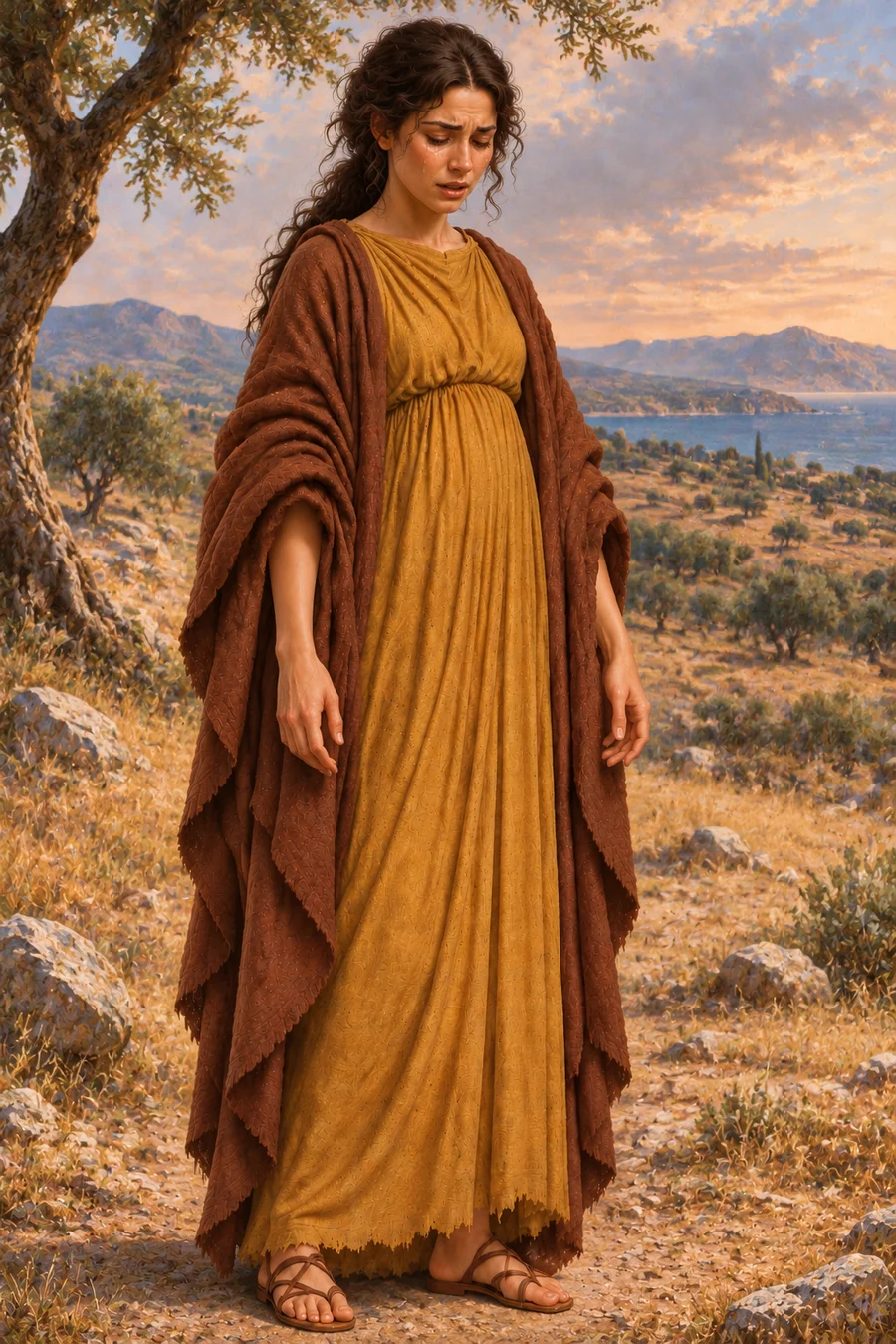
A passion for her father overtook her, leading to an act considered a greater wickedness than hatred, which Eros denied causing with his arrows, attributing it instead to a Stygian firebrand kindled by one of the Sisters.3 Accounts differ on the source of her torment, with some stating the passion arose from the wrath of Aphrodite, while others attribute it to a Stygian firebrand kindled by one of the Sisters.3,1 When nobles from the East sought her hand, excluding her father from the choice, she remained silent when her father asked which suitor she preferred.3,2 Delighted by her father's kisses, she requested a husband who resembled him, though she looked at the ground in shame after he praised her affection.2
Her nurse, believing her suffering from an unlawful passion for a man, promised to help her hide her love.4 With the nurse's help, Smyrna slept with her father for twelve nights without his knowledge, while the nurse falsely told Cinyras that a maiden was the same age as Myrrha.1,5 Myrrha attempted to end her own life using a halter, but was discovered by her nurse while preparing to hang herself.4 She remained silent and looked at the ground when confronted, weeping while held in the arms of her aged nurse.4
When Cinyras discovered their relationship, he drew his sword and pursued her, forcing Myrrha to flee through Arabian and Panchæan fields for nine lunar cycles.6,1 Exhausted, she rested in the Sabæan country.6 Praying to the gods to be transformed to avoid both life and death, she sought an escape from her human form.6 A divinity granted her prayer, causing the earth to close over her legs as her body parts transformed into wood, sap, bark, and branches of a tree.6
The gods turned Smyrna into a tree called smyrna out of compassion, and the branching tree delivered her from the pains of childbirth.1,7 Even after losing her human shape and senses, she continued to weep, with warm drops distilling from the tree to become myrrh, retaining her name.6 Ten months later, Adonis was born from the tree, making him her son and, in some codex relations, her sibling as well.1