SCYLLA (sea monster with six heads)
Monster · nymph transformed into a sea monster by Circe in Greek mythology
- Known as
- Ausonian Scylla the deadly
- Parents
- Typhon, Phorcys, Poseidon, Crataeis, Hecate, Echidna, Lamia, Styx
- Foes
- Circe
- Haunts and cult places
- Sicily
- In the sources
- 43 ancient passages
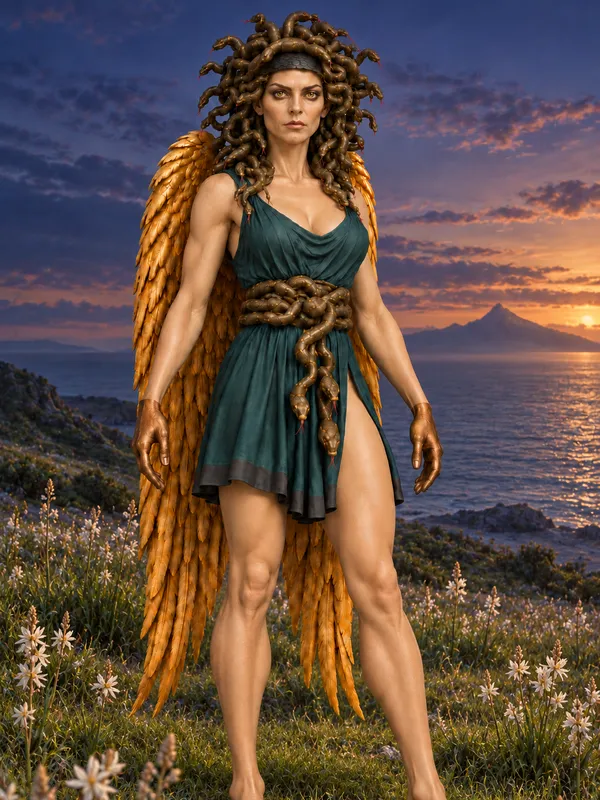
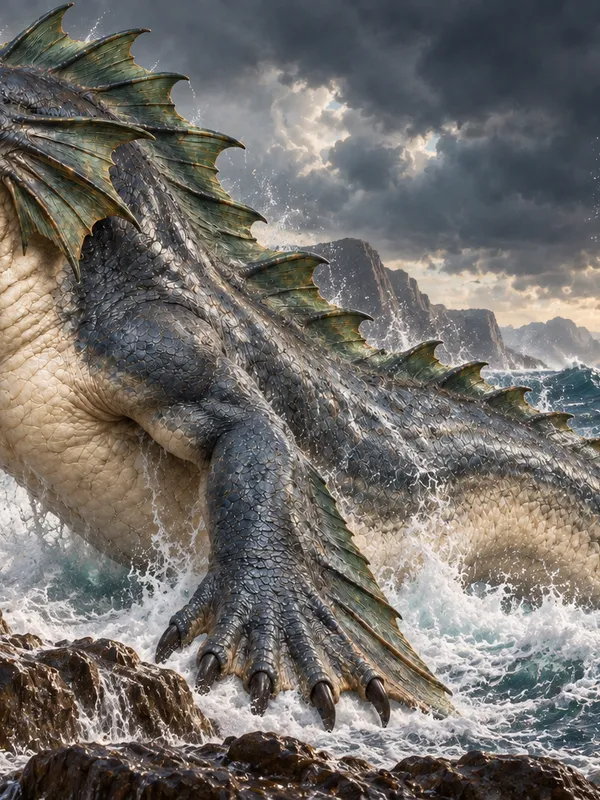
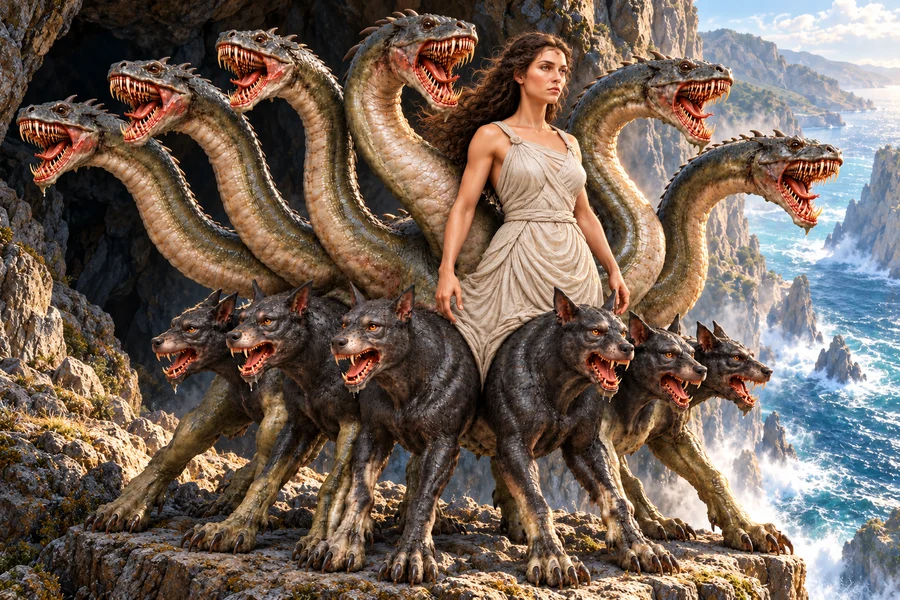
She possessed the face and breast of a fair-breasted virgin down to the womb, appearing as a maiden in her upper form.1,2,3,4 From her flanks sprang six necks of prodigious length, each ending in a head with three rows of close-set teeth.5,6,4 Her lower body was that of a huge fish with dolphin flukes and a wolf paunch, supported by twelve mis-shapen feet.3,6 Furious dogs surrounded her swarthy stomach, completing her hideous appearance.1,7
Accounts of her lineage vary, with some naming Hecate as her mother and others pointing to the river Crataiis or the sea god Phorcus.8,9,4,5,10 Before her transformation, Scylla repulsed many suitors who had courted her, including the sea god Glaucus, whose romantic advances and promises she rejected.11,12,1 Provoked by this rejection, the god sought aid from a goddess who prepared a potion using bruised herbs and Hecate's incantations.13,14 The goddess traveled to Rhegium opposite Zancle and polluted a bay shaped like a bent bow with monster-breeding drugs before Scylla arrived.14,15 When Scylla entered the water up to her stomach, the transformation began, turning her into the hybrid creature she remained.15
Her lair was a high, dark cavern in the middle of a sheer rock, where she sat deep in the shade, thrusting out her heads to peer around the crags.16,6,17 She hunted dolphins, dogfish, and other large sea creatures, pulling ships onto the rocks from her eyeless cave.6,3 Scylla extended all her heads simultaneously to grab sailors, snapping them up and carrying them high above the water.6,18 At the mouth of her den, she devoured her victims while they screamed, having crushed them with jaws capable of killing instantly.18,19,8,6 In the Odyssey, Odysseus lost six of his best men to her grasp as the ship passed the dangerous rock.18,19,20
Navigators were advised to hug her side of the strait, for no person had ever successfully passed by without suffering harm.21,22 During the passage of the Argonauts, Scylla was expected to cause significant harm to the crew.23 Yet Thetis and the Nereids steered the ship through Scylla at Hera's summons.24
Scylla was a dreadful monster who terrified everyone, even the gods, with her savage and cruel disposition.5,6 Her voice yelped like that of a young hound, a sound that echoed from her cave depths in response to stormy waves.6,25 Though she feared the annoying mouths of the dogs around her, believing they were not part of her body, she remained a formidable threat to all who sailed near.15 In the underworld, she appeared as a double-shaped creature among the shadows, a lingering terror in the realm of the dead.26
The codex facts behind this entry
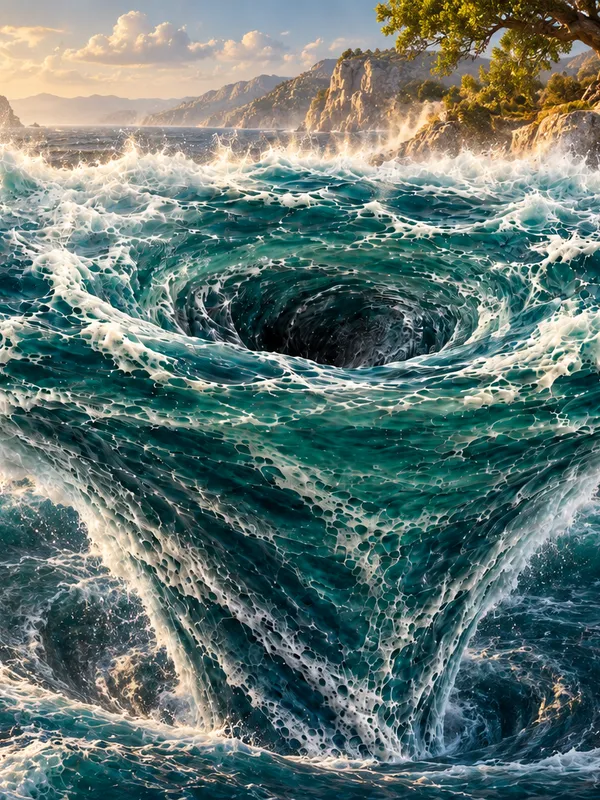
Scylla is a non-mortal, deadly monster with a hideous lair located on a rock opposite the whirlpool of Charybdis. Argonautica 4 ¶50 +3 Scylla is described as a daughter of Crataeis and either Trienus or Phorcus. Apollodorus, Epitome 7.20 Scylla is described as a double-shaped creature among the shadows in the underworld. Aeneid 6.282
Appearance
Scylla is described as a monstrous and fabulous creature with the face of a maiden. Ovid Met. 13.719-897 +1 She possesses six heads, each with three rows of closely set teeth, and six extremely long necks. Odyssey 12 ¶10 +1 Scylla has a swarthy stomach surrounded by furious dogs. Ovid Met. 13.719-897 +1 Scylla has the face and breast of a woman, appearing as a fair-breasted virgin down to the womb. Aeneid 3.374 part 2 +1 Her yelping voice sounds like that of a young hound. Odyssey 12 ¶7 Scylla is compared to a fisherman spearing fish on a jutting rock. Odyssey 12 ¶20
Powers
Scylla possesses horrible jaws with sharp teeth capable of crushing any person to death instantly. Argonautica 4 ¶50 +1 No person had ever successfully passed by Scylla without suffering harm. Odyssey 23 ¶27 Scylla is reported to bark in the sea. Ovid Met. 7.1-158 part 2 She is characterized as savage, extreme, rude, cruel, and invincible. Odyssey 12 ¶10
In the myths
Scylla seized and consumed several of the crew members, including six of the narrator's best men, carrying them high above the water and eating them at her den's mouth while they screamed. Odyssey 12 ¶20 +3 Scylla rejected the romantic advances and promises made by Glaucus. Athenaeus 7.48 +1 Thetis and the Nereids steered the ship through Scylla at Hera's summons. Apollodorus 1.9.25 The god felt anger and was provoked by Scylla's rejection. Ovid Met. 13.898-968 (5) The goddess prepares a potion using bruised herbs and Hecate's incantations. Ovid Met. 14.1-74 (3) The goddess travels to Rhegium opposite Zancle to confront Scylla. Ovid Met. 14.1-74 (3) Roaring at her mother can stop her from making a second raid. Odyssey 12 ¶10 She hunts and captures dolphins, dogfish, and other large sea creatures. Odyssey 12 ¶7 She used to tell the ocean Nymphs about the eluded loves of youths. Ovid Met. 13.719-897 The goddess polluted the bay with monster-breeding drugs before Scylla arrived. Ovid Met. 14.1-74 (4)
Fate
The goddess is enraged because Scylla is preferred to her in love. Ovid Met. 14.1-74 (3) Any ship passing her location inevitably loses some crew members to her attack. Odyssey 12 ¶7 During her transformation, her loins grew hideous with barking monsters, her prominent stomach remained attached to the new forms, and her thighs, legs, and feet were replaced by Cerberean jaws. Ovid Met. 14.1-74 (4) Savage monsters with cut-off backs remained attached beneath her groin. Ovid Met. 14.1-74 (4)