POLYPHEMUS (the Cyclops of the cave)
Monster · giant son of Poseidon and Thoosa in Greek mythology
- Parents
- Poseidon, Thoosa
- Consorts
- Galatea
- Children
- Illyrius, Keltos, Helpe, Galas
- Foes
- Odysseus
- Symbols and gear
- Silenus, cleavers, club
- In the sources
- 28 ancient passages
Polyphemus is a savage, unsocial, and godless giant who lives in a rocky cave by the sea. Euripides, The Cyclops 316-355 +2 Polyphemus is identified as the son of Eilatus in this account. Argonautica 1 ¶126 He is identified as a one-eyed child of the god of the ocean. Euripides, The Cyclops 1-40
Appearance
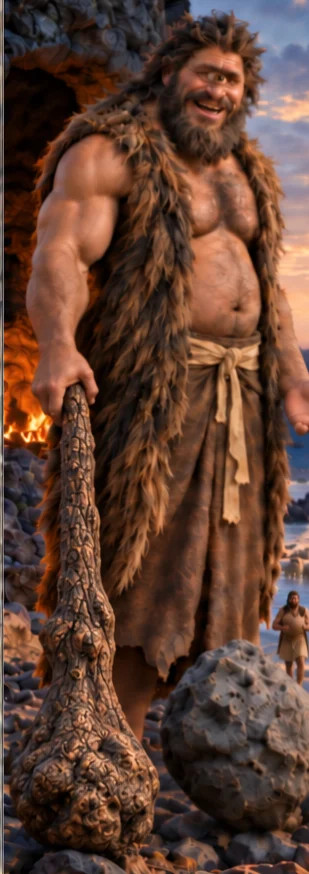
Polyphemus has a single eye located in the center of his face. Euripides, The Cyclops 131-174 +2 Polyphemus combs his stiff hair with rakes and trims his shaggy beard with a sickle. Ovid Met. 13.719-897 (3) He examines his fierce facial features in water to arrange them pleasingly. Ovid Met. 13.719-897 (3) Polyphemus possessed giant arms capable of hurling immense rocks. Ovid Met. 14.154-247 (2)
Powers
The Cyclops is considered a single man capable of threatening a group of heroes. Euripides, The Cyclops 175-202 Polyphemus is described as a cannibal who eats human flesh. Euripides, The Cyclops 82-130 He claims to be as mighty as Zeus and does not fear his thunder. Euripides, The Cyclops 316-355
In the myths
Odysseus blinded one of Polyphemus's eyes by burning it out with a red-hot brand or heated olive branch, fulfilling a destiny that his eye would be burned out by a revolving brand. Euripides, The Cyclops 441-482 +3 The Cyclops eats the flesh of strangers, including boiled and grilled limbs, and plans to cook and eat captured strangers immediately. Euripides, The Cyclops 241-272 +2 Polyphemus felt the backs of the sheep to check for hidden men but failed to detect the men hiding beneath the sheep's bellies. Odyssey 9 ¶32 Polyphemus grabbed the ram that was leaving last with the narrator inside. Odyssey 9 ¶32 He has recently eaten lions and stags but has lacked human flesh for a long time. Euripides, The Cyclops 241-272 He laughs at Telemus and dismisses his warning as mistaken. Ovid Met. 13.719-897 (3) The Cyclops was intoxicated by wine and desired to share it with his brothers. Euripides, The Cyclops 441-482 The Cyclops is addressed as the son of Ocean's god, implying a divine parent. Euripides, The Cyclops 273-315 The Cyclops ate the flesh of Odysseus's companions before falling asleep. Euripides, The Cyclops 409-440 The Cyclops became intoxicated and fuddled from drinking too much wine. Euripides, The Cyclops 409-440
Worship
The Cyclops performs burnt-offerings on the altars of Aetna. Euripides, The Cyclops 361-368
Fate
An oracle predicted that Polyphemus would lose his eye to Odysseus on the way home from Troy. Euripides, The Cyclops 441-482 +1 Poseidon prevents Polyphemus from killing Odysseus outright. Odyssey 1 ¶6 The Cyclops is described as a monster detested by the gods. Euripides, The Cyclops 566-607 An oracle predicted the Cyclops would suffer at sea for many days after blinding Odysseus. Euripides, The Cyclops 663ff