SCAMANDER (river god of Troy)
Divine power · water deity
- Parents
- Oceanus, Zeus, Tethys, Doris
- Consorts
- Idaea
- Children
- Callirhoe, Teucer, king of Troy, Strymo, Glaucia
- Haunts and cult places
- Lycia, Troy, Simois, Mount Ida
- In the sources
- 94 ancient passages
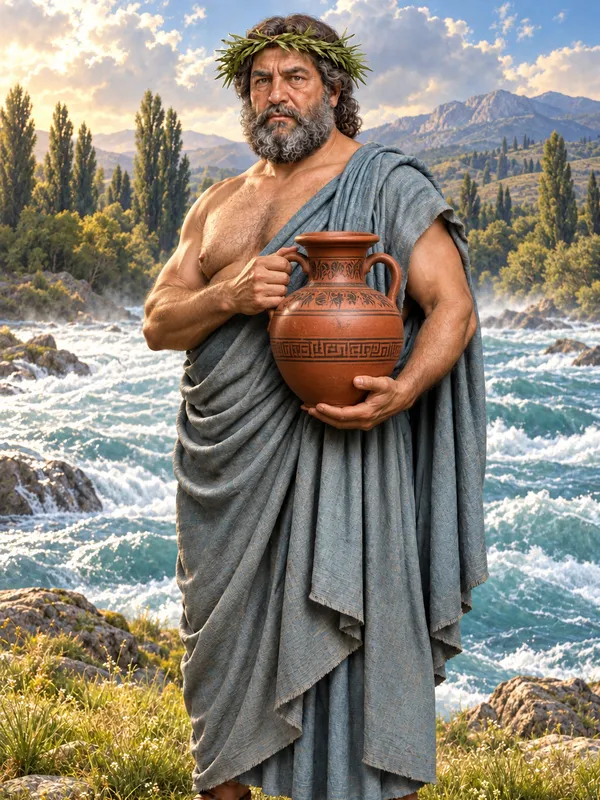
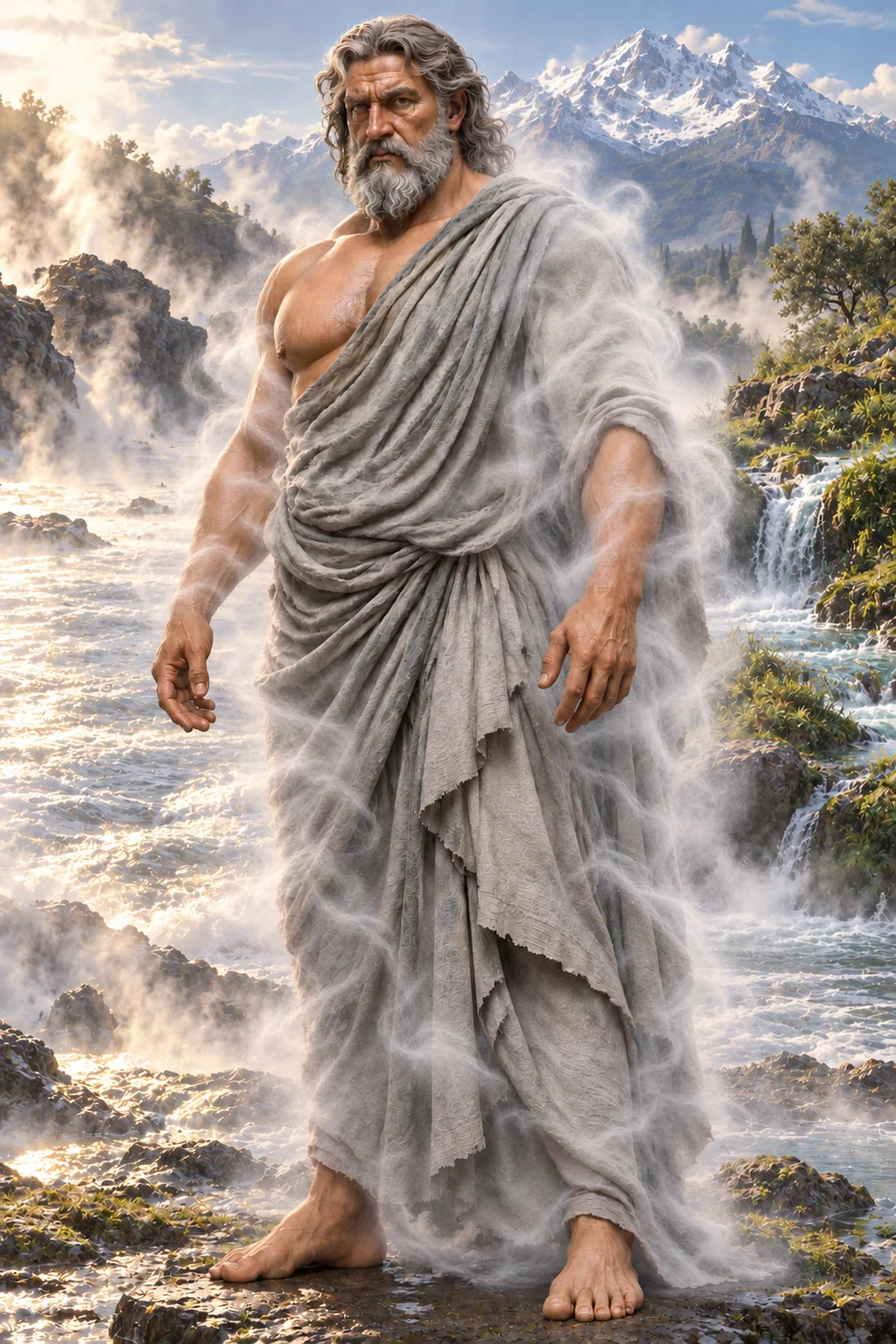
His waters were fed by the snows from Ida, creating a full-flowing stream that formed the boundary for the plain where the Trojan and Achaean armies fought.1,2,3,4 The river possessed two distinct fountains, one warm and steaming through scorching clefts, and the other cold as winter's snows and clear like crystal.5 Cloaked in celestial mist, he was known as the Sea-king and the Shaker of Earth, capable of making the dark ground quake as he approached.6
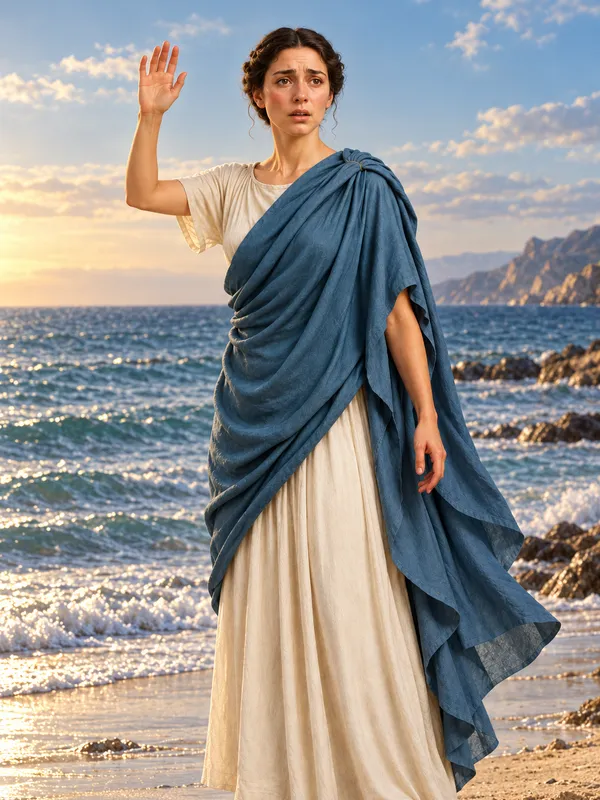
As the father of the first king of Troy, Teucrus, and of the nymphs who wailed over the battle-slain, Scamander held a deep lineage within the Trojan royal house.7,8 He also sired Callirrhoe and Strymo, linking his waters to the broader divine family tree of the region.9,10 During the war, the steep banks of the Scamander were the place where Ares was stationed, shedding the blood of many dead Achaeans.11,12 The river's flow was often blocked by countless corpses, and its waters were stained with blood as Achilles ruthlessly slew youths in its eddies.13,14,15,16,17 Mourners would gather near the swollen tide to cut their hair, a testament to the grief that clung to the banks near Troy.18,19
Angry at the slaying of young men in his waters, the river grew increasingly furious and called upon his brother Simois to unite their waters against Achilles.16,20,8 He raised his foamy, blood-mixed flood into a high crest, threatening to wrap the hero in sand and shingle to hide his bones from burial.21,20 The intense heat from the fire caused the waters to boil and seethe, afflicting the river until he stopped flowing.22 Despite his anger, Scamander admitted he was less to blame than others and swore he would never again try to save the Trojans from destruction.22
In the divine battle, the river deity positioned himself to fight against Hephaestus, matching himself against Vulcan.23 horse/">Xanthus and his companion could run as fast as the wind Zephyrus, showcasing their swiftness in the conflict.24 The waters resounded as men and horses struggled in its eddies, and the river appeared thick and hot due to the blood and fire of the battle.2,25 Hera eventually intervened to stop the fighting, and the river agreed to cease his interference because she desired it.26,22
Before the war's end, Xanthus spoke to Achilles to predict his impending death, a prophecy granted by his divine nature.27 Though his broad silver stream provided no protection to the Trojans, the river mourned the destruction of Troy alongside his nymphs.28,29 His eddies carried the body of Lycaon into the broad bosom of the sea, a final testament to the river's power over the dead.14,28 Scamander remained a force of nature, breathing fierce valour into the fainting Greeks while his waters flowed sluggishly, stained forever by the events of the war.6,30
The codex facts behind this entry
Scamander is a divine river, the offspring of Ocean and Tethys. Apollodorus 3.12.1 +1 The river is referred to by mortals as Scamander and by the gods as Xanthus. Iliad 20 ¶8 Xanthus is described as a fair stream that was begotten by the immortal Zeus. Iliad 14 ¶35
Powers
Xanthus is capable of foretelling the death of Achilles. Iliad 19 ¶31 The river's broad silver stream is said to provide no protection to the Trojans. Iliad 21 ¶8 Hera granted Xanthus the ability to speak human language. Iliad 19 ¶30 Xanthus and his companion can run as fast as the wind Zephyrus. Iliad 19 ¶30
In the myths
The river's flow was blocked by countless corpses. Aeneid 5.779 +3 The river was stained with blood by Achilles. Bacchylides 13 part 2 +1 The river caught fire during the global blaze caused by Phaethon's chariot. Ovid Met. 2.1-303 (11) Apollo directed the waters of all Idaean rivers, including Scamander, against the Achaean wall for nine days. Iliad 12 ¶2 Poseidon restored Scamander to its original course after the wall was destroyed. Iliad 12 ¶2 He filled Asteropaeus with courage because he was angry about youths being killed in his waters. Iliad 21 ¶9 Lycaon's life was torn from his limbs beside the river. Quintus 4 ¶12 Xanthus mourned the destruction of Troy alongside his nymphs. Quintus 14 ¶4 Scamander called upon his brother Simois to unite their waters and rouse torrents to a fury against Achilles. Iliad 21 ¶18 Xanthus claims the Trojans stripped Patroclus of armor without any fault on their part. Iliad 19 ¶30
Worship
Hypsenor served as the priest of the river Scamander and was honored by the people as if he were a god. Iliad 5 ¶9 Trojans offered bulls and living horses to the river as sacrifices. Iliad 21 ¶8
Fate
The gods decree that Aeneas will pass through the waters of Xanthus. Quintus 13 ¶16 His grief was described as undying despite his immortal nature. Quintus 14 ¶4 Xanthus predicts that Achilles is doomed to be killed by a man and a god by the will of heaven and fate. Iliad 19 ¶30 The river is said to hasten back to its source before Paris lives without Oenone. Ovid, Heroides 5.3