ZEPHYRUS (god of the west wind)
Power of sky and light · Greek god of the wind from the west, spring, fertility, procreation, luck, rebirth, vegetation, flowers, bees and honey

- Parents
- Astraeus, Eos
- Siblings
- Boreas, Euros, Notus
- Consorts
- Iris, Podarge, Chloris
- Children
- Eros, Arion, Pothos, Xanthus, Aurai, Karpos, Balius
- Allies
- South Wind
- Haunts and cult places
- Thrace, Sicily
- In the sources
- 28 ancient passages
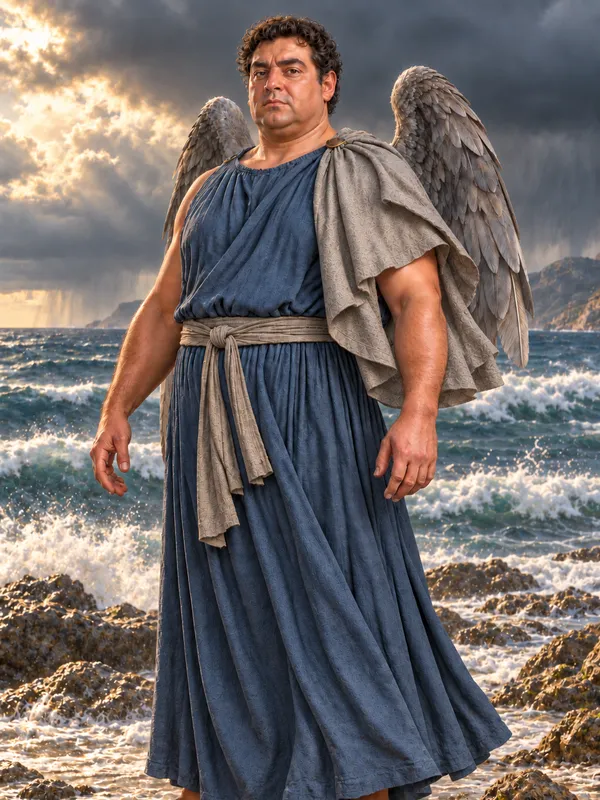
Zephyrus, the west wind, was born of the divine union between Astraeus and Eos.1,2,3 He was distinct from the boisterous offspring of Typhoeus, standing apart as a clear, god-sent kind of breeze.4 With fair hair and a warm, dry nature, he was perceived as a clear, god-sent kind of breeze that sailors either feared or welcomed.4,2,5,6,7 As the swiftest of all winds, he governed the western region near the setting sun and the evening star.8,9,2
Zephyrus was a great blessing to men, initiating the arrival of spring and opening the earth for agricultural activities.4,2 His prevailing presence signaled the time for pruning vines, weeding corn, planting trees, grafting fruit-trees, and trimming olive trees.2 His breezes produced the most nutritious effects on plants, while his gusts were described as the sweetest music in the sky.2,10 He gently breathed from the sea onto the Elysian Isles, refreshing their happy inhabitants in that far western region.11,12
He blew against Heracles, forcing the hero to return to Cos, and later pushed the ship carrying Helen across the sea.13,14 He also wafted the ships carrying Menelaos's bride toward Ilos' town, riding from Sicily across the Ionian sea.6,10 Achilles prayed to him and Boreas to kindle Patroclus's pyre, promising drink-offerings from a golden cup.15 He was asked to blow upon the pyre to consume the dead bodies, and in another instance, he strove against Eurus to rend the seas in a storm.15,16
Zephyrus had long been in love with the youth Hyacinth, although the boy rejected him.17 During a game, Zephyr deflected a quoit thrown by Apollo, causing it to strike Hyacinth's head.17 In an attempt to take revenge, Apollo shot an arrow at Zephyr, who then fled to the mountain.17
Zephyrus held a high feast in his house when Iris arrived, conversing with the South Wind about the events.15,1 An altar dedicated to Zephyrus stood near the grave of Themistocles, marking his place in the landscape of memory.18 He was one of the winds commanded by the stern father figure, and thunder filled his halls when lightning struck from the north.19,20
The codex facts behind this entry
Zephyrus is identified as one of the four cardinal winds, specifically the west wind. Lucian, Dialogues of the Sea-Gods 15 ¶1 +4 Zephyrus is identified as one of two adverse winds blowing from Thrace. Strabo 1.2.21 The term stormy zephyr refers to the wind now called the north-west. Strabo 1.2.21
Powers
The Zephyr gently breathes from the sea onto the Elysian Isles, refreshing their happy inhabitants. Strabo 1.1.4 +1 Zephyrus is described as the swiftest of all the winds. Iliad 19 ¶30 Zephyr is considered a great blessing to men. The Theogony ll. 869-880 Zephyr was capable of blowing down from the mountain of Taygetus. Lucian, Dialogues of the Gods 14 ¶1 The wind is characterized by a drier nature compared to other winds. Pliny, Nat. Hist. 18.77 ¶4 Its breezes produce the most nutritious effects on plants. Pliny, Nat. Hist. 18.77 ¶4
In the myths
Zephyrus blew against Heracles, forcing him to return to Cos. Strabo 7.fragments.58 Zephyros blew the ships carrying Menelaos's bride toward Ilos' town. Pindar, Nemean 7 ¶8 The wind pushed the ship carrying Helen across the sea. Aeschylus, Agamemnon 681-698 The stormy zephyr frequently scatters feathery clouds brought by the clearing south wind. Strabo 1.2.21 Zephyrus was asked to blow upon the pyre to consume the dead bodies. Iliad 23 ¶17 The wind is described as heavy-blowing in a poetic list of directions. Strabo 1.2.20 part 2 Achilles prayed to Boreas and Zephyrus to kindle Patroclus's pyre, promising drink-offerings from a golden cup. Iliad 23 ¶17 Tiphys turned his ship's canvas to catch the Zephyrs. Seneca, Medea act 2 ¶9 He claims to have witnessed a splendid pageant on the waves. Lucian, Dialogues of the Sea-Gods 15 ¶1 He states he first blew on the day he saw this specific spectacle. Lucian, Dialogues of the Sea-Gods 15 ¶1
Fate
Zephyr was unnamed before sailors learned to navigate the seas. Seneca, Medea act 2 ¶9 Apollo shot an arrow at Zephyr in an attempt to take revenge. Lucian, Dialogues of the Gods 14 ¶1