PHEMIUS (mythical bard in Homer)
Figure of myth · mythical bard in Homer
- Symbols and gear
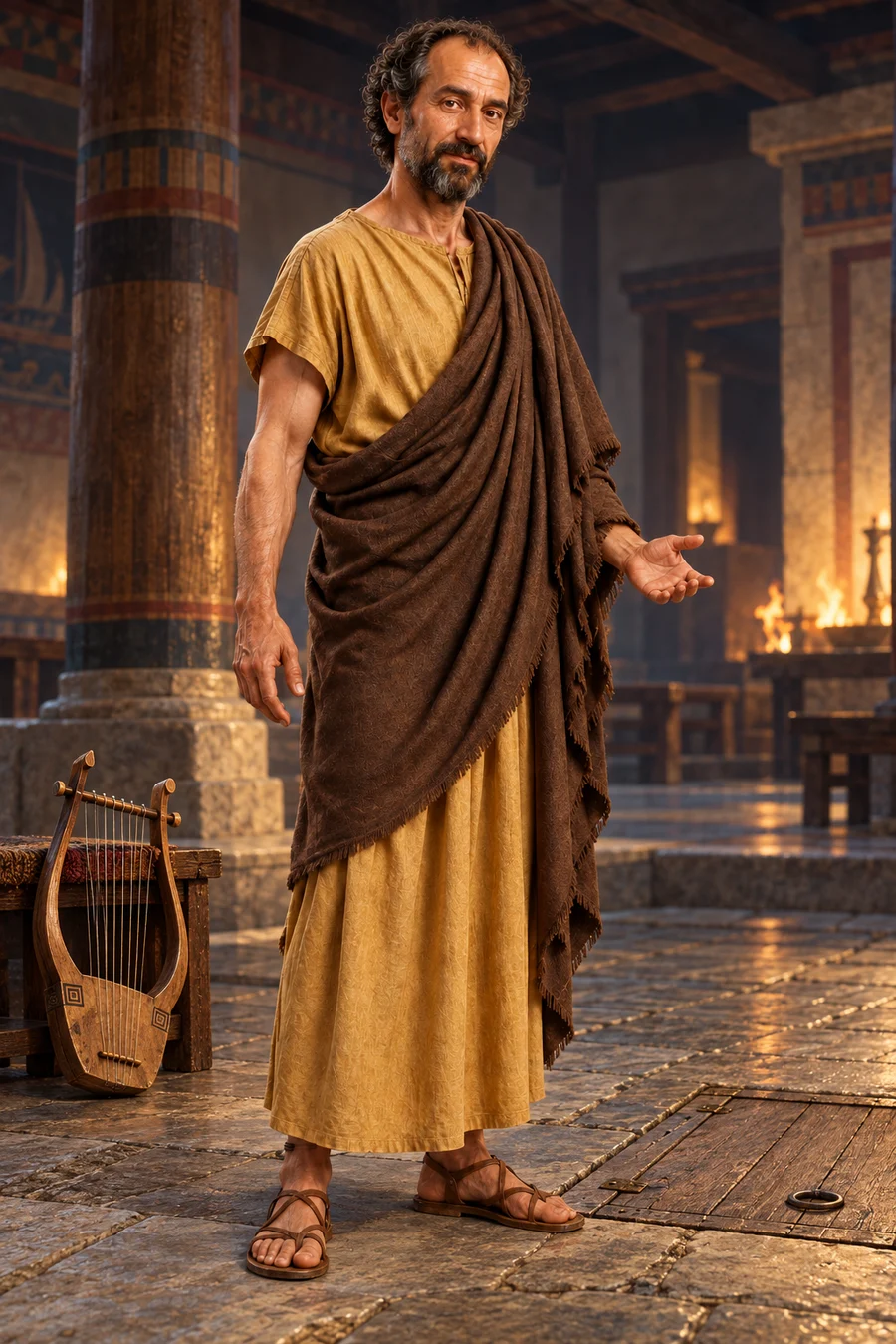
- lyre
- In the sources
- 12 ancient passages
Phemius, son of Terpes, was a professional minstrel of divine voice who composed his own songs through divine inspiration. [f: 7, 37, 35]1,2 His knowledge encompassed many feats of gods and heroes that poets celebrate, allowing him to sing for both immortals and men. [f: 36, 34]3,1
Seated among the suitors in the house of his master, Phemius was forced to perform against his will for their entertainment. [f: 26, 2]4,5,6 Servants provided him with a portion of meat, while an upper woman servant placed bread before him for him to eat.4 He sang a sad tale about the return from Troy, describing the ills Athena placed upon the Achaeans, a song that made the listeners sit in rapt silence. [f: 6, 11, 17]5,7 Penelope, who had heard the performance from her room upstairs, was reminded of her husband, leading to a command for Phemius to stop the sorrowful narrative. [f: 5]7,3
He placed his lyre on the ground between a mixing bowl and a seat.1 Odysseus instructed the minstrel to go to the open court to avoid the blood and carnage that would follow. [f: 22]8 Telemachus later praised Phemius for his rare and divine singing voice, stating that the bard could confirm he did not willingly sing for the suitors. [f: 4]2,1
In the aftermath, Phemius woke up and joined the group at the house of Odysseus, where everyone present was astonished to see him there. [f: 20, 15]9 He stood in the middle of the assembly with Medon.9 He was instructed to play a dance tune on his instrument and ordered to perform music to create a false impression of a wedding, singing in a way that pleased the listeners' ears.10,11 His performance made everyone desire sweet song and stately dance, causing the house to echo with the sound of dancing men and women. [f: 14]12
He began playing his instrument and singing after receiving the lyre.6 Phemius harshly criticized the suitors for plotting against Penelope.5 Eurymachus liked Phemius more than any of the other suitors.4
The codex facts behind this entry
Powers
Phemius possesses a divine voice and the ability to compose his own songs with divine inspiration. Odyssey 1 ¶27 +1
In the myths
The suitors forced Phemius to perform songs for their entertainment against his will. Athenaeus 1.24 +4 Telemachus praised Phemius for his rare and divine singing voice and stated that Phemius could confirm he did not willingly sing for the suitors. Odyssey 1 ¶27 +1 Phemius was commanded to stop singing the sad tale that reminded Penelope of her husband, which she had heard from her room upstairs. Odyssey 1 ¶23 +1 Phemius was singing a sad tale about the return from Troy. Athenaeus 1.24 +1