TELEMACHUS (son of Odysseus and Penelope)
Figure of myth · in Greek mythology, the son of Odysseus and Penelope, a character from Homer's "Odyssey"
- Parents
- Odysseus, Penelope
- Consorts
- Circe, Nausicaa, Polycaste, Cassiphone
- Children
- Latinus, Persepolis, Poliporthes, Ptoliporthus
- Haunts and cult places
- Pylos
- In the sources
- 260 ancient passages
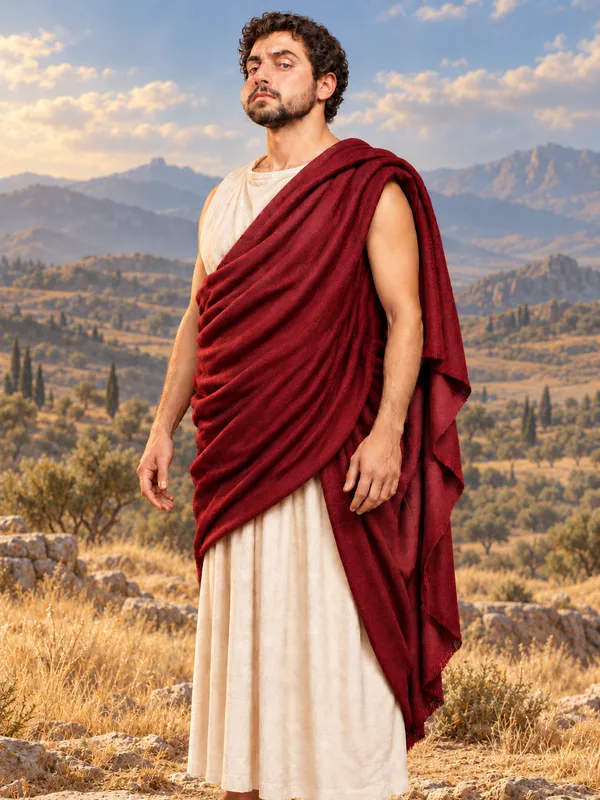
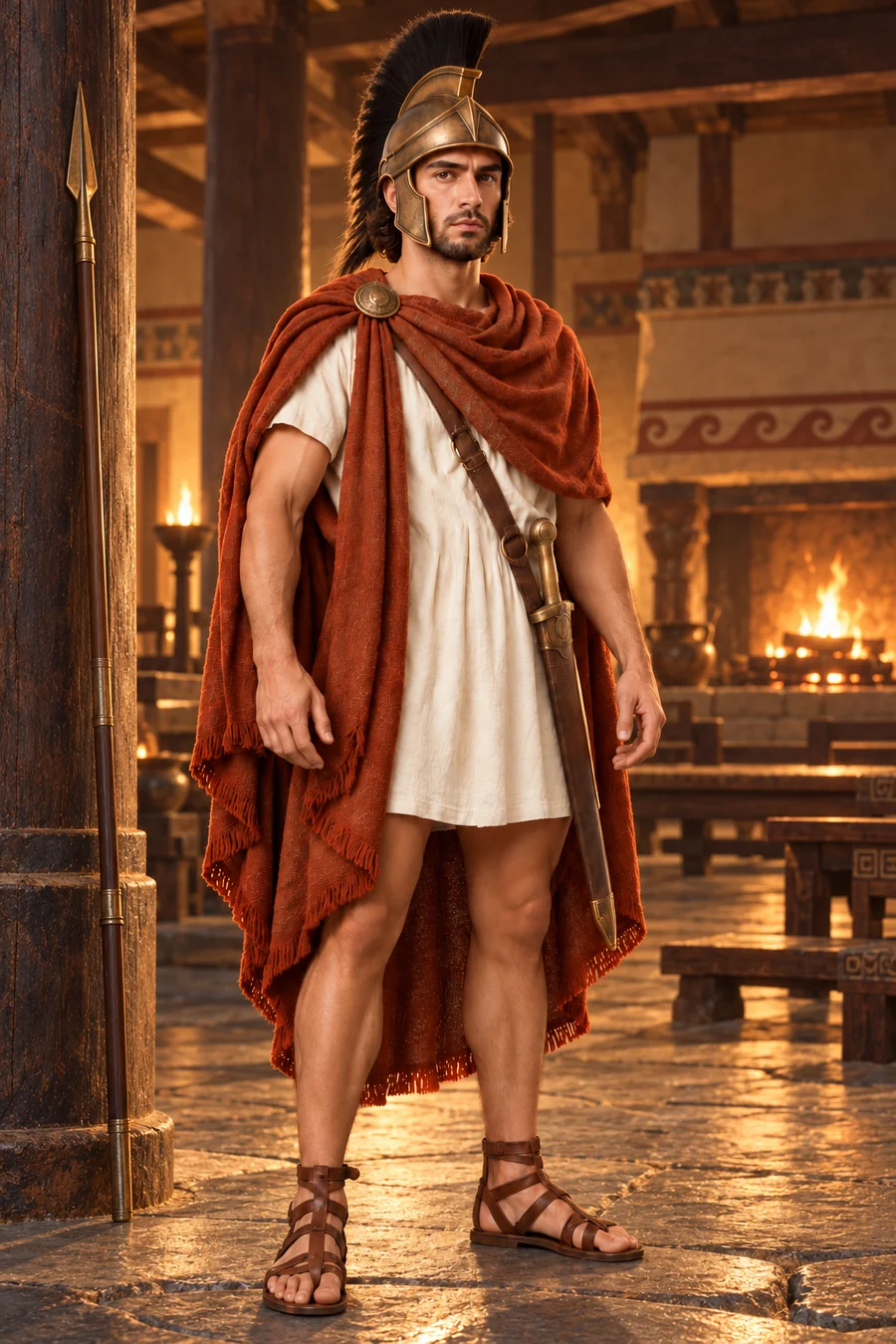
Young, large in size, and good-looking, he possessed a face and figure that closely resembled his father, while his comely feet were clad in sandals.1,2,3,4,5,6,7 He carried a long spear with a sharpened bronze head and girded a sword about his shoulder, projecting an air of strength even while he remained modest and ashamed to speak with Menelaus.5,4,8,6,7,9,10,11 Though he claimed the house belonged to Odysseus and had passed to him, he lived in a small, defenseless household where he was concerned for his mother's appearance, not wanting her to spoil her beauty by crying.12,13,14
The suitors who crowded the palace consumed his sheep and oxen, intending to continue consuming his estate without paying him, and Telemachus warned that Zeus would punish them if they continued to spend his father's money.15,16,17,18 In response to their insolence, he told Antinous to stop criticizing his actions and to leave the house if he objected, asserting his authority as host.19,18,20 He traveled by sea with a crew, and two dogs accompanied him when he walked to the assembly, while he kept the gathered stores hidden in the cloister.21,22,23,4,24
In Pylos, Nestor ordered Telemachus’s horses to be put to the chariot and sent his son Pisistratus to escort him to Menelaus for counsel.25,26 Telemachus ate and drank during a dinner with other men, taking his seat beside Nestor on soft sheepskins near Thrasymedes, and admired the many ornaments in the palace.26,27,28,29 Menelaus took a seat near Telemachus before speaking to him, and a beautiful mixing bowl crafted by Hephaestus was placed before him by Megapenthes.30,3,31,32 Polycaste, the youngest daughter of Nestor, provided Telemachus with a fair mantle and shirt, and he was joined in love with her.26,33 On his return journey to Ithaca, the suitors planned to ambush and kill him while he traveled by sea, a danger Eumaeus had advised him to avoid from enemies plotting mischief.34,35,36,37
Telemachus returned home to the countryside to inspect the herdsmen working on one of his farms, where Eumaeus tended the pigs that belonged to him.38,39,37 When Odysseus finally appeared in his home, Telemachus was unable to believe the person before him was his father and was astonished to see him actually present.40,41 He noted that Odysseus’s bed was empty and covered with cobwebs.42 Together, Telemachus and Odysseus planned to restrain the suitors, and Telemachus identified himself as the only man in Ithaca with rights over the bow.43,44,45 In the ensuing conflict, Telemachus was destined to kill Amphinomus, though he also saved the life of another suitor.46,47
Telemachus possessed some of his father’s wise discernment, and he asserted his maturity and knowledge of good and evil, refusing further violence.48,49 He expressed disapproval of the men’s indecent handling of meat and liquor, attributing their behavior to an evil spirit, yet he did not wish to drive them away.50 He offered protection to a stranger, declaring that anyone striking him would face multiple opponents, and instructed the stranger to beg from the suitors.51,20,52,53 According to the Colophonian author, Telemachus married the sorceress Circe after arriving on her island, and some people claim he is the father of the poet being discussed.54,55,56 He continued to hold his father’s lands without disturbance, a young lord who had grown into manhood and resembled his father in every respect.57,58,59
The codex facts behind this entry
Telemachus is the son of Odysseus and Penelope. Odyssey 1 ¶15 +8 Telemachus is the son of Odysseus and a character in Homer's Odyssey. Odyssey 16 ¶36 +2 Telemachus is the only son of Odysseus. Odyssey 16 ¶12 +1
Appearance
Telemachus is young, large in size, good-looking, and appears like a god. Odyssey 16 ¶10 +3 Telemachus was growing into manhood and resembled his father in face and figure. Athenaeus 5.16 +1
In the myths
Nestor ordered Telemachus's horses to be put to the chariot and sent his son Pisistratus to escort Telemachus to Menelaus for counsel. Odyssey 3 ¶29 +3 Telemachus traveled to Sparta to seek allies. Odyssey 2 ¶23 +3 Telemachus traveled to Pylos and Lacedaemon to seek news of his father, Odysseus. Odyssey 2 ¶12 +3 Telemachus ate and drank during a dinner with other men, taking his seat beside Nestor on soft sheepskins near Thrasymedes. Odyssey 3 ¶36 +2 Telemachus offered protection to a stranger, declaring that anyone striking him would face multiple opponents, after the suitors agreed to leave the stranger's handling to him. Odyssey 18 ¶40 +1 Telemachus warned that Zeus would punish the suitors if they continued to spend his father's money. Odyssey 1 ¶27 +1 The suitors claim Telemachus might travel to Ephyra to obtain poison to kill them. Odyssey 2 ¶23 +1 Telemachus was instructed to approach Nestor to seek the truth, though he expressed hesitation about asking for help. Odyssey 3 ¶2 +1 Nestor stopped Telemachus and Athena from leaving the gathering and arranged for Telemachus to sleep in a specific room above the gateway. Odyssey 3 ¶27 +1 Eumaeus advised Telemachus to be careful to avoid danger from enemies who are plotting mischief against him. Odyssey 16 ¶12 +1