EURYPYLUS, SON OF TELEPHUS (son of Telephus)
Figure of myth · mythical son of Euaemon
- Parents
- Evaemon
- Haunts and cult places
- Ormenium
- In the sources
- 53 ancient passages
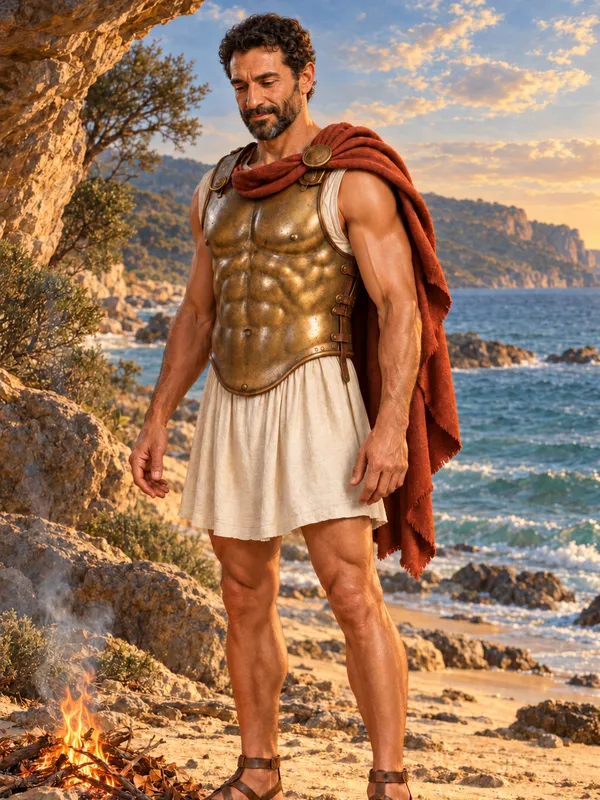
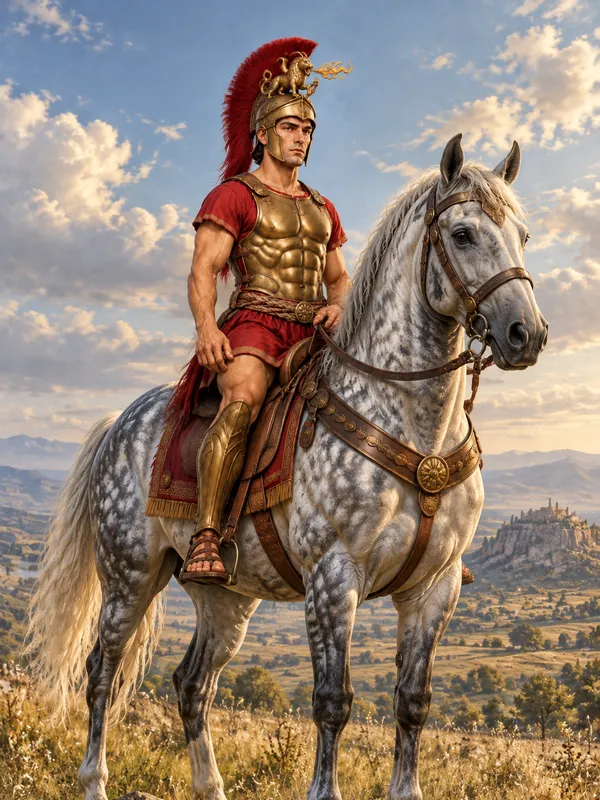
Eurypylus, son of Telephus, stood as a great king of the Ceteians, a people dwelling between the Cilicians and the Pelasgi.1,2,3 He possessed a giant frame that covered a large space of earth when falling, and his appearance was so formidable that the Trojans saw in him the likeness of the War-god.4,5 Paris noted that Eurypylus was most like Heracles in stature, might, and goodliness, and he was described as godlike.5,1 Clothed with the might of the gods, he was bold in fight and driven by a dauntless hardihood that fate itself seemed to sustain.5,6,4
Eurypylus traveled to Sparta to seek Helen's hand in marriage.7 During the Trojan War, he commanded forty ships and a group of men who were scaling a tower, marching in the army after Agamemnon, Menelaus, and the Ajaxes.8,9,10 He led the men of Ormenius, Hypereia, Asterius, and Titanus, ruling the region containing Ormenium and the spring Hypereia.8,11,12 His forces included chariot-lords who accompanied him in battle, and he securely retained his possessions after Phoenix departed from his home.13,11
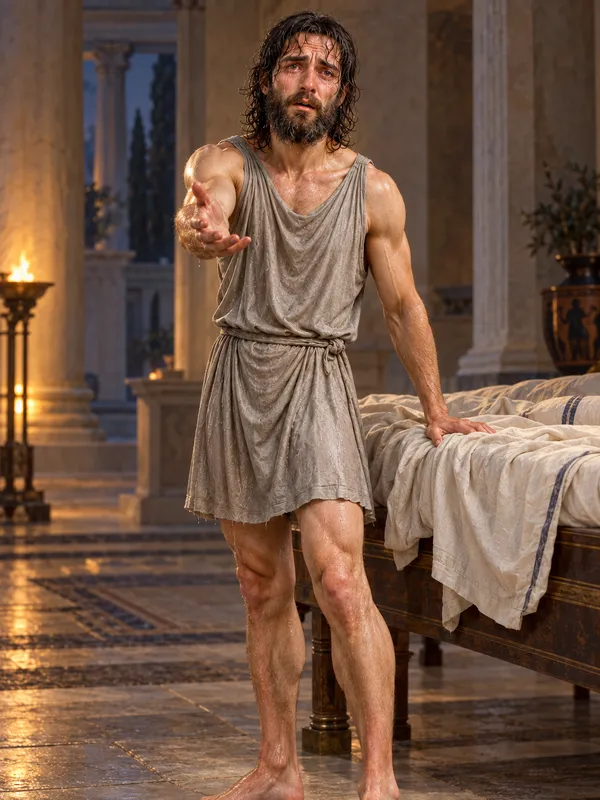
Wounded in the thigh by an arrow, Eurypylus met Patroclus near the ships of Odysseus in urgent need of assistance.14,15 Patroclus felt compassion for Eurypylus upon seeing his condition and applied medicinal herbs to his wound to relieve his pain, while Eurypylus requested that Patroclus apply herbs that Achilles had learned from Chiron.14,16,15 He did not continue his planned voyage to Thessaly due to his condition, instead traveling to the town and gulf of Cirrha and going to Delphi to ask the oracle about his illness.17
Eurypylus later resumed his fierce combat against the enemy forces, engaging in a prolonged hand-to-hand struggle with Neoptolemus, hoping the enemy would tire from the slaughter.18,1,4 In the heat of combat, Eurypylus pressed the Argive warriors so hard that many fled to their ships, and he pursued the fleeing soldiers relentlessly.19,2 Exultant in the hope of tearing down walls and slaughtering Argives, he burned the ships of the enemy fleet and constantly encouraged his Trojan allies to continue the fight.9,2,13,1 He slew a multitude of Achaeans with his flying spears, specifically killing Peneleos, Melanthus, Axion, and others such as Bucolion, Nesus, Chromion, and Antiphus.20,2,21,22,23,24 His hands and feet were covered in blood while fighting, and he struck Hypsenor, the son of Dolopion, on the arm with his sword, severing his strong hand from his arm while the latter was fleeing.2,25 He killed Apisaon by striking him in the liver with his spear and then stripped the armor from his shoulders, while also throwing a spear at an enemy when he saw Ajax struggling.26
He accepted a Greek request to pause fighting for two days to bury the dead, though he had previously threatened to destroy the Danaan ships and men.18,4 Eurypylus was surrounded by the Ceteians during the conflict, and his death was mourned deeply by the Trojans, who treated him with the same honor as Priam's sons.1,27 He was buried separately from other fallen soldiers before the Dardanian Gate.27 In a separate account, his ships were blown by the wind to the sea near Aroe, where he landed and found a youth and maiden at the altar of Triclaria.28 The local people identified him as a king they had never seen before, and certain writers identify this Eurypylus as the son of Dexamenus.28,29 Accounts vary regarding his parentage, with some writers naming his father as Euaemon or Eumaemon, the latter being a son of Ormenus.7,26,11 He picked up a piece of earth from his feet to give as a gift to the hero who was leaving.30
The codex facts behind this entry
Eurypylus is identified as the son of Euaemon. Apollodorus 3.10.8 +9
In the myths
Eurypylus met Patroclus near the ships of Odysseus and, in urgent need of assistance during the conflict, asked him to remove the arrow from his wound and wash it with warm water. Iliad 11 ¶53 +2 Eurypylus killed Axion, who was a son of Priam. Pausanias 10.27.2 +1 Eurypylus opened a chest and saw an image inside it, leading locals to suspect it contained a god. Pausanias 7.19.7 +1 Patroclus felt compassion for Eurypylus upon seeing his condition and applied medicinal herbs to his wound to relieve his pain. Iliad 11 ¶53 +1 Eurypylus constantly encouraged his Trojan allies to continue fighting and kill the Greeks. Quintus 6 ¶37 +1 Eurypylus was wounded in the thigh by an arrow during the battle. Iliad 11 ¶53 +1 Eurypylus engaged in a fierce, prolonged hand-to-hand combat with Neoptolemus, hoping the enemy would tire from the slaughter. Quintus 7 ¶23 +1 Eurypylus pressed the Argive warriors so hard that many fled to their ships, and he pursued the fleeing soldiers relentlessly. Quintus 6 ¶33 +1