DRYAD (tree nymph in Greek mythology)
Divine power · tree nymph in Greek mythology
- Haunts and cult places
- Latium, Thrace
- In the sources
- 15 ancient passages
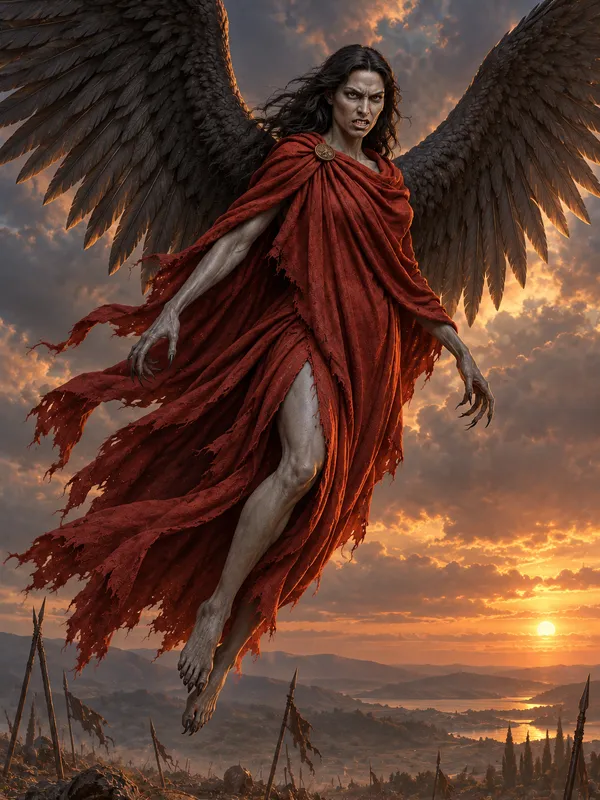
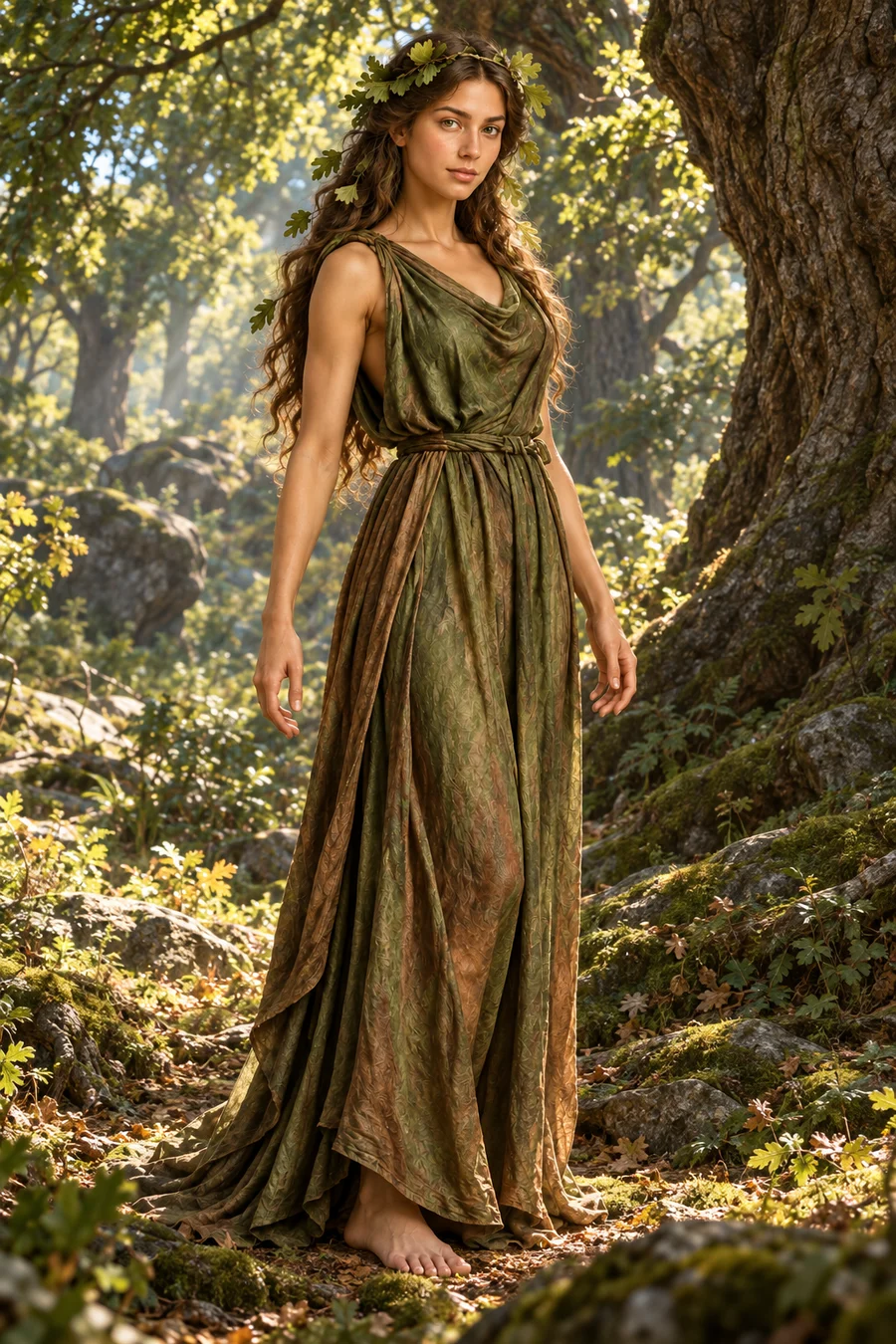
Dryads were a specific category of nymphs, distinct from Epimeliads and Naiads, who possessed a half-divine nature.1,2 They resided within the trunks of oak trees and were born in the hills of the region known as Latium.3,4 These wanton goddesses of groves wore dark mourning garments and had disheveled hair.5,6
The nymph Erato, identified as a Dryad in one legend, was the wife of the legendary figure Arcas and bore him the sons Azan, Apheidas, and Elatus.1 Some accounts also identify Phigalia as a member of this group of nymphs.7 The Dryads were attracted to Picus because of his handsome appearance.4
When their grove was destroyed by a falling tree, the Dryads were shocked by the destruction of their grove and their own lives.8 They dressed in black to express their grief and went to Demeter to request punishment for Erisicthon.8 In another instance, they mourned the death of a young man, with Echo amplifying their lamentations.9
The Dryads also mourned the death of a bard.6 Their cries reached the heights of Rhodope and Pangaea, filling the mountains with their voices and echoing in the land of Thrace near the Hebrus stream.10 They frequently performed festive dances beneath a specific ancient oak tree, walking in a circle around the trunk with their hands joined.11
The Dryad-maids were invited to dance together with the Fauns, and they abandoned their tree shelters to listen to Orpheus's music.12,3 However, they also struck people with terror and amazement, acting alongside horned Satyrs to frighten others.2 They plotted mischief against the sleep of the person being addressed and drove the roving Pans in pursuit.5
The codex facts behind this entry
Dryads are a specific category of nymphs, distinct from Epimeliads and Naiads. Pausanias 8.4.2 The nymph Erato is identified as a Dryad in this legend. Pausanias 8.4.2 Some accounts identify Phigalia as a member of the group of nymphs known as Dryads. Pausanias 8.39.2
Powers
The dryads are described as possessing a half-divine nature. Ovid, Heroides 4.40
In the myths
The Dryads mourned the death of the young man. Ovid Met. 3.402-510 (5) Echo amplified the lamentations of the Dryads. Ovid Met. 3.402-510 (5) The dryads wore dark mourning garments and had disheveled hair. Ovid Met. 11.1-84 (3) The dryads mourned the death of the bard. Ovid Met. 11.1-84 (3) The dryads walked in a circle around the trunk of the oak with their hands joined. Ovid Met. 8.738-884 The Dryads were attracted to Picus because of his handsome appearance. Ovid Met. 14.320-440 The Dryad-maids are invited to dance together with the Fauns. Georgics 1.1 The dryads abandoned their tree shelters to listen to Orpheus's music. Seneca, Hercules Oetaeus act 3 ¶15 The dryads strike people with terror and amazement. Ovid, Heroides 4.40 The dryads plot mischief against the sleep of the person being addressed. Seneca, Phaedra act 2 ¶18