ERATO (greek muse of lyrical poetry)
Divine power · Greek muse of lyrical poetry
- Parents
- Zeus, Mnemosyne
- Siblings
- Calliope, Clio, Urania, Melpomene, Euterpe, Terpsichore, Thalia, Polyhymnia
- In the sources
- 9 ancient passages
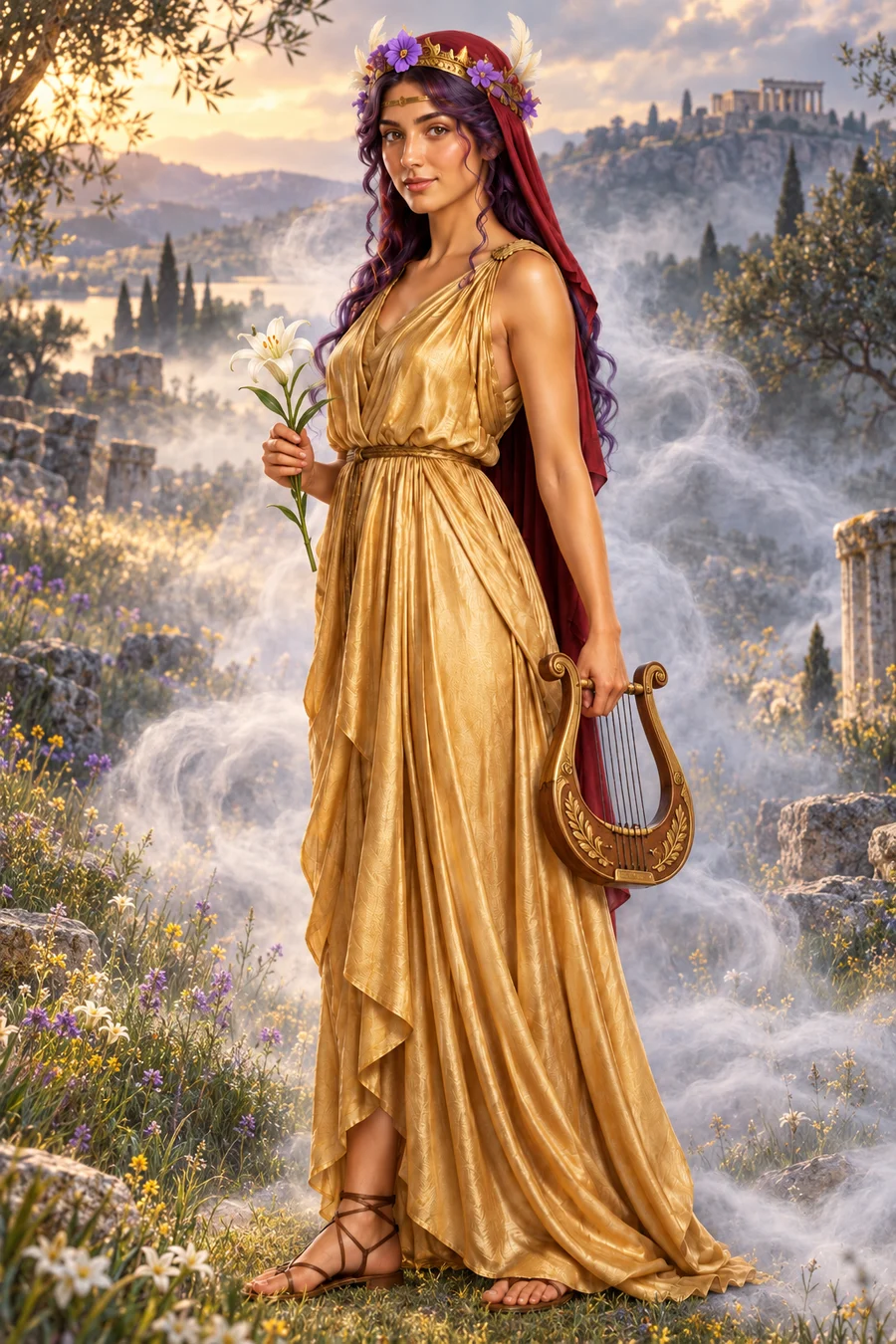
Erato, daughter of Zeus and Memory, held her place among the nine Muses who dwelt on Olympus.1,2,3 Named by the poet Hesiod, she stood as a sibling to Calliope, Clio, Urania, Melpomene, Euterpe, Terpsichore, Thalia, and Polyhymnia.1,2 Her very name carried the weight of love, a bond that linked her to the power of Cypris.4
Through the Muses and Apollo, singers and harpers came into being on earth.3 Erato helped these singers make listeners forget their sorrows and grief.3 Her instruction made men desirable and worthy of being loved, while she charmed unwedded maidens through her love-cares.2,4
Once, a bard asked Erato to breathe upon him to inspire a song about the origins of the war in Italy.5 Despite her associations with love, most myth writers believed Erato to be a virgin.2 Yet she bore a son named Dynastes to the man who fathered children by Thespius's daughters.6
The codex facts behind this entry
Erato is one of the nine Muses, daughters of Zeus and Memory, who reside on Olympus and were named by the poet Hesiod. Apollodorus 1.3.1 +2