DEIANIRA (wife of Heracles)
Figure of myth · wife of Heracles in Greek mythology
- Parents
- Oeneus, Althaea
- Consorts
- Heracles
- Children
- Hyllus, Macaria, Ctesippus, Glenus, Hodites, Glycisonetes
- Symbols and gear
- Nessus
- In the sources
- 72 ancient passages
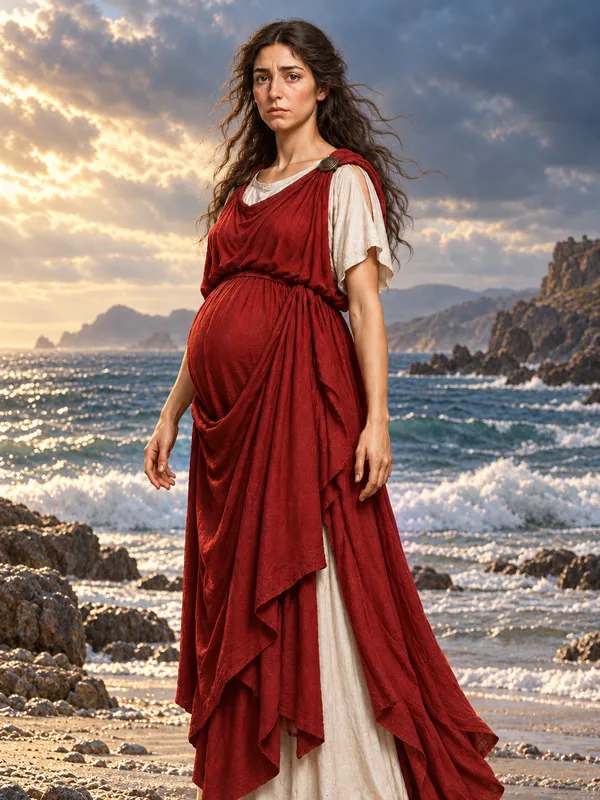
She lived in the house of her father at Pleuron, where she was described as a very beautiful young woman whose neck was compared to a fresh olive.1,2,3 Her beauty was such that the centaur Nessus became enamoured of her, and she was once sought by many suitors before her marriage.4,5 She considered herself the most praised wife in the world, though she claimed her beauty had faded and lost its former brightness due to advancing age and the hardships of raising children.5,6
Heracles broke off a horn from the Achelous and gave it to Oeneus as a bridal gift.7 Diodorus states they were married for three years before Heracles killed a boy, and during their union Deianira bore him sons including Hyllus, Gleneus, Hodites, Onites, and Odites, as well as a daughter named Macaria.8,4,9,10,11,12,13,14,15 She accompanied Heracles to the court of Ceÿx in Trachis, where he entrusted her to the centaur Nessus to ferry her across the river Evenus.4,16
Nessus tried to assault Deianira during the river crossing, and Heracles killed him for this attempt.4,17 The dying centaur gave her his seed to mix with oil and arrow blood, and she collected the blood and seed he gave her, keeping the blood hidden in a bronze urn.4,16,18,17 She believed this mixture was a love charm, and she kept the potion hidden away from fire and sunlight as instructed.11,19,20 Deianira feared that a foreign woman or a slave would replace her as Heracles' spouse, and she felt deep pity for the stranger Iole because her beauty caused her downfall and she devastated and enslaved her fatherland against her will.21,5,22,23 She warmly welcomed a foreign girl into her household and questioned Lichas about the identity and family background of the captive maidens.24,25,22
Deianira instructed Lichas to deliver her messages and a chest containing a robe to her absent husband Heracles.26,27 She anointed a festive robe with the potion using a tuft of sheep's wool, though she accidentally exposed the wool tuft to direct sunlight.20 She planned to display the robe to the gods during a bull sacrifice and gave the poisoned tunic to Heracles to wear for the rite.28,11,29,26,30 After learning the tunic poisoned Heracles, Deianira hanged herself or killed herself with a sword, an act performed by her own will.11,31,32 The Nurse witnessed the violent act of her death.31
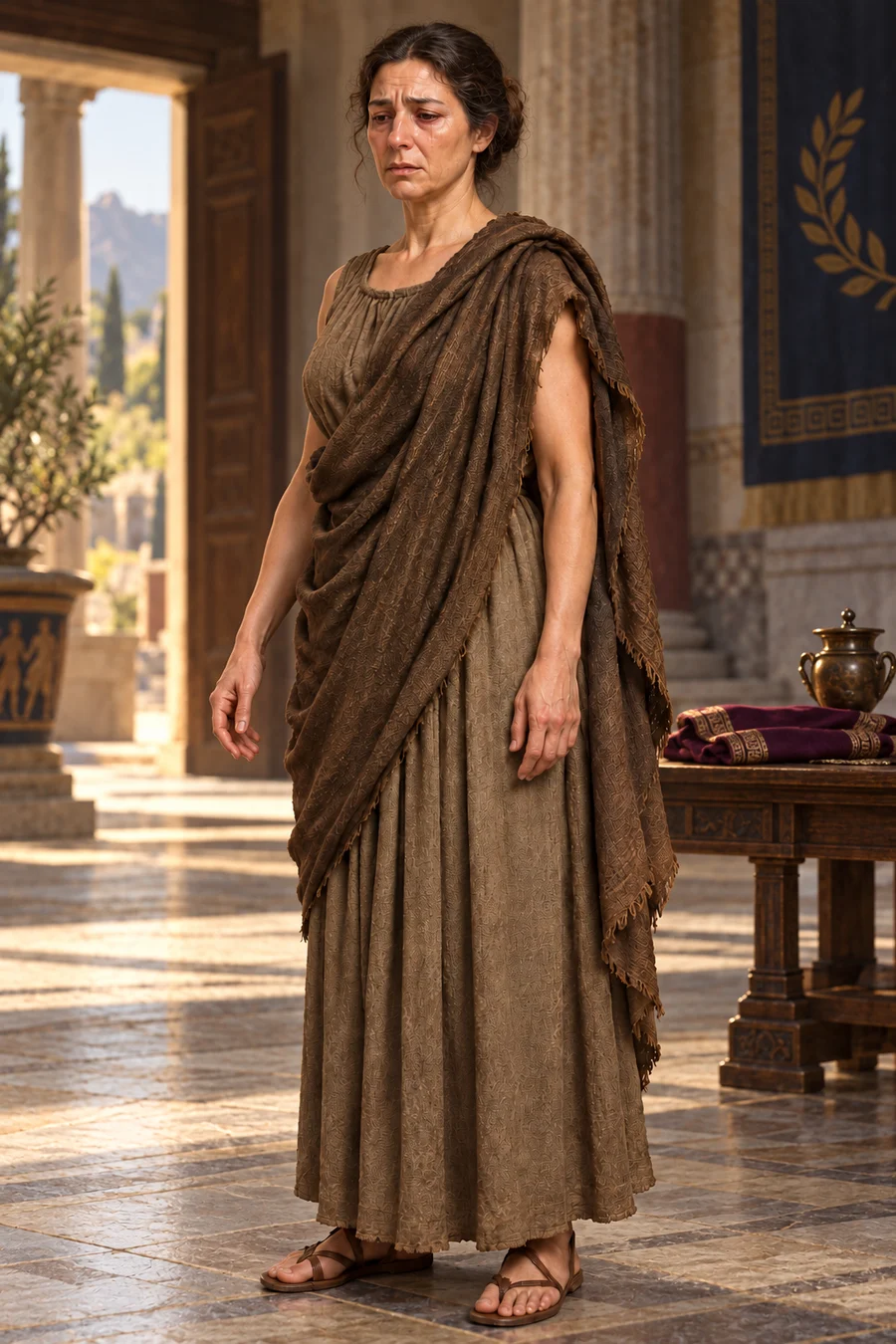
Her eyes were constantly filled with tears due to her sorrow, and she worried constantly about the safety of her husband during his travels.33,34 She identified herself as a chaste wife and viewed Heracles as a trifler, criticizing his lustful crimes.35,36 Deianira believed her life was ill-fortuned and heavy, anticipating misfortune in her state of misery before her death.2,33 She prays to Zeus to spare her children from his wrath, and in one account, she urged her son to kill her.22,32
The codex facts behind this entry
Deianira is the daughter of Oeneus. Apollodorus 2.7.5 +6 Deianira is the wife of Heracles, described as a battle prize won by him. Seneca, Hercules Oetaeus act 2 ¶14 +6
Appearance
Deianira claims that her beauty has faded and lost its former brightness due to advancing age and the hardships of raising children. Seneca, Hercules Oetaeus act 2 ¶7 +1 Deianira was described as a very beautiful young woman whose neck was compared to a fresh olive. Bacchylides 5 part 3 +1
In the myths
Deianira questioned Lichas about the identity and family background of the captive maidens, including the stranger Iole. Sophocles, Trachiniae 225-247 +3 Heracles entrusted Deianira to the centaur Nessus to ferry her across the river Evenus. Apollodorus 2.7.6 +3 Deianira instructed Lichas to deliver her messages and a chest containing a robe to her absent husband Heracles. Seneca, Hercules Oetaeus act 2 ¶15 +3 Heracles killed Nessus because he tried to assault Deianira during a river crossing. Diodorus 4.36 +2 Deianira collected the blood and seed the dying centaur Nessus gave her to use as a love charm. Apollodorus 2.7.6 +2 She smeared the tunic with Nessus's blood because she believed it was a love-charm. Apollodorus 2.7.7 +2 Heracles defeated Achelous in combat to secure Deianira as his bride. Diodorus 4.16 +2 Deianira gave the poisoned tunic to Heracles to wear for a sacrifice. Apollodorus 2.7.7 +2 Deianira feared marriage to the river-god Achelous, who demanded her from her father in three different forms. Sophocles, Trachiniae 1-48 +1 Deianira feels deep pity for Iole because her beauty caused her downfall and she devastated and enslaved her fatherland against her will. Sophocles, Trachiniae 291-313 +1
Fate
After learning the tunic poisoned Heracles, Deianira hanged herself or killed herself with a sword. Apollodorus 2.7.7 +1 Deianira believed her life was ill-fortuned and heavy, anticipating misfortune in her state of misery before her death. Sophocles, Trachiniae 1-48 +1 Deianira fears that a foreign woman or a slave will replace her as Heracles' spouse. Ovid, Heroides 9.104 +1