NARCISSUS (hunter in Greek mythology)
Figure of myth · hunter in Greek mythology
- Parents
- Cephissus, Liriope
- In the sources
- 10 ancient passages
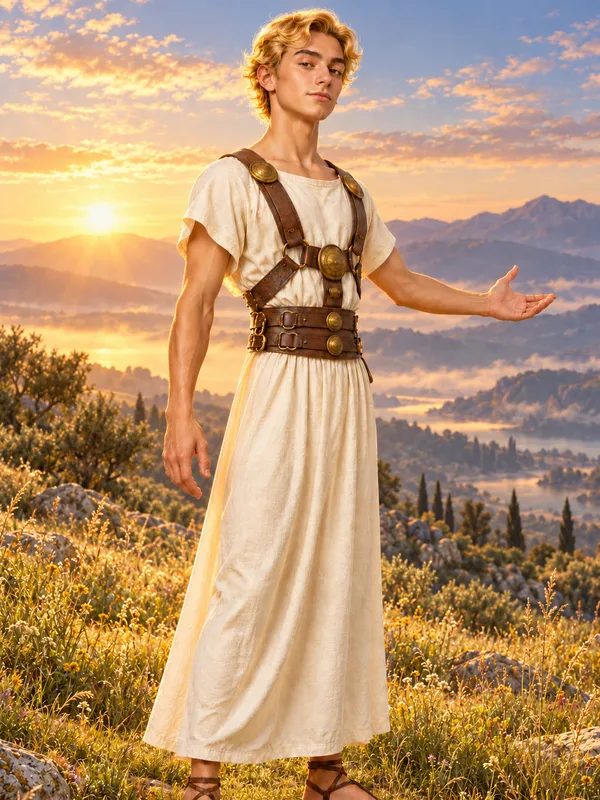
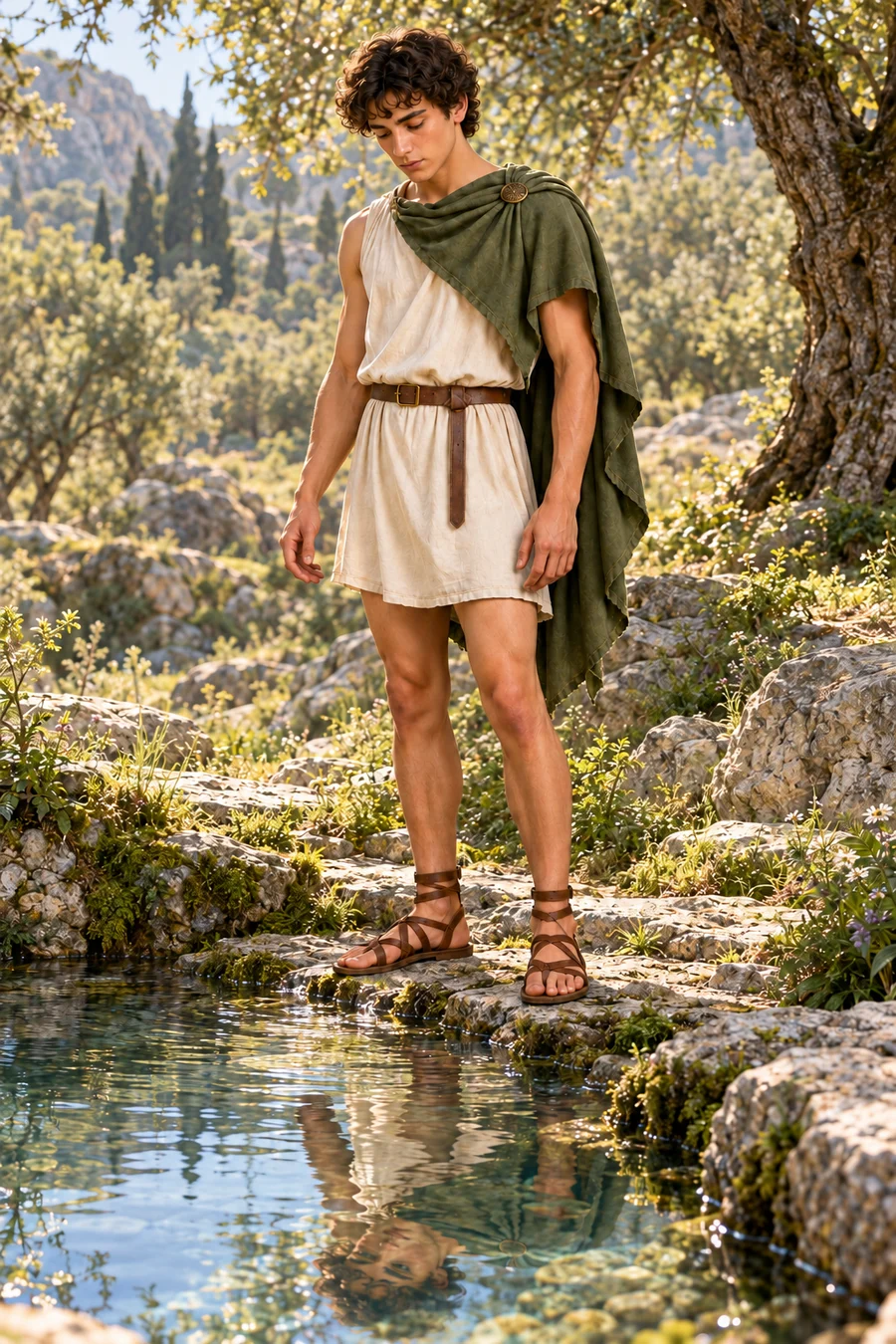
Liriope bore a beautiful infant boy after the river Cephisus attempted to assault her with its waters.1 At fifteen years of age, he appeared as both a boy and a young man, his striking youthful beauty attracting many suitors.2 His stubborn pride prevented him from being impressed by others, and he rejected all the youths and maidens who courted him.2
A prophet predicted that he would live to old age if he never recognized himself.1 He wandered through pathless forests and drove timid stags into his nets while hunting.2 He was often a loiterer among the flowers.3 Accounts differ regarding a twin sister; in a less popular variant, she looked exactly like him, sharing his appearance, hair, and clothes.4 In this alternative telling, they went hunting together, and he fell in love with his twin sister.4
In the more common account, he gazed into the water of a specific spring in the territory of the Thespians.5 He allegedly failed to recognize his own reflection in the water, yet he supposedly fell in love with himself while looking at it.5 His death and strange madness confirmed the prophet's prediction, as he died of love at the spring.1,5
The river Cephisus, described as childless, washes the flower that was once Narcissus.6 He has already become a pale flower in a Thespian field.6 A spring named after him remains in the territory of the Thespians.5
In the underworld, he is located among other famous beauties, appearing as a bare skull.7 A monument to this figure is located near Oropus at a place called Graia, and he is identified as being from Eretria.8 Passers-by are said to keep silence near his monument, a habit that earned him the surname Sigelus, meaning the Silent.8
The codex facts behind this entry
Narcissus was named by his mother and is identified as the son of the river god Cephisus. Ovid Met. 3.339-401 +1 Narcissus is described as a boy who was pre-eminent in beauty and considered one of the beauties of old. Lucian, Dialogues of the Dead 18 ¶1 +1
Fate
He is said to have died of love at the spring, and his death and strange madness confirmed the prophet's prediction. Ovid Met. 3.339-401 +1