MORPHEUS (deity of sleep and dreams)
Divine power · Greek deity associated with sleep and dreams
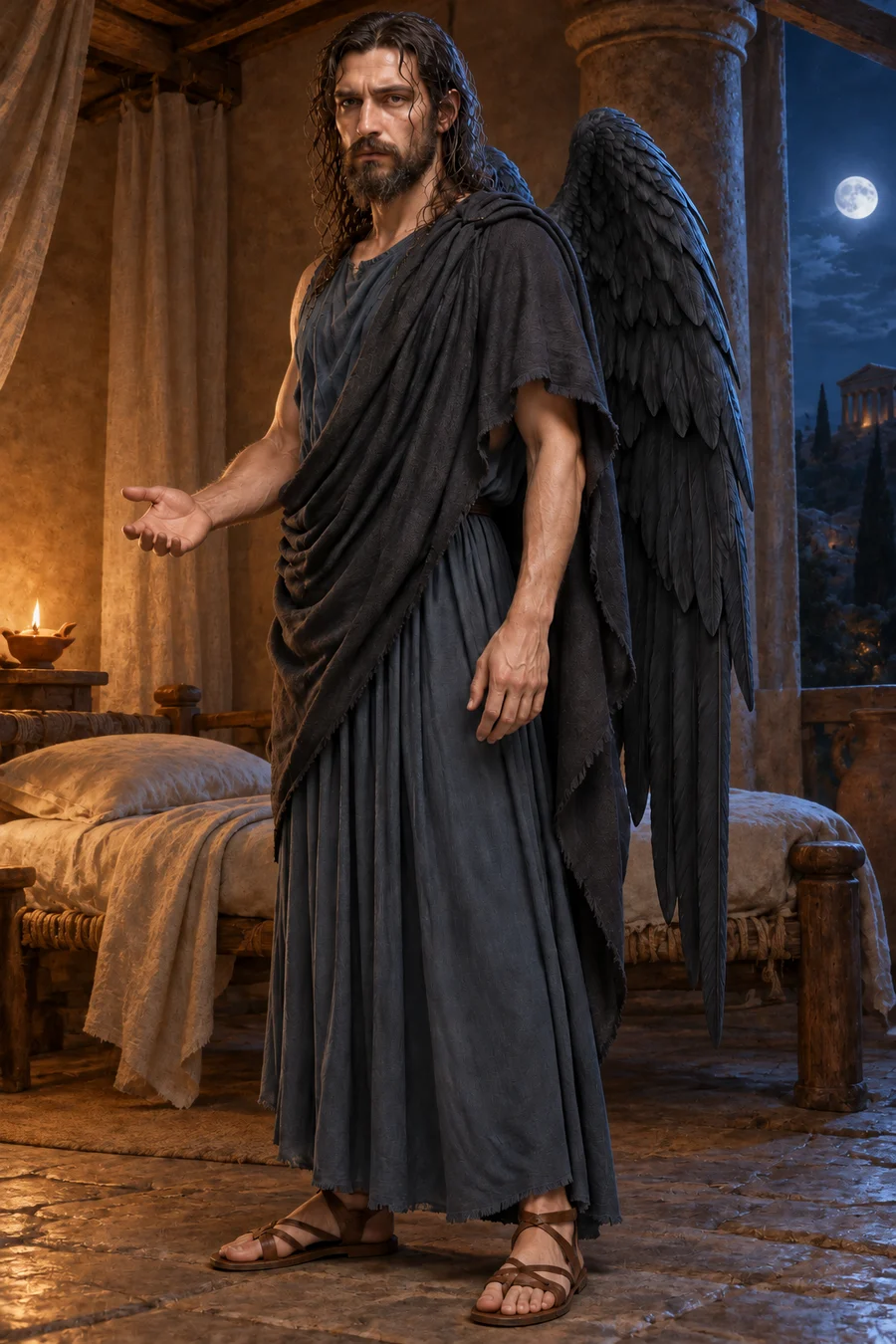
Morpheus, son of Sleep, stood as the sole figure among his kin capable of assuming the physical appearance of men.1 While his brothers Icelos and Phantasos imitated beasts, birds, or inanimate objects, Morpheus alone could mimic the gait, countenance, speech, dress, and words of any human being.1 He was a skilled artist of form, possessing wet, dripping hair and a beard, with wings that allowed him to fly silently through the darkness.1,2
When Sleep selected Morpheus to carry out the commands of the daughter of Thaumas, he traveled to the Hæmonian city to deliver news to Halcyone.1,2 Removing his wings, he assumed the form of Ceyx and presented himself to the sleeping woman as her husband's ghost.2,3 In this guise, he appeared pale, bloodless, and naked before her bed, speaking in a voice that sounded exactly like her husband's.2,3
He informed Halcyone that Ceyx had died in a shipwreck in the Ægean Sea, shedding real tears while mimicking his specific gestures.2,3 Leaning on the bed, he wept and urged his wife to mourn him, warning her not to send him to Tartarus unwept.2
The codex facts behind this entry
Morpheus is described as a skilled artist and imitator of human shapes. Ovid Met. 11.410-748 (12)
Appearance
Morpheus has wet, dripping hair and beard, and possesses wings that allow him to fly silently through the darkness. Ovid Met. 11.410-748 (13)
Powers
Morpheus can mimic the gait, countenance, speech, dress, and words of any man, unlike his brothers who mimic animals or inanimate objects. Ovid Met. 11.410-748 (12)
In the myths
Morpheus removed his wings to assume the physical appearance of Ceyx and presented himself to the sleeping Halcyone as the ghost of Ceyx, shedding real tears while mimicking Ceyx's gestures. Ovid Met. 11.410-748 (13) +1 Sleep selects Morpheus alone to carry out the commands of the daughter of Thaumas. Ovid Met. 11.410-748 (12) He informed Halcyone that Ceyx had died in a shipwreck in the Ægean Sea. Ovid Met. 11.410-748 (13) He traveled to the Hæmonian city to deliver news to Halcyone. Ovid Met. 11.410-748 (13) Morpheus spoke to Halcyone in a voice that sounded like her husband's. Ovid Met. 11.410-748 (14) He wept while leaning on the bed of his wife. Ovid Met. 11.410-748 (13) He urged Halcyone to mourn him and not send him to Tartarus unwept. Ovid Met. 11.410-748 (13)