TARTARUS (deep abyss of the underworld)
Primordial power · deep abyss, place of punishment, in ancient Greek mythology
- Siblings
- Nyx
- Consorts
- Gaia
- Children
- Typhon, Enceladus, Echidna, Telchines, Emphytus, Colophonus, Corydon, Effra
- Haunts and cult places
- Cilicia, Dis, Acheron
- In the sources
- 83 ancient passages
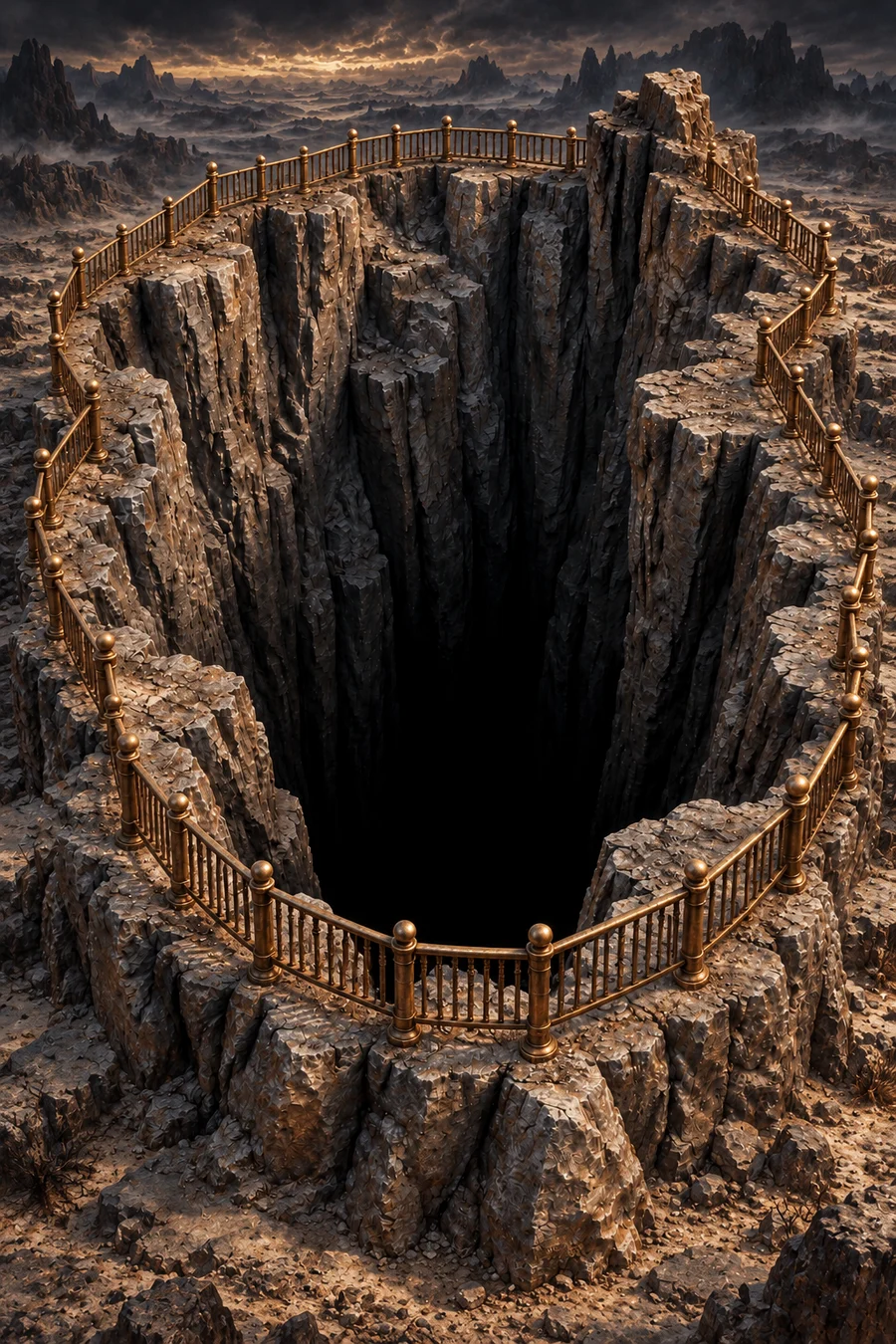
Tartarus is the gloomy, dark, sunless, dusty, and dank abyss located in the depths of the earth, beneath the sea, and within the realm of Hades and Death.1,2 This awful, hopeless darkness sits at the ends of the huge earth, a place so loathsome and dank that even the gods abhor it.1,2,3,4 A gaping, sheer, and deep chasm, it is characterized by a complete lack of light and wind.5,6,7 Bronze fences run around the abyss on every side, while Night spreads in a triple line around it like a neck-circlet.8 The floor of this accursed place is made of bronze, and its gates are made of iron.9
Tartarus is the father of Death and the father of the monster Typhoeus, born from intercourse with Earth.10,11,12 He is also the father of Echidna, and the offspring of Tartarus and Earth was born in the region of Cilicia.13,12 Gaia is listed as a consort, and Nyx is his sibling. The distance from Tartarus to earth equals the distance between earth and sky, and it lies as far below Hades as heaven is above the earth.14,15 It is the farthest, dim place situated deep within the Earth, a domain over which certain gods hold sway.16,17,18
After their defeat, Cronus and the Titans were imprisoned by Zeus in Tartarus, where they reside in isolation and misty gloom.19,20 The gods confined the defeated Titans within Tartarus after their victory, and the Hundred-handers were assigned to guard them.21 Sky also imprisoned the Cyclopes by casting them into Tartarus.15 Menoetius was hurled down to this abyss by Zeus during the Titan battle.22 Zeus cast the defeated Typhoeus into wide Tartarus.11 The intense shaking from the battle reached down to the dim depths of Tartarus.23 The Titans were later brought up from this abyss after dethroning their father.20
Tartarus is the destination and prison-house for sinful, guilty, and damned souls who are doomed.24,25 The Furies live in the evil gloom of Tartarus and grip Orestes to throw him into the abyss.26,27 A savage hound is associated with Tartarus, and the place contains punishments associated with the realm of Erebus.28,29 It is a region unknown to Cerberus, characterized as an awful realm associated with insatiable Death.25,30 The location contains the palace of the underworld, situated in the silent places and empty void where the shades lurk in hollow night.30 Catiline is shown trembling in fear near fury-faces within this abyss.31
Heracles crossed the waters of Tartarus and forcibly brought the dog from the location after subduing the underworld.32,33 The Infernal King and his spouse were startled by the light entering Tartarus, which penetrates through cracks in the ground.34 A new chasm split Tartarus to its depths, allowing spirits to enter across a river that did not belong to its usual boundary.35 The shaking of Tartarus is compared to Zeus swaying the heaven with his nod.36 Prometheus wished to be hurled into Tartarus to escape his current suffering, while the abyss was invoked to take Polyneices into another home.37,38 Hermes threatened to cast the infant into Tartarus, and those cast into it wander beneath the earth.39 The path to Tartarus is described as the left-hand route, a dreadful place where the greedy god Dis holds his realm.24,40,28
The codex facts behind this entry
Tartarus is identified as the farthest, dim place situated deep within the Earth. Strabo 3.2.12 +1 Tartarus is a domain over which certain gods hold sway. Statius, Thebaid 1.42-65 ¶1
Appearance
Tartarus is characterized as loathsome and dank, causing even the gods to abhor it. The Theogony ll. 736-744 +1 Tartarus is described as a gaping, sheer, and deep chasm. Seneca, Thyestes act 5 ¶9 +1 Tartarus is characterized by a complete lack of light and wind. Iliad 8 ¶39
Powers
Tartarus is invoked to take Polyneices into another home. Sophocles, Oedipus at Colonus 1346-1396 The shaking of Tartarus is compared to Zeus swaying the heaven with his nod. Statius, Thebaid 8.72-97 ¶1
In the myths
Sky imprisoned the Cyclopes by casting them into Tartarus. Apollodorus 1.1.2 The gods confined the defeated Titans within Tartarus after their victory. Apollodorus 1.2.1 The Hundred-handers were assigned to guard the imprisoned Titans in Tartarus. Apollodorus 1.2.1 The Infernal King and his spouse are startled by the light entering Tartarus. Ovid Met. 2.1-303 (12) Hermes threatens to cast the infant into Tartarus. Hymn IV to Hermes ll. 254-259 Poseidon fixed bronze gates upon Tartarus to prevent escape. The Theogony ll. 713-735 Homer supposedly derived the name Tartarus from the region of Tartessus and embellished the concept of Tartarus with fable using poetic licence. Strabo 3.2.12 Catiline is shown trembling in fear near fury-faces within this abyss. Aeneid 8.608 A new chasm split Tartarus to its depths, allowing spirits to enter. Statius, Thebaid 7.806-823 ¶2 Heracles intends to go and dwell upon its farthest bound. Seneca, Hercules Furens act 5 ¶4
Fate
Hesiod or the Theogony author states Tartarus was born after Chaos and Earth. Pausanias 9.27.2 The gods abhor this specific region. The Theogony ll. 736-744 A child in Tartarus becomes a leader among small creatures. Hymn IV to Hermes ll. 254-259 No parent can free a child thrown into Tartarus or bring them back to light. Hymn IV to Hermes ll. 254-259