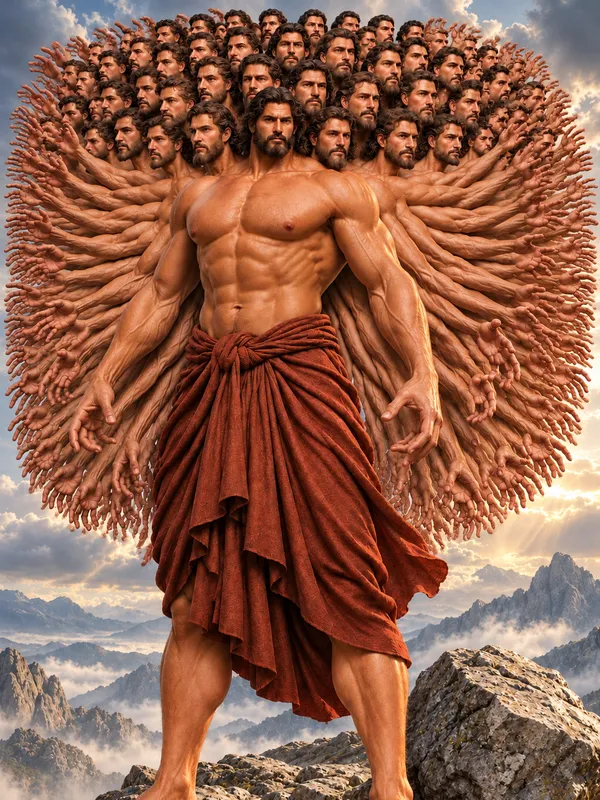
CYCLOPS (giant smith with a single eye)
Monster · member of a primordial race of giants in Greek mythology and later Roman mythology
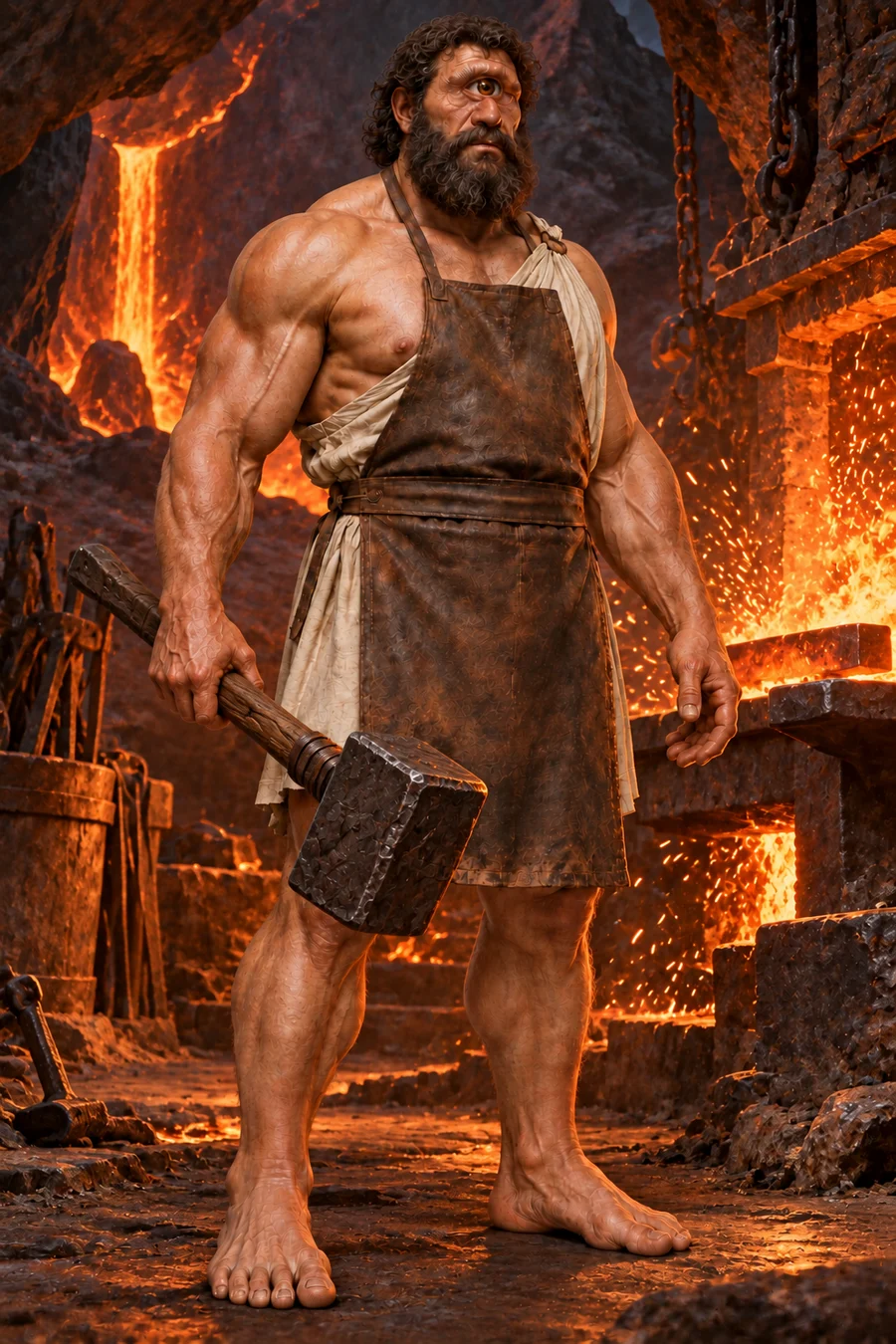
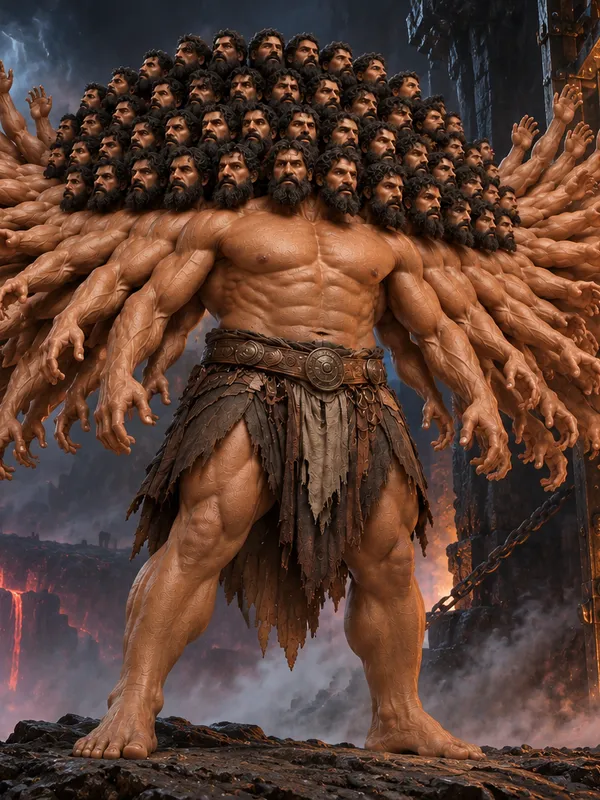
Each possessed a single eye located in the center of their forehead, beneath a long, unbroken eyebrow that spanned the entire face.1,2,3,4 Their bodies were of great, monstrous, and gigantic size, resembling the crags of Ossa, though one account describes the Cyclops as looking like one of his own goats.5,6,7,8 In every aspect except their single eye, they resembled the gods, with giant arms and limbs that marked them as terrible monsters.9,3,10,7
They lived by their craft, earning the name Gasterocheires, and did not plant or plough, trusting in providence for wild wheat, barley, and grapes.11,12 They produced wine from wild grapes grown by sun and rain without tillage, and their diet consisted of milk, cheese, and the flesh of sheep.12,13 Their society lacked established laws, public assemblies, or any administration of justice, as each individual was lord and master in his own family.12,14
The Cyclopes were responsible for forging the heavenly fire and crafting thunder, lightning, and a thunderbolt for Zeus.15,10,16,17,18 Using iron hammers, they beat out the final ray of the bolt, lifting their sinewy arms in a rhythmic swing that produced a heavy groaning sound.19,20,7 They also fashioned arrows and a well-bent bow for Artemis, and their construction work included fortifying the city of Tiryns with massive unwrought stones.21,22,23 They squared the city-walls of Mycenae using red plumb-lines and mason's tools, producing works characterized by strength, might, and skillful craftsmanship.24,25,3
Polyphemus, the king of the Cyclopes, was a huge, wild, and cannibalistic man who loved Galatea with intense, fatal frenzy.26,27,28 While trapped in his cave, the giant killed and consumed several of the narrator's companions, including Antiphus, whom he cooked as his last dinner.29,30,31 He seized two men, smashed them to the ground, tore them apart, and ate their flesh, bones, and entrails for supper, considering strangers the daintiest meat.32,33,13 The giant blocked the cave entrance with a stone too heavy for many wagons to move, but eventually removed it after feeling for it with his hands.29,34,35,36,30,32 After becoming heavily intoxicated on wine offered as a drink-offering, the monster vomited wine and human flesh, and his beauty was spoiled when Odysseus blinded him in the eye.1,6,30,37,26
The fate of the Cyclopes was sealed when Apollo struck them in anger after Zeus killed his son Asclepius, killing them in retaliation for the death of this figure.18,15,38,9 They were rovers who obeyed no other person, possessing a spirit that was overbearing and indifferent to the regard of the gods unless they were in the mood.13,3,39 They claimed to be significantly stronger than the blessed gods, a strength that was considered much greater than that of the divine.39 They remain an accursed and bestial brood, pitiless and indifferent to divine regard, defined by their savage lawlessness and inhuman size.1,39,40,5,6
The codex facts behind this entry
The Cyclopes are three brothers born to Earth by Sky. Apollodorus 1.1.2 +4 The Cyclopes are described as a group of savage, lawless, and inhuman giants who live in a specific country. Odyssey 7 ¶18 +2
In the myths
The Cyclops killed and consumed several of the narrator's companions, including Antiphus, while they were trapped inside his cave. Apollodorus, Epitome 7.5 +6 The Cyclopes crafted thunder, lightning, and a thunderbolt for Zeus. Aeneid 8.407 +5 The Cyclopes fortified the city of Tiryns for Proetus using massive unwrought stones that were too large for mules to move. Apollodorus 2.2.1 +4 Odysseus blinded the Cyclops in the eye while he was intoxicated, spoiling his beauty. Lucian, Dialogues of the Sea-Gods 2 ¶1 +3 The monster vomited wine and human flesh after becoming heavily intoxicated. Aeneid 3.613 +3 The giant removed the stone blocking the entrance after feeling for it with his hands. Apollodorus, Epitome 7.8 +2 The Cyclopes constructed parts of the Mycenae city wall using red plumb-lines and mason's tools. Euripides, Heracles 815-1015 part 3 +1 Apollo struck the Cyclopes in anger after Zeus killed his son Asclepius. Diodorus 4.71 +1 The giant seized two men, smashed them to the ground, tore them apart, and ate their flesh, bones, and entrails for supper. Odyssey 9 ¶19 +1 He blocked the cave entrance with a stone too heavy for many wagons to move. Apollodorus, Epitome 7.5 +1
Fate
A seer had previously prophesied that the Cyclops would lose his sight to Odysseus. Lucian, Dialogues of the Sea-Gods 2 ¶1 +2 Apollo killed the Cyclopes in retaliation for the death of a figure. Apollodorus 3.10.4 +1