TROPHONIUS (oracular prophet of Lebadaea)
Figure of myth · Greek mythological figure with an oracular cult at Lebadaea
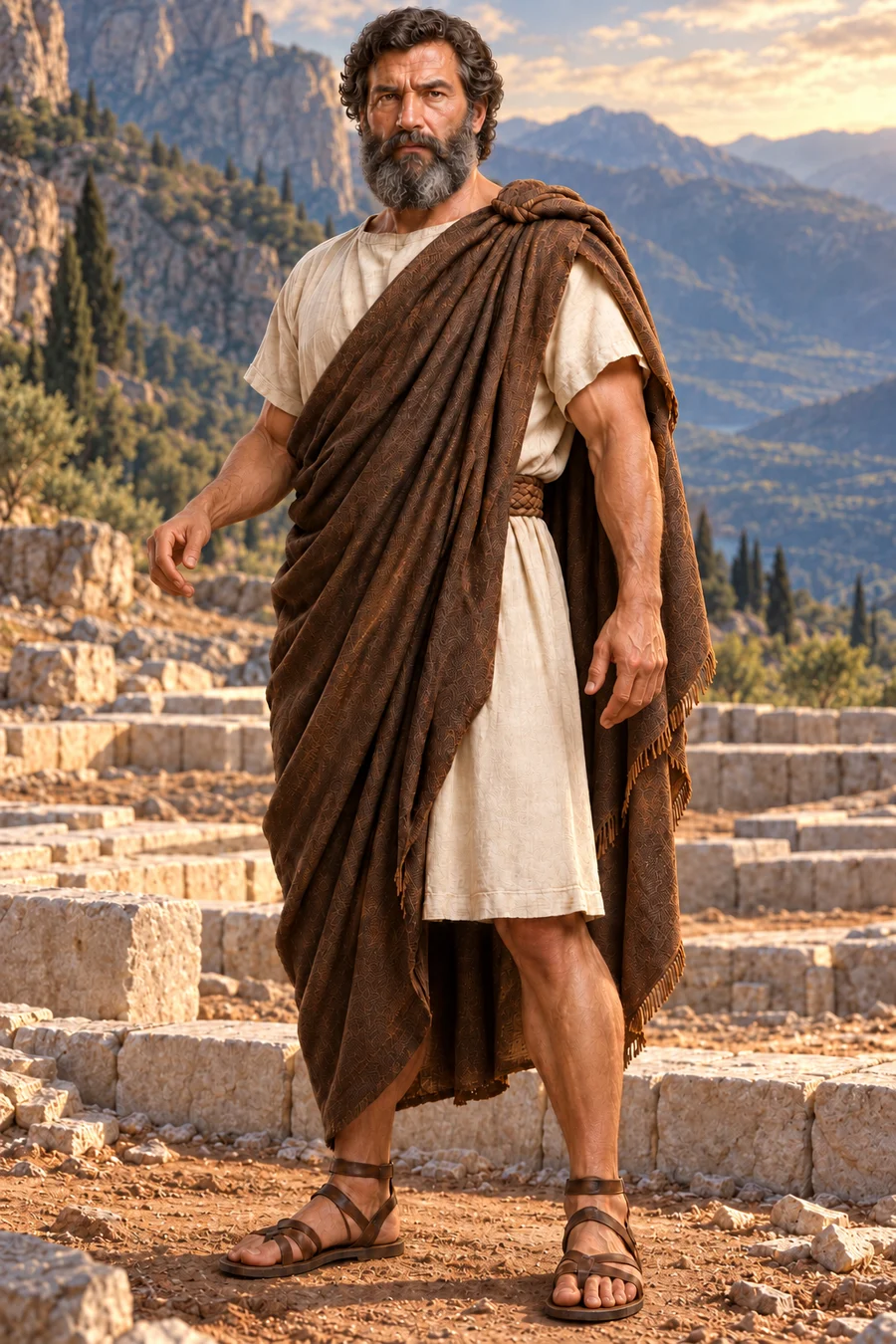
Trophonius identified himself as a Hero who was half God and half man.1 Accounts differ regarding his father, with some sources naming Erginus and others identifying Apollo as his sire.2,3,4 He was considered dear to the deathless gods and was said to have been nursed by Demeter, who bore the surname Europa.2,5 After his death, he was thought to communicate divine precepts, flitting about as a shadow among those who sought his counsel.6
In life, Trophonius worked alongside his sibling Agamedes, jointly building structures that brought them renown.7,8,3 Together, they constructed the temple for Apollo at Delphi, laying a stone footing for the foundations using wrought stones.2,4 They also built the treasury for Hyrieus, incorporating a removable stone that allowed them to steal treasure from within.4 Trophonius further constructed a chamber for Amphitryon in the house at Lebadaea and is credited with building the second shrine mentioned in the texts.7,9 He originally constructed the sanctuary of Horse Poseidon, collaborating with Agamedes on the construction of the original sanctuary.10
The brothers' partnership ended in violence when Trophonius beheaded Agamedes to prevent his brother from being tortured for information about their construction techniques.7,8 Following this act, the earth opened up and swallowed Trophonius at a specific spot in the grove at Lebadeia, a location known as the pit of Agamedes.11 Mortals honored Trophonius with temples, mistakenly believing him to be a God.1 The Pythian priestess instructed the Boeotian envoys to consult Trophonius, directing them to his shrine at Lebadeia for a remedy for drought.12
Consultants sacrificed to Trophonius and his children before descending, offering tablets that recorded their experiences at the shrine.5,13 Inquirers swaddled themselves in linen and held a cake, while serpents were considered sacred to him in the same way they were to Asclepius.1,14 On the night before descending, they sacrificed a ram over a pit, and diviners inspected the entrails to determine if the ram's entrails agreed with previous sacrifices for a hopeful descent.15
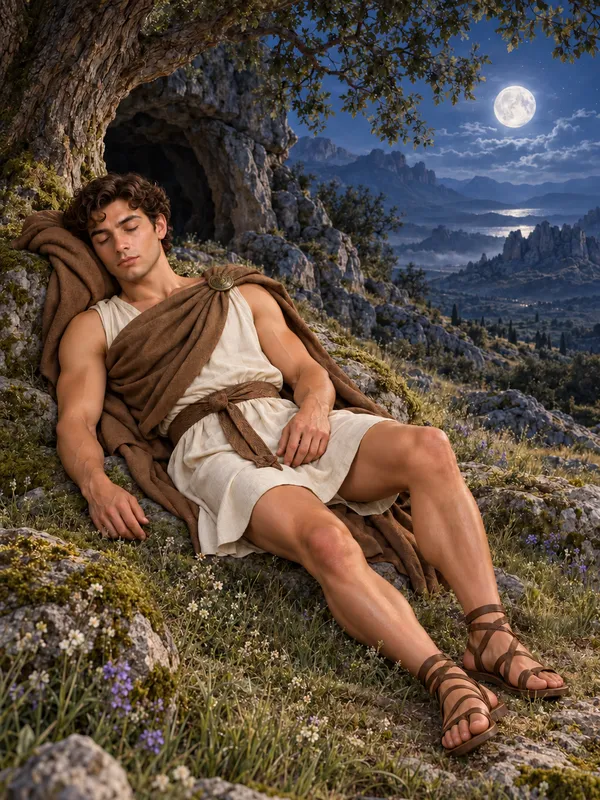
Trophonius provided oracular answers that could be compared to those of Phoebus, refusing to give a prophecy that would contradict the future words of the god.16,17 He declared that neither Xuthus nor Creusa would return home without offspring, offering a specific divine response to their hopes for children.17,16 To the Thebans, he provided an oracle response in hexameter verse, claiming he would destroy the enemy army if a specific condition was met.18 He instructed Saon in the standard rituals and observances at the oracle, ensuring the continuity of his cult.19 Parmeniscus of Metapontum descended into the cave and emerged unable to laugh, while a shield dedicated by Aristomenes was displayed among the offerings at the shrine.20,21,18 The temple he built was traditionally said to be made of stone, but it was eventually destroyed by fire.22
The codex facts behind this entry
In the myths
Trophonius and Agamedes jointly built the structure, and Trophonius beheaded Agamedes to prevent his brother from being tortured for information. Pausanias 9.11.1 +1 Trophonius and his sibling built the temple for Apollo at Delphi, laying a stone footing for the foundations using wrought stones. Hymn III to Delian Apollo ll. 294-299 +1