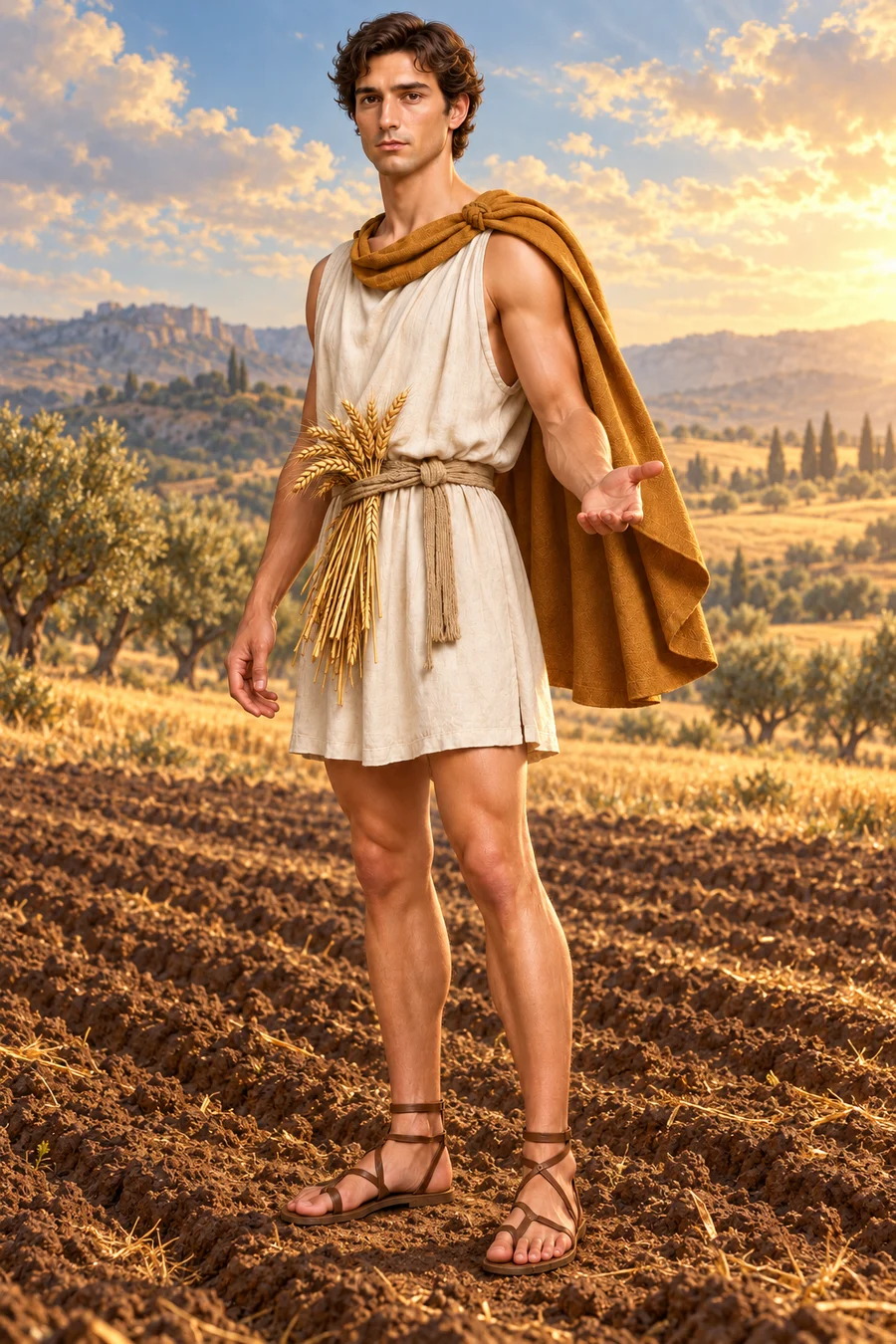
TRIPTOLEMUS (promulgator of agriculture at Eleusis)
Figure of myth · mythical promulgator of agriculture at Eleusis
- Parents
- Celeus, Rarus, Eleusis, Oceanus, Dysaules, Trochilus, Metanira, Hyona, Gaia
- Children
- Crocon, Deiope, Gordys, Dolichus
- In the sources
- 26 ancient passages
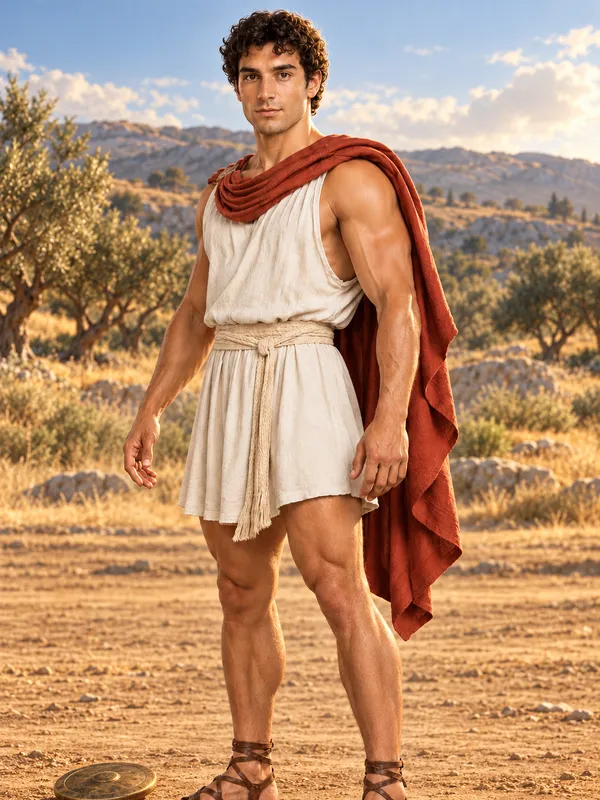
Triptolemus, the elder of Metanira's children, stood as a king who dealt justice and possessed great power and honour within his community.1,2,3 He resided in a city characterized by a coif of towers, where he served as one of several men who guarded the place through wisdom and true judgements.3 Accounts of his lineage differ, with the Argives naming Trochilus as his father, while Choerilus claimed Rarus was the sire and the mother was the daughter of Amphictyon.4,5 Other traditions identify him as the son of Triopas, or state that Ocean and Earth were his parents, while Panyasis claimed he was a son of the place Eleusis itself.6,1 Verses attributed to Orpheus name Dysaules as his father, and Metanira is identified as his mother in the main account.5,1
Demeter taught Triptolemus the sacred mysteries and instructed him to sow the corn she had given him.6,7 His mother, Metanira, gave him a chariot drawn by winged dragons and wheat for his mission, enabling him to waft through the sky.1 He was commanded to share the gift of corn with men everywhere and to instruct others in the labor of sowing.7 Triptolemus traveled through the sky in his dragon-drawn vehicle to sow the entire inhabited earth with wheat.1,8 He brought gifts from Demeter intended to provide harvests and food, scattering seeds in both fallow and previously cultivated ground.8 The Athenians claim he was the first person to sow seed for cultivation, and some accounts credit him with teaching the use of oxen and the plough.4,9
During his journey, he traveled from Attica to the region of Patrae, where he received cultivated corn from the aboriginal king Eumelus.10 He named a newly founded city Aroe after tilling the soil and learned how to establish a city during this visit.10 He and Eumelus jointly established a city named Antheia, which was named in honor of Eumelus's son.11 While Triptolemus slept, the youth Antheias attempted to drive his car and sow seed, though Orphic verses state that the sowing of seed was Demeter's reward to Triptolemus and Eubuleus.11,5 He also wandered through the region of Cilicia during his search.12
The youth traveled through the air over Europe and Asia to reach Scythia.8 In Scythia, Triptolemus entered the house of the local king, Lyncus, who attacked him with a sword while he slept.8 Demeter transformed the attacker into a lynx during the assault, and Triptolemus was sent again to drive her chariot through the air.8 He taught Arcas the method for growing agricultural crops, possessing the knowledge of cultivating them.13 Triptolemus is identified as an Eleusinian figure, and he gave the gift of grain to Eleusis, a location associated with the grain gift.14,15
A temple dedicated to him exists above the Enneacrunos spring in Athens, and the Eleusinians maintain a temple in his honour.16,17 A festival is celebrated in his honour on Mount Casius, and a threshing-floor bearing his name is displayed at the site along with an associated altar.12,17 He is listed among those who received instruction in the mysteries, and Choerilus claims he was the brother of Cercyon.2,5 Triptolemus is identified as the father of the colonizer Gordys.18 According to Orphic verses, Triptolemus gave Demeter information about her daughter, while Panyasis claimed that Demeter came to Triptolemus.5,1
The codex facts behind this entry
In the myths
Demeter taught Triptolemus the sacred mysteries and instructed him to sow the corn she had given him. Callimachus, Hymn 6 ¶1 +3 Triptolemus traveled through the sky in his dragon-drawn vehicle to sow the entire inhabited earth with wheat. Apollodorus 1.5.2 +2