THEOCLYMENUS (mortally prophetic seer)
Figure of myth · son of Polypheides in Greek mythology
- Parents
- Polypheides
- In the sources
- 19 ancient passages
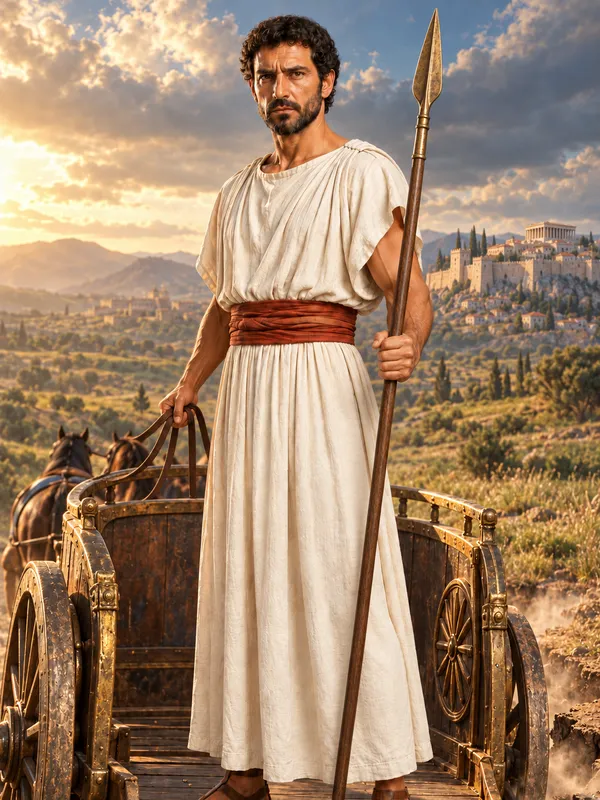
He possessed a spear that was later handed to Telemachus.1 His nature was one of solemn piety, spending his days in worship and ritual.2 Accounts differ regarding his domestic life; in one tradition, his sister Theonoe was the daughter of a Nereid goddess.3
Theoclymenus claimed to possess rich herds of animals suitable for sacrifice.4 He regularly addressed his father's tomb when entering or leaving his house.5 He asked whether the stranger had left Menelaos unburied or hidden him in the earth, and if there was a tomb for the absent.6 Theoclymenus wondered what he should give for the dead man, reflecting his belief that the race of Pelops was clever in such funeral matters. [f: 34, 16]6
Theoclymenos provided a Sidonian ship to a stranger for a voyage.7 He directed his servants to carry funeral gifts for the sea and asked Helen to appoint someone to provide a ship for them.8 Theoclymenos promised to provide a swift Phoenician ship for the funeral procession and offered clothing and food to Menelaos so he could return to his country. [f: 25, 26]4 He instructed a stranger to give offerings to the sea for Helen's former husband and told him to return home with his wife after sharing a feast. [f: 21, 22]9 Theoclymenos commanded that a specific man would lead the ship and that his sailors would obey him.9 He ordered his sailors to allow the stranger to command the vessel, while expressing disbelief that one person could defeat many sailors.7
Tragedy struck when Theoclymenos learned from Helen that her husband Menelaos had died, news that he expressed was good fortune for himself.5 He asserted that fortune gave his bride to him as his property and claimed he would be a husband no less than Menelaos, believing his house was pure because Menelaos did not die there. [f: 6, 64, 30, 31]10,9 However, his sister Theonoe was accused of seeing Menelaos in the house without informing him, leading Theoclymenos to intend to kill her for giving his bride to another man. [f: 27, 17]10 Theoclymenos held a black sword against his sister, but his servant physically blocked him to prevent the killing, and he eventually stated he would no longer try to kill her. [f: 18, 14]3,10 Angry about a marriage that was not destined for him, Theoclymenos claimed his bride escaped from him due to a woman's tricks.3,10 He eventually agreed to let Helen go home if the gods thought it right.3
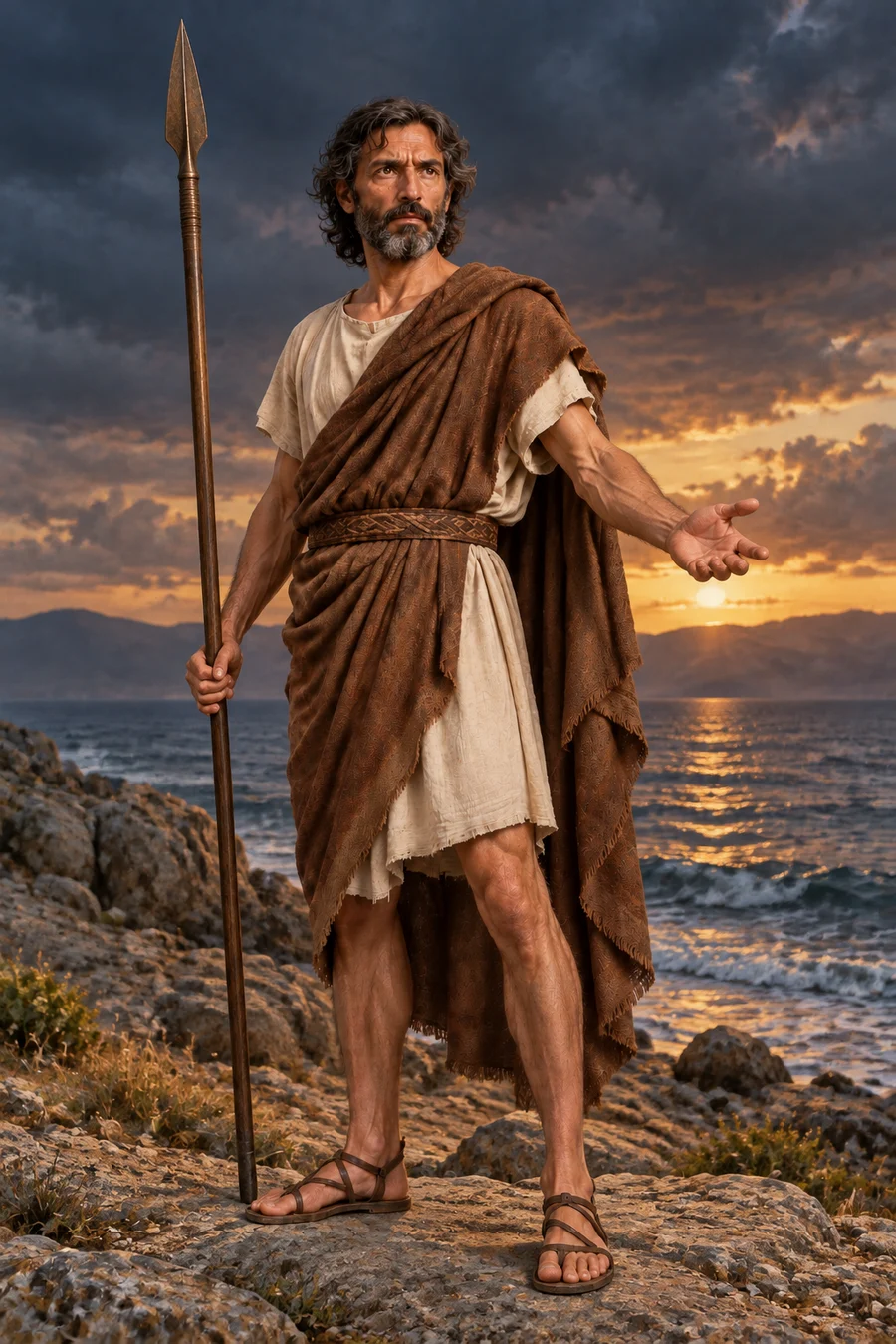
In another account, Theoclymenus was part of the group that sailed past Crouni and Chalcis, where he interpreted a hawk catching a dove as a divine omen for Telemachus. [f: 11, 23]1,11 He predicted that Telemachus would remain powerful in Ithaca and that no house in Ithaca would be more royal than Telemachus's.11 Theoclymenus was taken to the house of a speaker by the man who spoke, where he ate and drank until he was satisfied, consuming bread and other good foods. [f: 47, 35]12 A maid poured water from a golden ewer into a silver basin for his hand washing, and he received new cloaks and shirts from the maids after his bath. [f: 36, 42, 38, 48]12 He removed his cloak and placed it on the benches and seats, taking a seat at the dining table.12 Theoclymenos warned that impending disaster would prevent the insulting men from escaping, claiming he could use his own senses and mind to depart safely without an escort. [f: 12, 9, 67]13 He claimed the dead experience nothingness and that labor for them is useless.9 Finally, Theoclymenos killed a man who belonged to his own family lineage, and he begged to be taken aboard a ship to escape his enemies, identifying himself as an exile fleeing death.14