RHESUS (mythical king and demigod)
Figure of myth · mythical king and demigod
- Parents
- Strymon, Eioneus, Calliope, Euterpe
- Siblings
- Sete
- Consorts
- Arganthone
- Allies
- Hector
- Symbols and gear
- chariot
- Haunts and cult places
- Thrace, Mount Ida
- In the sources
- 35 ancient passages
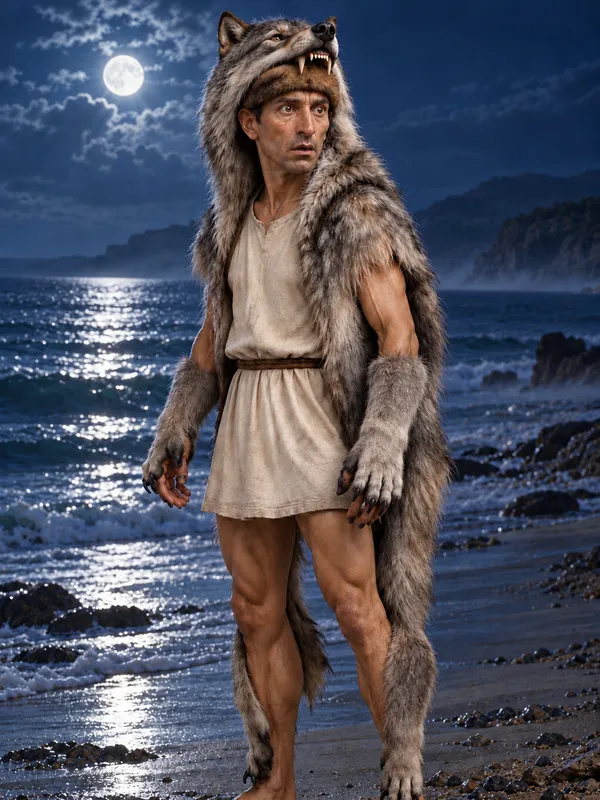
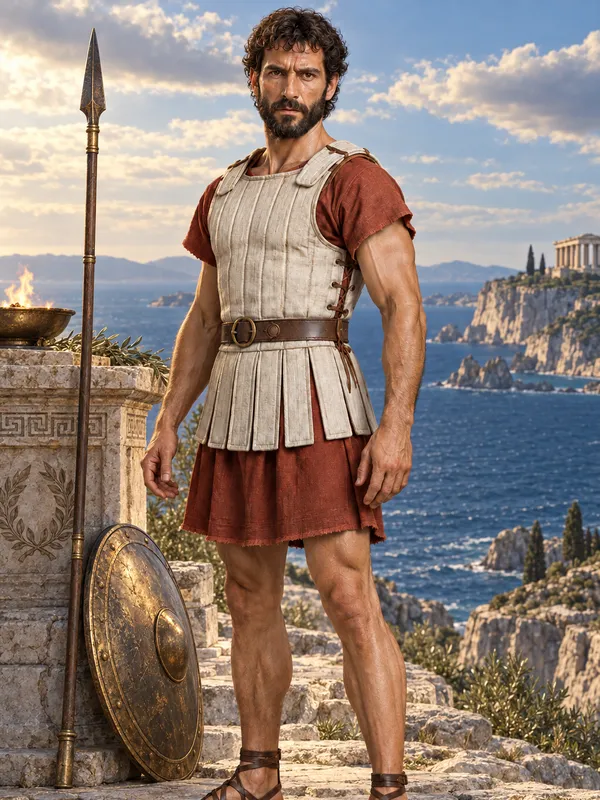
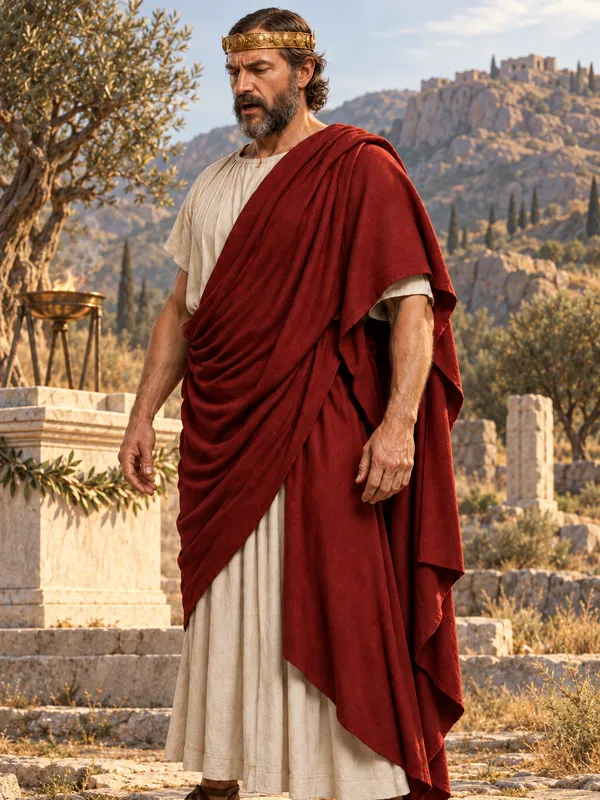
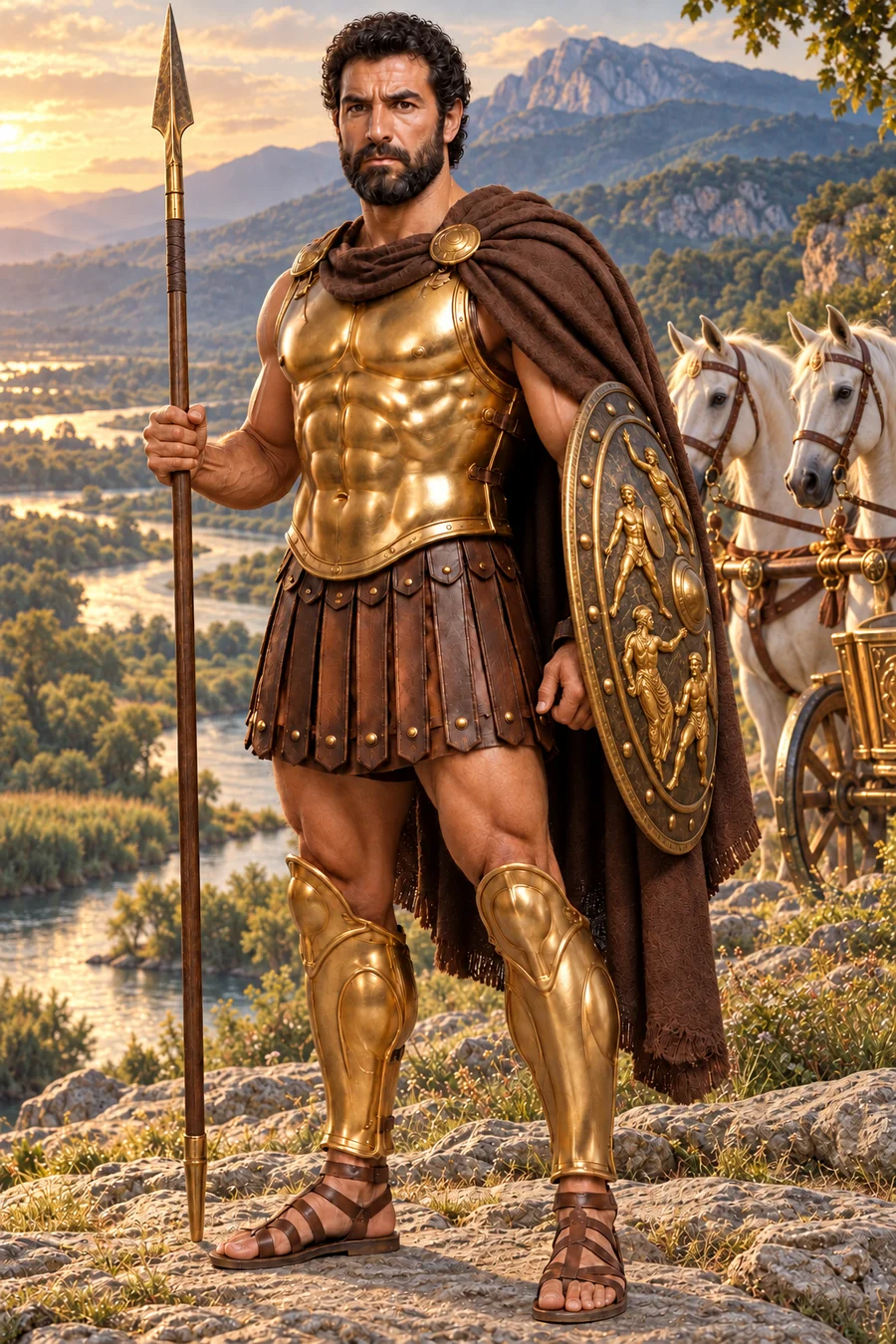
Rhesus, the high lord of Thrace and king of the Thracians, was a figure of immense power who arrived at Troy to aid the sons of Priam against the Greeks.1,2,3,4,5,6 His lineage is a matter of debate, with some accounts naming Eioneus as his father, while the people of Thrace claim the river Strymon and a Muse, either Euterpe or Calliope, as his parents.7,2,8,1 He appeared mounted on his Thracian chariot in a manner resembling a god, commanding a band of warriors arrayed in Thracian garb.3,9 His horses were whiter than snow and faster than the wind, tied to the top rim of his chariot, and they shone brightly in the darkness like the plumage of a river swan.3,7,10 A bronze gorgon head with bells was attached to the front of his horses, ringing out a note of fear, while a golden yoke linked the chariot horses.3 He possessed golden armor of rare workmanship deemed fit only for gods, and a shield on his shoulders featuring figures welded in gold.11,7,3 His chariot was decorated with silver and gold, and he wore a soldier's cloak as his only wrap during his journey.7,12,13
Rhesus traveled to Troy by sea and then overland through Paeonia, arriving late to provide military assistance to the city.1,3,2,14,13 He commanded a vast army of Thracian warriors that was impossible to count exactly, including the Bisaltae, Edoni, and Odomantes who migrated from Macedonia.3,15,1 On the day before he planned to leave for Ilium, the Scythians attacked him; he defeated them near the Euxine sea, took their children as hostages, and imposed a yearly tribute on them for his house.13 Hector initially treated him as a guest but accepted him as an ally after persuasion, allowing him to join the allies of the land following a messenger's report.11 Rhesus asked Hector to position him directly opposite Achilles and his army, expressing readiness to fight to clear the city of its enemies.16,17 He intended to atone for his long absence through military exploits and believed it was wrong to kill foes in secret, preferring face-to-face combat.17,16 He claimed his arrival was timely despite the Greeks' ten-year failure, boasting that he could sack Troy and destroy the Achaean fleet in a single day.13
Hector instructed him to lead his troops in front of the Trojan ranks and told him to receive the spy Dolon as he approached the camp.16 During the night, Rhesus slept in a lowly bed in the darkness, in the middle of the Thracian soldiers' camp.18,19 Odysseus and Diomedes, on a spying mission, found him there, and the accounts differ on whether he was killed in his own camp by unknown attackers or by the Greek heroes.6,10,20,8,18,21,22 Together, they struck him with a treacherous blow, a fate sterner than mere wounding, and seized his horses.6,10,14,18 The attendants who guarded him were also slain, and the charioteer later claimed Rhesus was murdered by his own Phrygian allies, though the Greek heroes were the true perpetrators.6,12,18
Rhesus had married Arganthone after she confessed her love for him, and he was the son of Eioneus in some traditions.22 His fate was sealed by his confidence, for if he had survived the night, his spear could have destroyed the Argive fleet and raze palisades.10 He remains a figure of tragic brilliance, a king whose divine-like presence and immense power were cut short by the treachery of the night.14,18,3
The codex facts behind this entry
Rhesus is identified as a king of the Thracians. Iliad 10 ¶1 +1
In the myths
Odysseus and Diomedes kill Rhesus and seize his horses during their spying mission. Apollodorus, Epitome 4.4 +3 Diomedes killed Rhesus in his own camp during the events at Troy. Aeneid 1.464 +2 Rhesus was killed in his bed by unknown attackers during the night. Euripides, Rhesus 833-881 +2 Rhesus traveled to Troy to provide military assistance, arriving late to aid the city against the Argive forces. Euripides, Rhesus 388-421 +1 Rhesus's attendants were also slain by the speaker in his camp. Apollodorus, Epitome 4.4 +1
Fate
Rhesus was killed by a treacherous blow, a fate described as sterner than mere wounding. Euripides, Rhesus 747-753 +1 Rhesus was killed by Odysseus and Diomedes while sleeping, or wounded by Diomedes alone at the river. Apollodorus, Epitome 4.4 +1