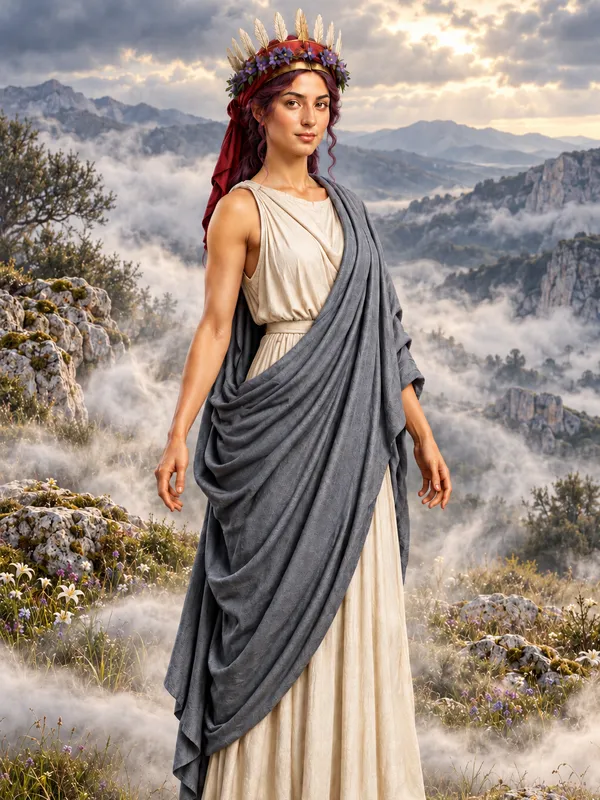
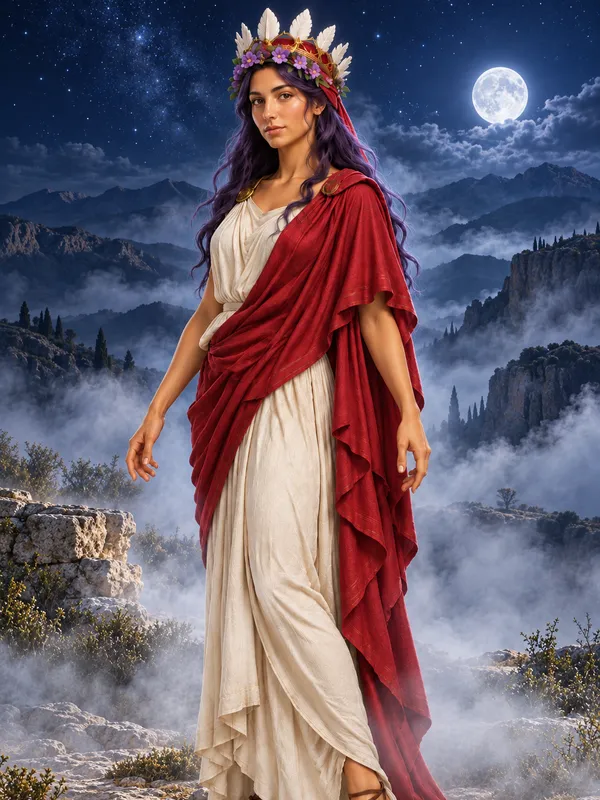
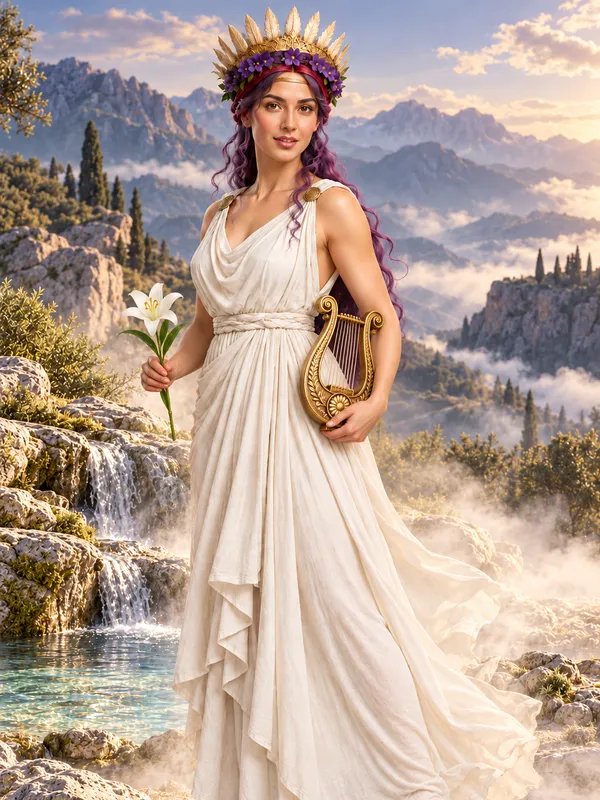
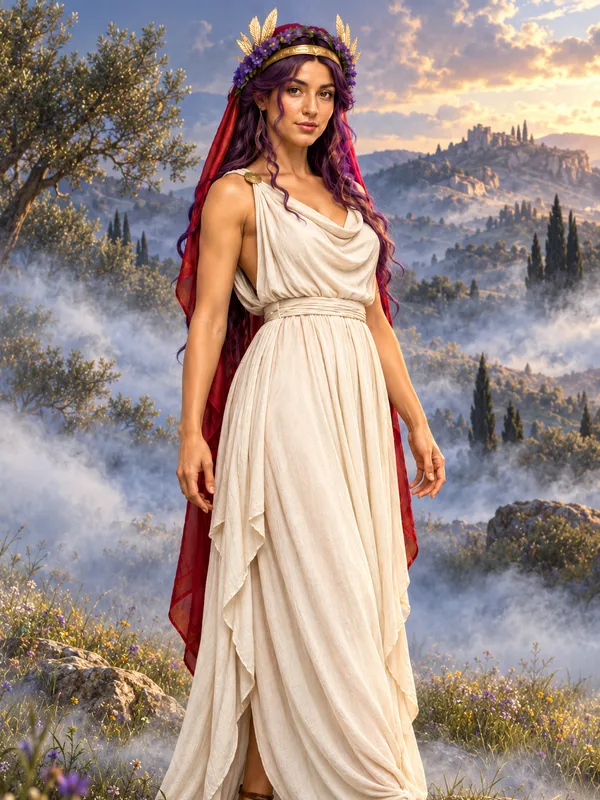
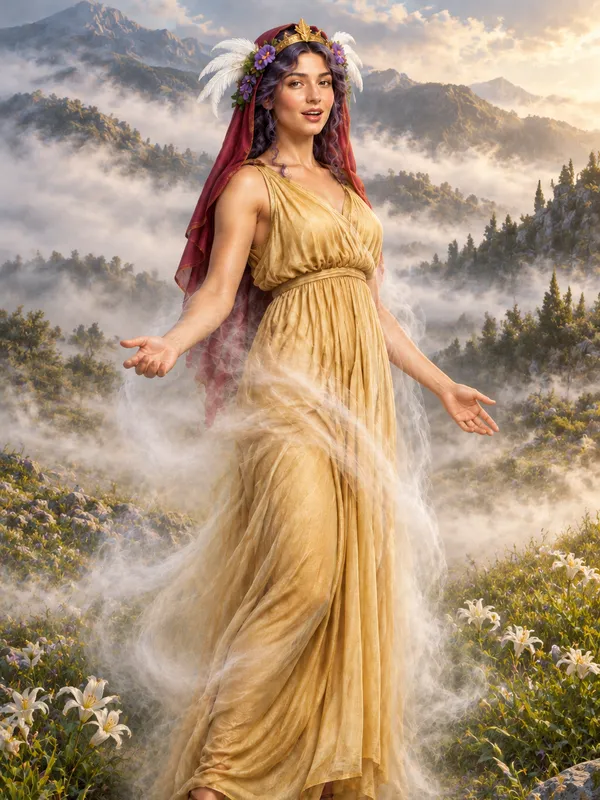
HESPERID (nymph guarding the golden apples)
Divine power · nymphs in Greek mythology
- Parents
- Atlas, Erebos, Phorcys, Zeus, Hesperus, Nyx, Themis, Ceto, Hesperis
- Symbols and gear
- apples, snake, golden apples, enchanting tree, poppy
- Haunts and cult places
- Africa, Libya
- In the sources
- 39 ancient passages
One account holds that they were seven daughters born to Atlas and Hesperis, known as the Atlantides, while another names four specific nymphs: Aegle, Erythia, Hesperia, and Arethusa.1,2 Hesiod also named Aegle, Erythea, and Hesperethusa as members of the group, which is otherwise counted as five figures.3,4
These maidens dwelled in a frontier land towards Night, beyond glorious Ocean, in the sacred plain of Atlas's garden at the borders of the earth.5,6,7,8,9 Their gardens were situated two hundred paces from the Ocean and near a shrine of Heracles, though some myths placed them in Libya or Lixos in Mauretania.10,11,12 The Hesperides marked the starting point for measuring the depth of the Greater Syrtes, and a lake named after them lay near Berenice where the river Lathon flowed in.13,14,15,16 Statius Sebosus claimed the islands were forty days' sail from the Gorgades and one day's sail from Hesperu Ceras, while the distance from Zacynthus to the Hesperides is given as 3300 stadia.17,9 The Sun traveled from the bright region of the Hesperides to the Ethiopian shore, and their shrine stood in the last Aethiop land near the setting sun.18,19
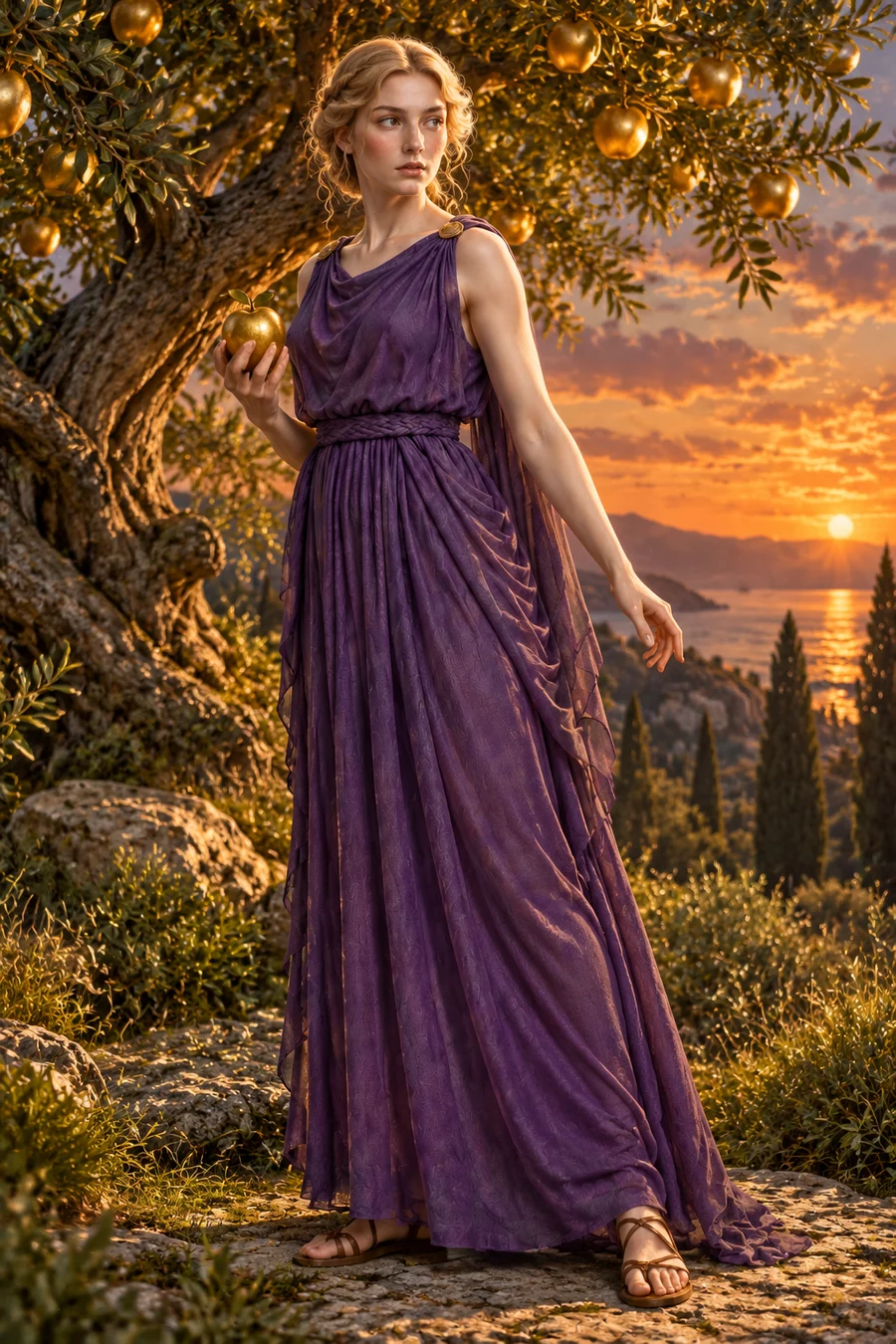
The maidens were stationed to guard the golden apples on trees located beyond Ocean, alongside an immortal dragon.3,5,2,20,21 They possessed exactly three golden apples, which were described as having a sweet smell but being poor to eat.20,22 The fruit was produced by Terra, and some writers claimed the Hesperides owned flocks of exceptionally beautiful sheep, or that the maidens themselves were sheep with a gold-like color.23,10 Timachides identified a specific pear variety as the apple of the Hesperides, while Jobas noted that Libyans called the citron the Hesperian apple, and Pamphilus stated these apples were offered to the gods in Lacedaemon.22,23 The Hesperides were associated with dolorous fruit incorporated into a magical circlet and an enchanting tree that bore fruit.24,19
Heracles attacked the Hesperides and took their golden fruit as spoil during his eleventh labor, after which Atlas received three golden apples from them.25,2 In another account, pirates sent by Busiris seized the girls while they played in a garden, but Heracles killed the pirates and returned the maidens to their father Atlas.1 When the heroes approached, Orpheus promised them gifts, libations, and banquets if they helped, but they turned into dust and earth.7 They lamented shrilly over the fallen serpent Ladon, and a Numidian witch guarded their shrine, scattering slumbrous poppies mixed with honey-dew and feeding the dragon that protected the fruit.7,19
The Hesperides were removed by the Eleans from their original location and were located in the Heraeum during Pausanias's time.26 Their gardens were highly admired in remote antiquity, but no traces of the grove remain except for some wild olive-trees.27,12 They chanted a lovely song around the sacred plain, and their presence marked the borders of the earth in the region of Africa.7,9,1 The golden apples are cited as fables related by later poets, yet the maidens remain a clear-voiced and beautiful group in the memory of the ages.28,6,1
The codex facts behind this entry
Hesiod identifies the Hesperides as the daughters of Night. Doubtful Fragments fr. 5 Orpheus described them as a sacred race of Oceanus. Argonautica 4 ¶82 The Hesperides were seven daughters born to Atlas and Hesperis, and were also known as the Atlantides after their father. Diodorus 4.27
Powers
Legend states the keeping of the apples was entrusted to the Hesperides. Pausanias 5.11.6
In the myths
The Hesperides guard the golden apples on trees located beyond Ocean. Doubtful Fragments fr. 5 +1 The Hesperides are depicted carrying apples in the painting. Pausanias 5.11.6 Theocles, a Lacedaemonian, created the statues of the Hesperides. Pausanias 5.17.2 Atlas received three golden apples from the Hesperides during Heracles' eleventh labor. Apollodorus 2.5.11 The Hesperides were removed by the Eleans from their original location. Pausanias 6.19.8 They were chanting a lovely song around the area. Argonautica 4 ¶82 They lamented shrilly over the fallen serpent Ladon. Argonautica 4 ¶82 Pirates sent by Busiris seized the girls while they played in a garden. Diodorus 4.27 Heracles killed the pirates and returned the maidens to their father Atlas. Diodorus 4.27 Heracles attacked the Hesperides and took their golden fruit as spoil. Seneca, Hercules Furens act 2 ¶2
Worship
Orpheus promised them gifts, libations, and banquets if they helped the heroes. Argonautica 4 ¶82
Fate
They turned into dust and earth when the heroes approached them. Argonautica 4 ¶82 No traces of the Hesperides' grove remain except for some wild olive-trees. Pliny, Nat. Hist. 5.1 ¶2 The fruit known as the apples of the Hesperides was produced by Terra. Athenaeus 3.25