HARMONIA (goddess of harmony and concord)
Divine power · ancient Greek goddess of harmony and concord, spouse of Cadmus; her opposite is Eris
- Parents
- Ares, Aphrodite
- Consorts
- Cadmus
- Children
- Semele, Ino, Agave, Autonoë, Polydorus, Illyrius, Aella
- Allies
- Ares
- Symbols and gear
- king
- Haunts and cult places
- Thebes, Amathus
- In the sources
- 32 ancient passages
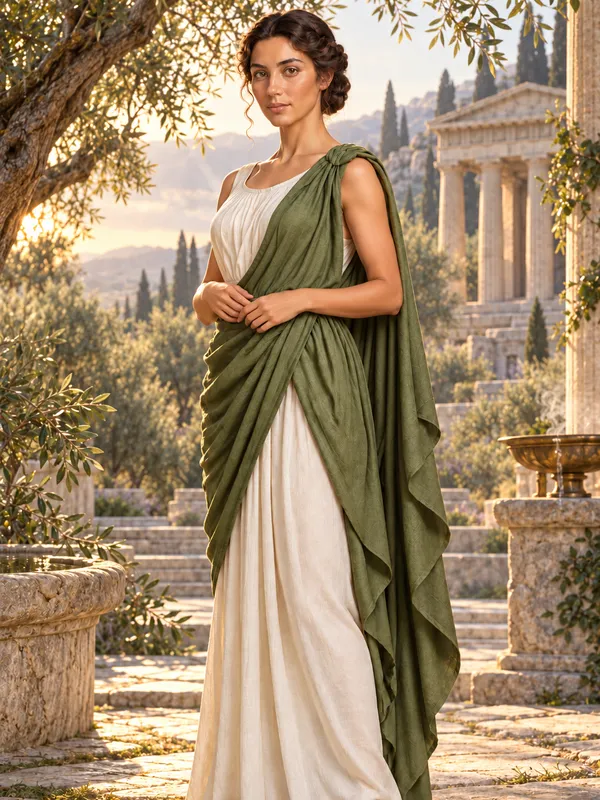
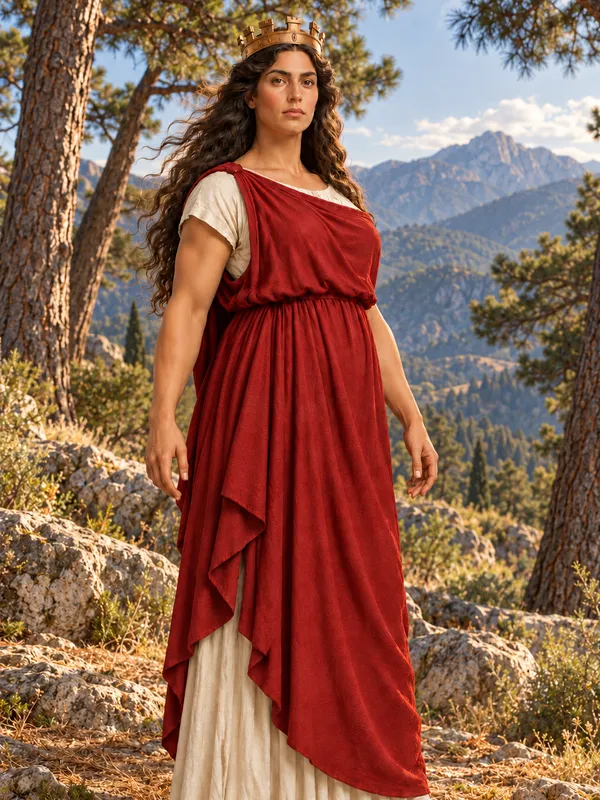
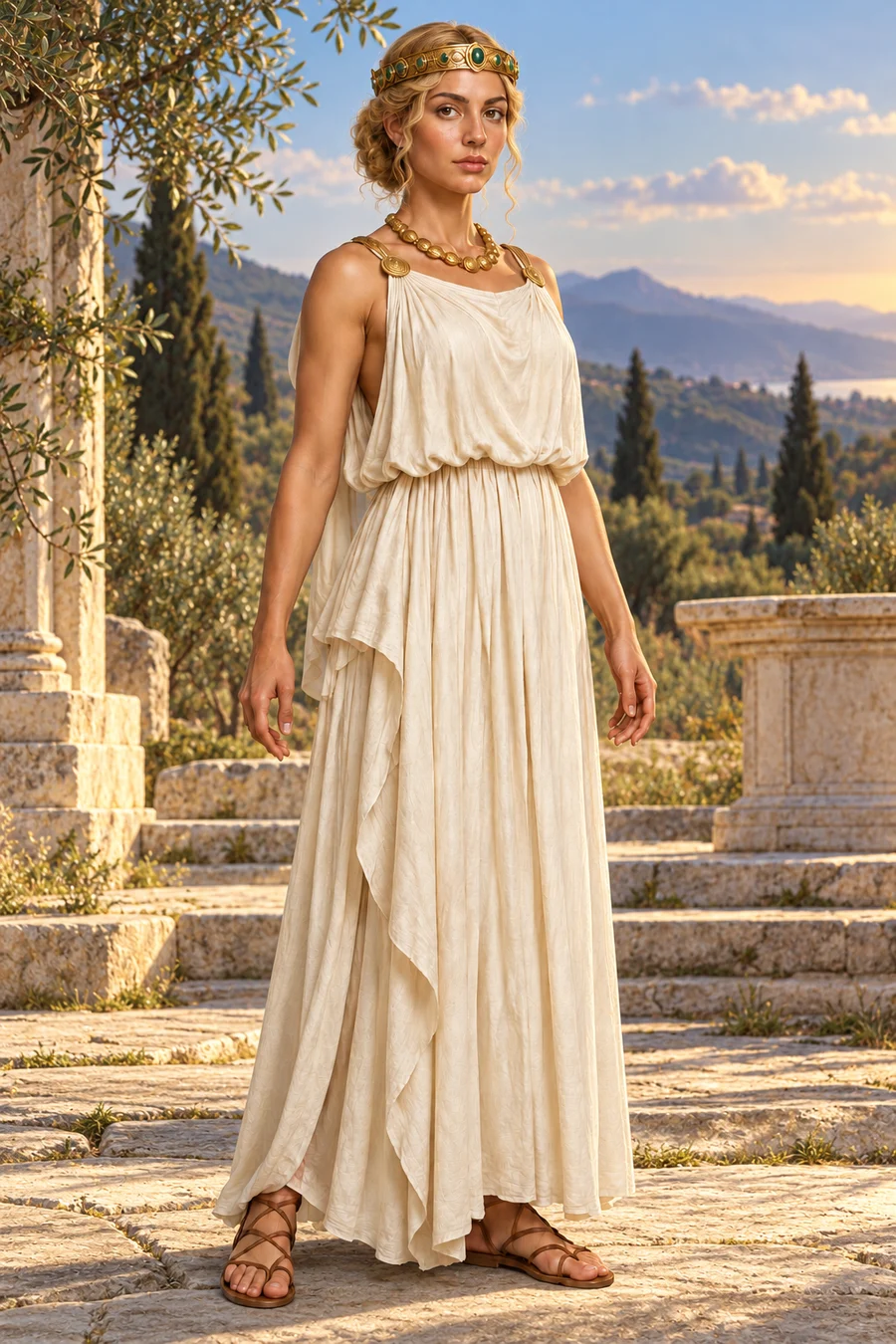
Harmonia, the daughter of Aphrodite and Ares, is depicted with golden hair and large eyes.1,2,3,4 Other accounts name Zeus and Electra as her parents, describe her as a nymph, or identify her as the sister of Iasion and Dardanus.5,6 She has been granted a portion of Aphrodite's influence and shares in the influence of the whispering touches of the Loves.7
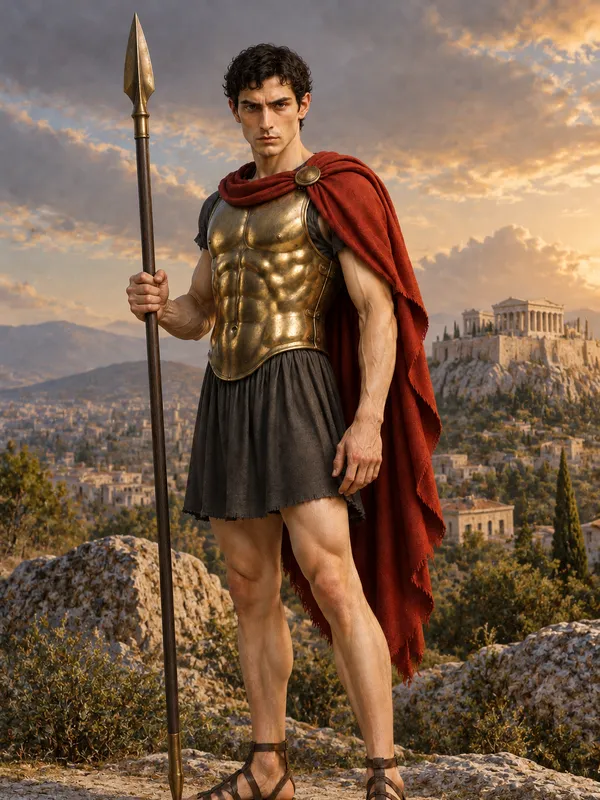
Her marriage to Cadmus, whom she believed to be mortal, was celebrated in seven-gated Thebes in connection with the founding of the city.8,9,10,4,1,11 The gods descended to the Cadmea to celebrate her marriage, bringing gifts and providing a feast, which was the first for which gods provided a feast, and the sons of heaven attended the ceremony.1,11,10 Apollo played the lyre while the Muses played their flutes and sang during the wedding celebration, as the sons of Cronus gave gifts for Harmonia's espousal.11,12,4 Ares created a circlet for Harmonia's bridal dowry to address his deceit, and Grief, Passions, and Anguish moulded the circlet rather than divine artisans.13 The circlet contained emeralds, adamant, Gorgon eyes, thunderbolt embers, the fruit of the Hesperides, and Phrixus' golden fleece, and it was anointed with lunar foam and the poison of delight.13
Harmonia received a golden necklace and a robe from Aphrodite, and a renowned necklace, a robe, and a flute from Athena.14,15,11 Electra gave Harmonia cymbals, kettledrums, and other ritual instruments, while Cadmus presented her with a robe and a necklace made by Hephaestus.11,1 A necklace was originally given to Harmonia, though Pherecydes claims Europa gave the necklace to Cadmus after receiving it from Zeus.1,16 Polyneices possessed the golden necklace that had been given to Harmonia, and he gave the necklace to Eriphyle to persuade her husband to join the war.14 The necklace was dedicated in a sanctuary in Amathus, Cyprus.16
With Cadmus, Harmonia bore Semele, Ino, Autonoe, Agave, and Polydorus, and legend says she gave birth to the nine Muses.2,9,3 The Thebans identify ruins of her bridal chamber on their citadel, and Harmonia was led to her home by a procession of brothers carrying torches.12,17 She left Thebes with Cadmus to travel to the Encheleans, where she served as a leader for the Encheleans against the Illyrians.18 Harmonia was traveling with Cadmus while carrying the remains of Pentheus and accompanying Epirus, the daughter of Echion, on a journey.19 In some accounts, Cadmus fled away with her after taking her, and she was described as a slave belonging to the king.20
Harmonia was transformed into a serpent alongside Cadmus, and she was sent to the Elysian Fields by Zeus.18,8 Ares will protect her and settle her life in the land of the blessed, and she will be brought to the altars and tombs of Hellas.8 Her tomb is located near the city of Pola on the Illyrian river, and she was present at the gathering of the gods on Olympus.21,22,23 Harmonia gave Aphrodite the specific epithet Heavenly, and she knew of crimes committed by both foreigners and Greeks, including those similar to those attributed to Phaedra and the Thracian Tereus.24,25 She danced with the Graces, Seasons, Hebe, and Aphrodite, holding the wrists of the other goddesses, and in some accounts served as a cupbearer for the gods.23,5
The codex facts behind this entry
Harmonia is the daughter of Aphrodite and Ares. Apollodorus 3.4.2 +3 She is identified as the daughter of Ares. Euripides, Bacchae 1330-1367 Some people described Harmonia as a nymph rather than a goddess. Athenaeus 10.25
Appearance
Harmonia is described as having golden hair and large eyes. Euripides, Medea 824-834 +1
Powers
Harmonia has been granted a portion of Aphrodite's influence and shares in the influence of the whispering touches of the Loves. Aeschylus, Suppliant Maidens 1034-1042
In the myths
The gods descended to the Cadmea to celebrate her marriage, bringing gifts and providing a feast. Apollodorus 3.4.2 +3 The Muses played their flutes and sang during Harmonia's wedding celebration. Diodorus 5.49 +1 She danced with the Graces, Seasons, Hebe, and Aphrodite, holding the wrists of the other goddesses. Hymn III to Delian Apollo ll. 182-206 The sons of Cronus gave gifts for Harmonia's espousal. Pindar, Pythian 3 ¶18 The sons of heaven attended her wedding ceremony. Euripides, The Phoenician Maidens 818-833 She served as a leader for the Encheleans against the Illyrians. Apollodorus 3.5.4 Harmonia knew of crimes similar to those later attributed to the mother of Adonis. Pausanias 9.16.4 Harmonia knew of crimes similar to those later attributed to Phaedra. Pausanias 9.16.4 Harmonia knew of crimes similar to those later attributed to the Thracian Tereus. Pausanias 9.16.4 Polyneices gave the necklace to Eriphyle to persuade her husband to join the war. Diodorus 4.65
Fate
She was transformed into a serpent alongside Cadmus. Apollodorus 3.5.4 +2 She was sent to the Elysian Fields by Zeus. Apollodorus 3.5.4