GANYMEDE (son of Tros)
Figure of myth · son of Tros in Greek mythology
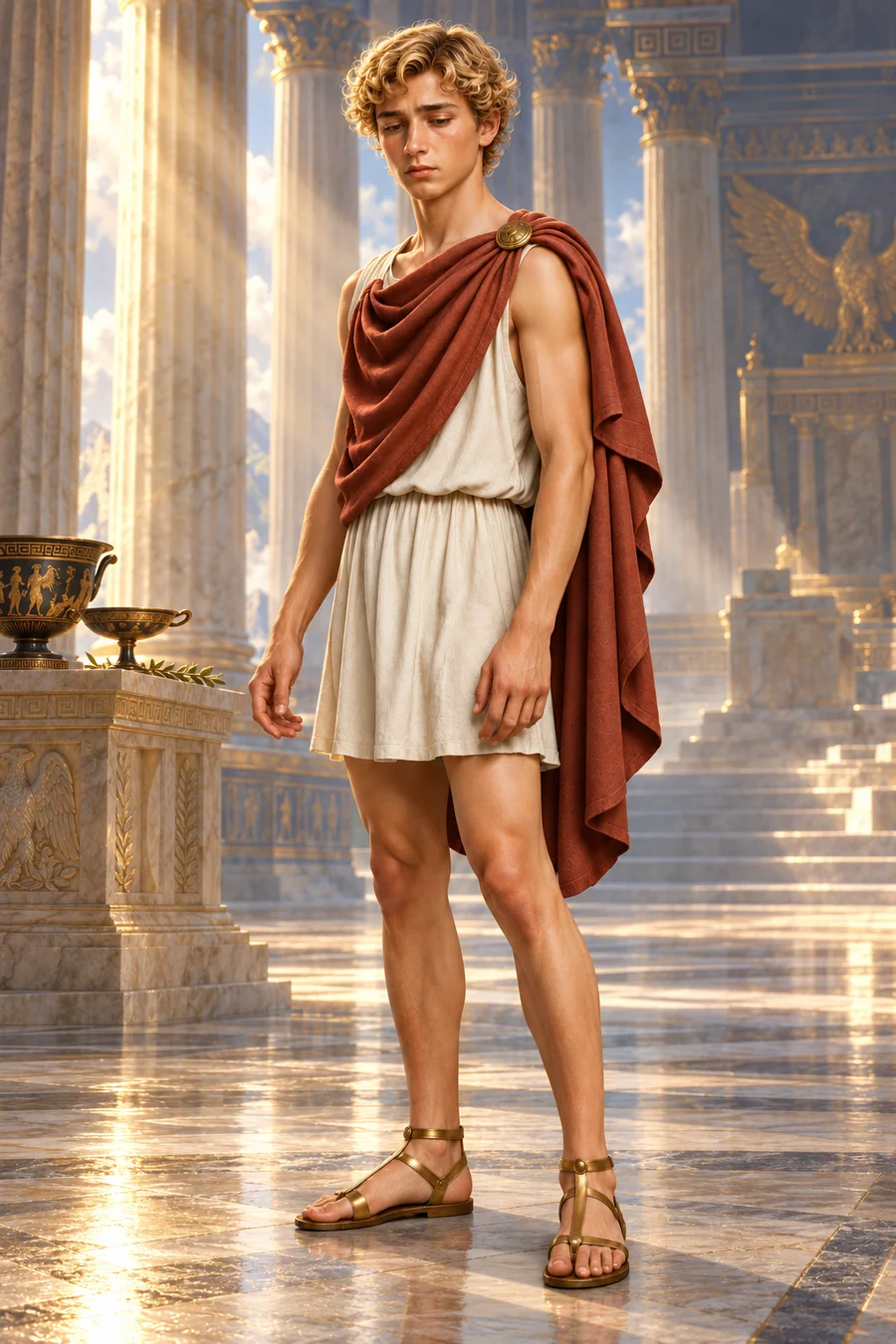
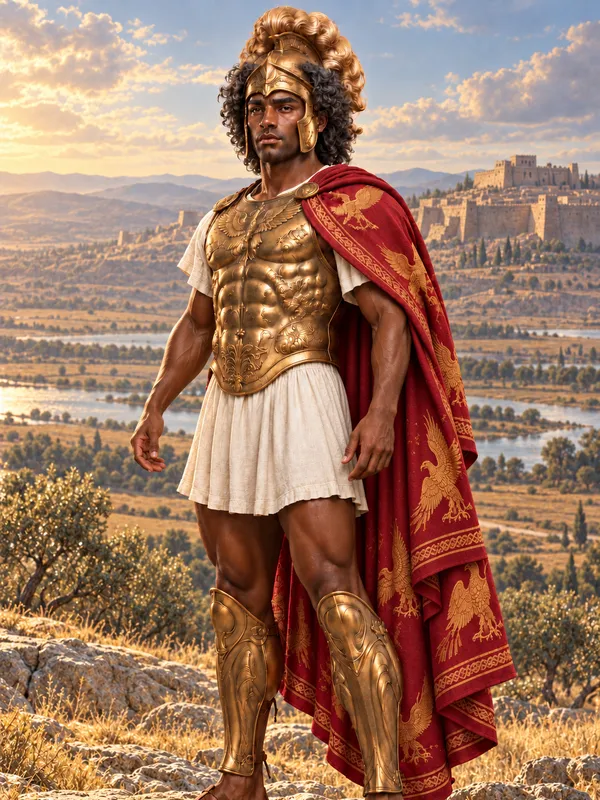
Ganymede, son of Tros and Callirhoe, was the most beautiful of all mortal men, a godlike Dardanian boy with golden hair.1,2,3,4 He was the brother of Ilus and Assaracus, and his divinely fair appearance inflamed the heart of Zeus.5,6 Some Cretans claim Minos, not Zeus, was the one who carried off Ganymede, while the Chalcidians assert that Zeus carried him away from their territory.7
Zeus, enamored of his physical beauty, transformed himself into an eagle to abduct the youth from Ilium.8,9,10 While tending his flock on Mount Ida, Ganymede played a pipe, unaware of the divine attention that had fixed upon him.11 As the eagle seized him, Ganymede dropped his pipes in fear, which Hermes later picked up, while the god flew alongside to help carry the boy away.11 The eagle held Ganymede's turban in its beak while transporting him to the palace of Zeus.11,8,9 His aged servants reached helplessly toward the sky, and his faithful hound barked fiercely at the air as he was carried off.9
Taken to the palace of Zeus, Ganymede became deathless and unageing, residing among the immortal gods in the house of the king.12,4,13 He was appointed as the cupbearer of the gods, mixing cups and serving nectar to the immortals, a role for which all the gods honored him.12,10,4 He drew red nectar from a golden bowl and held the cup that Hera had just used for drinking, serving against her wishes at times.4,14,10 At the wedding feast held on the slopes of Pelion, he served wine mixed in golden bowls, wearing golden sandals as he performed his duties in the high-peaked hills of the Haemonians.15,1
Zeus provided mares to Laomedon as compensation for the abduction, and a golden vine was also given to Laomedon, while horses were given to Tros.16,17,18,19 The destruction of Dardania is attributed to the horsemanship of Ganymede, though he was protected from unrelenting death by the favor of the Cyprian queen.20,21
In the orchard of Zeus, he played for golden dice with Eros, sitting crouching and downcast after losing the game and leaving empty-handed.13 Ganymede was angered by the loud laughter of Eros during the game, and he did not notice the approach of Cypris while playing dice.13 From heaven, he observed the Argives breaking through the gates of Troy, anguished with fear for his fatherland.22 He pleaded with groans and tears to Zeus to spare his fatherland from destruction by the Argives and to let him be far away so he would not see the city's ruin.22,23 Though described as a dainty morsel of Zeus' bed, his legacy endures as an ancestor of the king of Troy and a figure invoked to purify the lips of judges.1,24,25
The codex facts behind this entry
Ganymede is described as a godlike Dardanian boy and a Phrygian. Euripides, Iphigenia in Aulis 1036-1057 +1
Appearance
Ganymede was considered the most beautiful of all mortal men, with golden hair. Apollodorus 3.12.2 +3 Ganymede is described as matchless and divinely fair in appearance, a beauty that inflamed Zeus. Athenaeus 13.20 +1
Powers
He served as the cup-bearer for Zeus, pouring drink for the gods. Hymn V to Aphrodite ll. 202-217 +1
In the myths
Zeus abducted Ganymede from Ilium by transforming himself into an eagle, carrying him away to his palace because he was enamored of his physical beauty. Aeneid 1.12 +10 Ganymede was appointed as the cupbearer for Zeus, mixing cups and serving nectar to the gods. Diodorus 4.75 +2 Zeus provided mares to Laomedon as compensation for the abduction of Ganymede. Apollodorus 2.5.9 +1 He was serving wine mixed in golden bowls at the wedding of Peleus. Colluthus, The Rape of Helen ¶1 +1
Fate
Ganymede was taken to live among the immortal gods and became deathless and unageing. Diodorus 4.75 +3 Ganymede was appointed as the cupbearer of the gods in heaven. Apollodorus 3.12.2 +1