ANTENOR (mythical Trojan hero)
Figure of myth · mythical Trojan hero
- Parents
- Aesyetes, Cleomestra
- Consorts
- Theano
- Children
- Agenor, Acamas, Iphidamas, Polybus, Glaucus, Eurymachus, Archelochus, Thersilochus, Helicaon, Coön, Laodocus, Demoleon and 6 more
- Haunts and cult places
- Troy
- In the sources
- 47 ancient passages
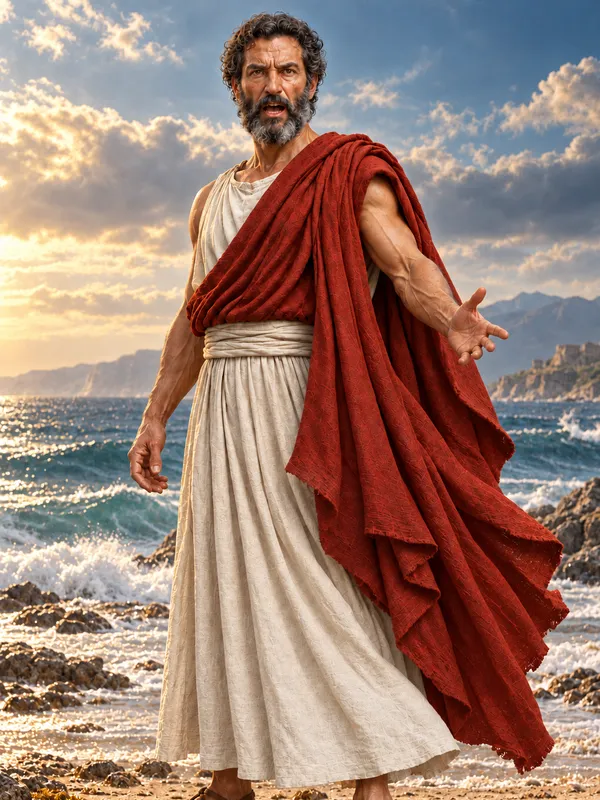
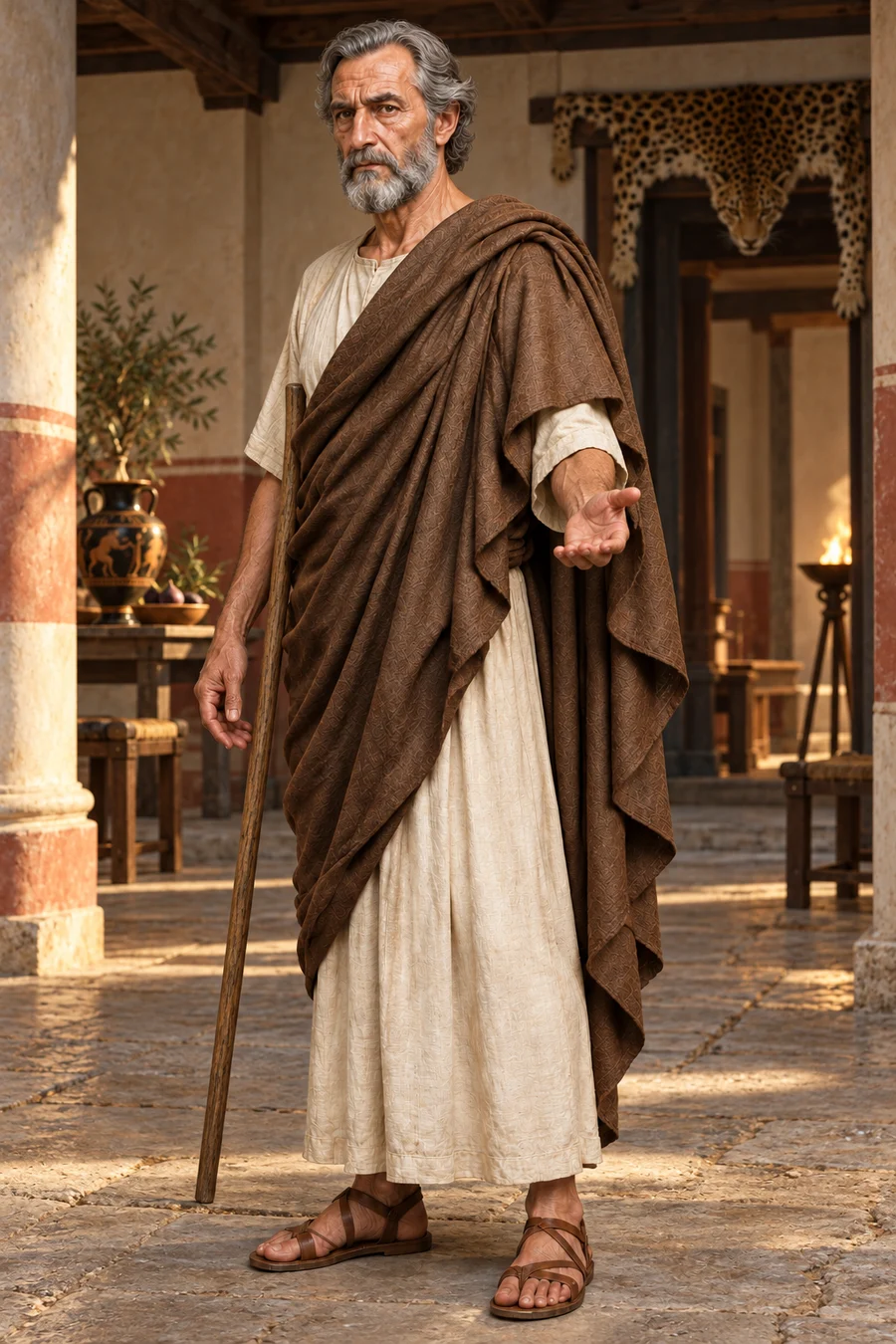
Antenor, son of Aesyetes and Cleomestra, stood as one of the two sages and an elder among the Trojan people.1,2 His face bore the heavy expression of a man who had already suffered a calamity, marking him as a figure of profound sorrow.3 Though considered too old to participate in the fighting, he was a fluent orator among the elders and a wise speaker to the princes.1,2 He was a knight in the eyes of some, and a leopard's skin hung over the entrance of his house, while a panther's skin was placed before the door to signal that the house should be spared.4,5,6
Antenor was the husband of Theano, and together they raised a lineage of sons who would lead the fourth company of Trojans alongside Aeneas.7,8,9,10 His children included the eldest son Coon, the warrior Acamas, and Iphidamas, all of whom were skilled in the arts of war.11,12,13,14,15,9 The family also counted among its members Pedaeus, Laodamas, Agenor, and Laodocus, each bearing the name of their father into the conflict.16,17,18,19,20 Accounts differ on the full extent of his progeny, with some writers naming Glaucus as his son, while others identify him as the father of Archelochus and the husband of Laodice.21,5,4,22 One son was loved by Paris, and another, Polybus, is listed among his children in the records of his line.23
When Menelaus and Odysseus visited Troy as envoys, Antenor provided them with hospitality in his own house.24,25 During the council, Antenor argued that the Trojans were fighting against their solemn covenants and spoke words that Alexandrus found disagreeable.2,26 Alexandrus accused Antenor of having lost his reason if he meant his previous words seriously.26 In another instance, he moved by a plea regarding the return of Helen, while also speaking softly to Ucalegon about the sorrow Helen would bring to their descendants.27,1
As the war raged, Antenor prayed to Zeus to stop the enemy from attacking the city and to turn away the battle-eager man threatening the town.28 He complained that Zeus was helping the Argives slaughter the Trojans, urging the god to end their suffering if their destruction was his will.28 He drove his chariot through the Scaean gates onto the plain, walking with a measured pace into the space between the two armies.29 He also informed King Priam and his sons about the speech of the Achaeans.7
After the destruction of Troy, Antenor oversaw the construction of a single pyre for all the slain Trojans and directed the burial rites for the dead.30 They first moved into Thrace, and later traveled to Henetica on the Adriatic, wandering over the earth in the manner of Aeneas and the Heneti.6,31,32 Some writers claim he joined the Heneti in their expedition, while others say he took refuge with the Veneti of Paphlagonia.33,34 Eventually, he sailed upstream where the Timavus river pours a nine-fold flood and built the city of Patavium, establishing homes for the exiled sons of Troy.35 In his new settlement, he hung Trojan arms on temple walls, and he is identified as the ancestor of the Trojan people who settled in Kyrene.35,36
The codex facts behind this entry
Antenor is identified as one of two sages and an elder of the Trojan people, described as a wise speaker among the Trojan princes. Iliad 3 ¶14 +3
In the myths
Antenor provided hospitality to Menelaus and Odysseus in his own house when they visited Troy. Iliad 3 ¶20 +1 Antenor sat beside the old man in his chariot. Iliad 3 ¶25 +1 Antenor's sons led the fourth company of Trojans alongside Aeneas. Iliad 12 ¶5 +1 Antenor showed hospitality to Menelaus, which led to his escape from Troy. Iliad 3 ¶20 +1