EILEITHYIA (greek goddess of childbirth)
Divine power · Greek goddess of childbirth and midwifery
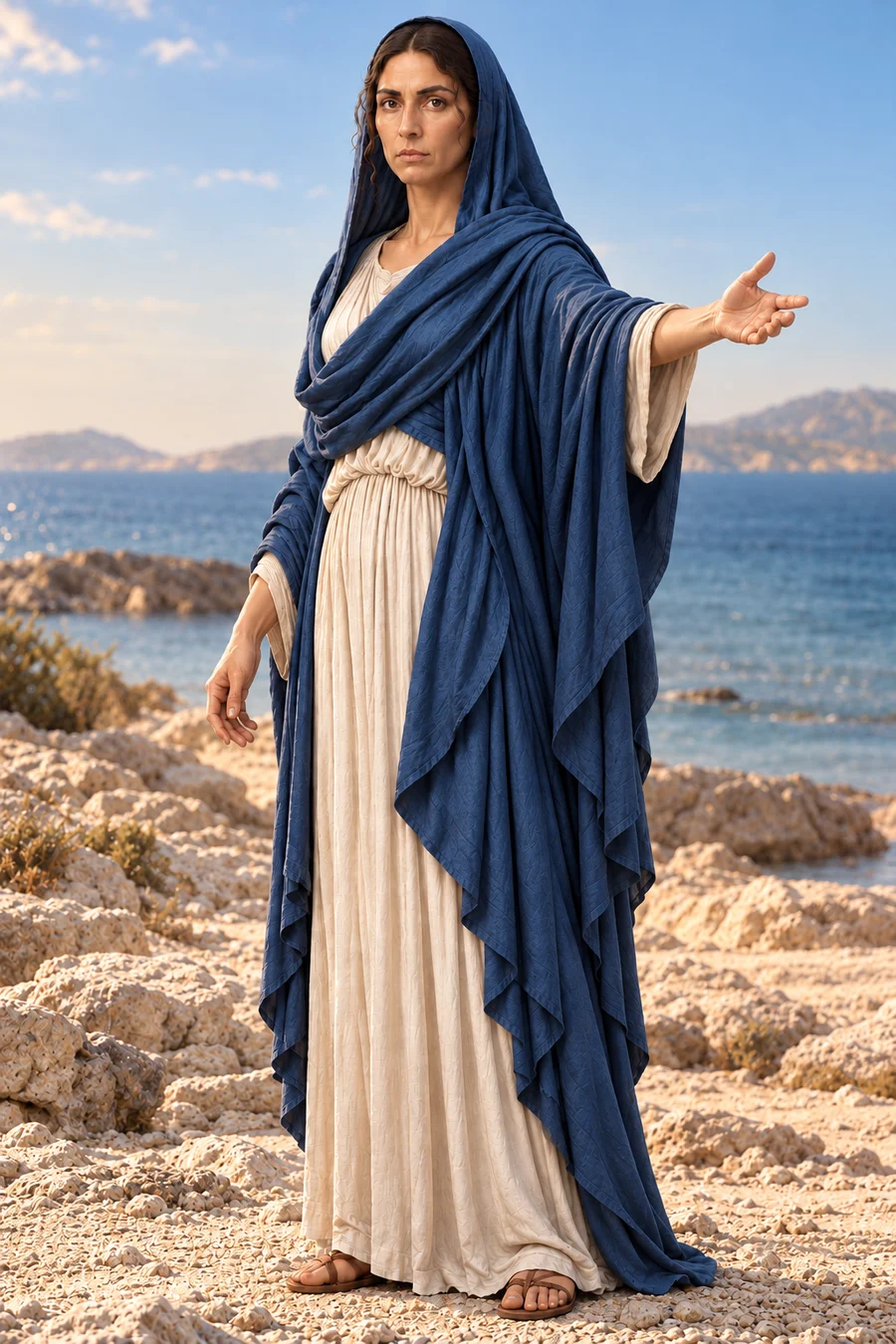
- Known as
- Olympian · One who loosens the girdle
- Parents
- Zeus, Hera
- Symbols and gear
- torch
- Haunts and cult places
- Delos, Pellene, Mases, Aegium
- In the sources
- 39 ancient passages
The torches she carried were attributes of her power, for they represented both the fire-like nature of childbirth pains and her role in bringing newborn children into the light.1
Iris was sent to fetch Eileithyia from the home of the gods, and she departed with the messenger, moving like shy wild-doves, before the other goddesses promised her a long golden necklace as a reward for her aid.2 This event caused her name to spread from Delos to other peoples, establishing her as the deity responsible for the painful and difficult aspects of labor.3,4,5 In another account, she assisted the Eleans by giving birth to her son for them, a deed that led the Eleans to decide to worship her alongside their local god.6
Eileithyia’s power was not always gentle, as she assisted Hera in delaying the birth of Alcmene’s child, pressing her knees together and joining her fingers to impede the delivery.7,8 She sat on an altar and used charms to retard the birth of Heracles, intending to cause Alcmene’s death as an act of vengeance for Hera, while hearing the mother’s groans.8 She also helped bring Eurystheus into the world before his full term, demonstrating her ability to control the timing of births with precise authority.7 In contrast, she cared for the pains of women during childbirth, as noted in Homer’s Iliad, and eased the suffering of Berenice by causing release from pain to flow over her limbs.9,10,11 Her influence extended to withholding abundant offspring, granting a speaker only one child, which highlighted her capacity to restrict fertility as well as facilitate it.12
The poet Olen identified Eileithyia with fate and styled her the clever spinner, suggesting a cosmic role that transcended mere physical assistance in the birthing process.13 According to Olen’s hymn, she was the mother of Love and was described as older than Cronus, a claim that placed her among the most ancient of divine powers.14,13 She was associated with the Hyperboreans as her origin, a tradition that linked her to distant northern lands before her arrival at Delos.5 A sharp shaft associated with childbirth was part of her iconography, a symbol that the Maiden feared during labor, reflecting the intense physicality of her domain.15
Sanctuaries dedicated to Eileithyia were found throughout the Greek world, from the foot of Mount Cronius to the city of Bura, and from Amnisus in Crete to the region of Messenia.16,17,18,19,20,21,22,23,24,25,26,13,27,28,29 The Delians paid tribute to her to ease the process of childbirth, sacrificing daily and offering various types of incense, while singing a hymn composed by Olen.30,27,20,29,5 A vast number of votive gifts, including two wooden figures made by Phaedra as Cretan offerings, were presented to the goddess, who received an altar in the front section of a two-part temple.5,20,29 The Lacedaemonians built her sanctuary following an oracle from Delphi, and she remained a figure of profound respect, cared for by expectant mothers and revered for her ability to alleviate the travail of birth.19,10,9
The codex facts behind this entry
She is identified as the goddess responsible for painful and difficult labor. Hymn III to Delian Apollo ll. 115-122 +1 Olen's hymn identifies Eileithyia with fate. Pausanias 8.21.3 Ilithyia is the deity who presides over women in the act of giving birth. Ovid Met. 9.273-323 (2)
Powers
According to Homer's Iliad, she cares for the pains of women during childbirth. Pausanias 8.32.4 Torches are an attribute of her because childbirth pains resemble fire. Pausanias 7.23.6 Torches are an attribute of her because she brings children into the light. Pausanias 7.23.6 Eileithyia withheld abundant offspring from the speaker, granting her only one child. Argonautica 1 ¶43 Eileithyia is responsible for caring for women who are expecting babies and has the ability to ease the pain and difficulty of giving birth. Diodorus 5.73 Eilithyia is described as having a sharp shaft associated with childbirth. Theocritus, Idyl 26 ¶4
In the myths
Eileithyia assisted Leto during her difficult labor on Delos, causing the pains of childbirth. Hymn III to Delian Apollo ll. 115-122 +2 Eileithyia assisted the Eleans by giving birth to her son for them. Pausanias 6.20.5 The sculptor Eucleides of Athens created the marble image of Eileithyia. Pausanias 7.25.9 The statue of her was created by Damophon the Messenian. Pausanias 7.23.6 Auge gave birth to her son on her knees at the location of Eileithyia's sanctuary. Pausanias 8.48.7 She helped bring Eurystheus into the world before his full term. Diodorus 4.9 Zeus assigned her the specific domain of childbirth and maternal care. Diodorus 5.73 The goddesses promised Eilithyia a long golden necklace as a reward. Hymn III to Delian Apollo ll. 102-114 She is said to have come from the Hyperboreans to Delos. Pausanias 1.18.5 Erysichthon brought the oldest wooden figure of her from Delos. Pausanias 1.18.5
Worship
The Delians paid tribute to Eileithyia to ease the process of childbirth. Herodotus 4.35.2 +1 The goddess receives daily sacrifices and various types of incense offerings from the local people. Pausanias 2.35.11 +1 The Lacedaemonians built her sanctuary following an oracle from Delphi and worship her as a goddess. Pausanias 3.17.1 The Eleans decided to worship Eileithyia alongside the local god. Pausanias 6.20.5 The Delians sacrifice to her and sing a hymn composed by Olen. Pausanias 1.18.5 A new priestess is selected to serve the goddess annually. Pausanias 6.20.2
Fate
According to Olen, Eileithyia is older than Cronus. Pausanias 8.21.3 Her name spread from Delos to other peoples after this event. Pausanias 1.18.5