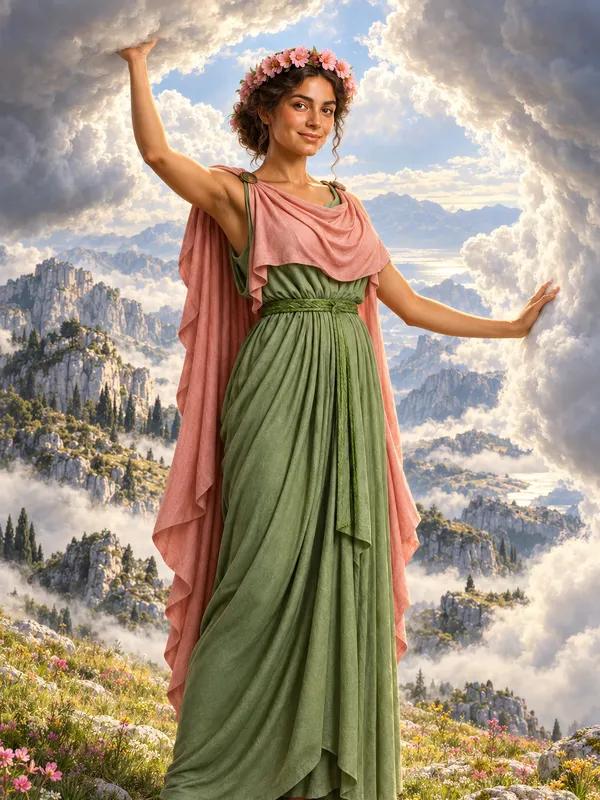
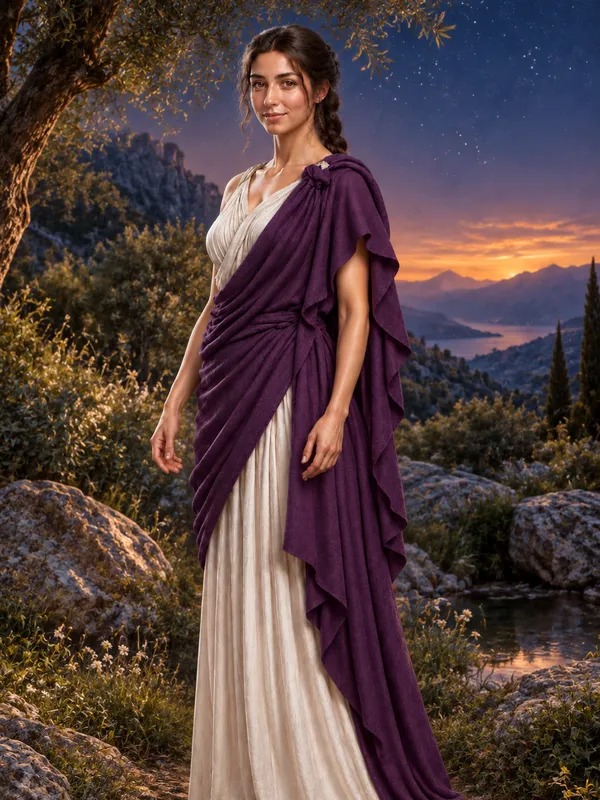
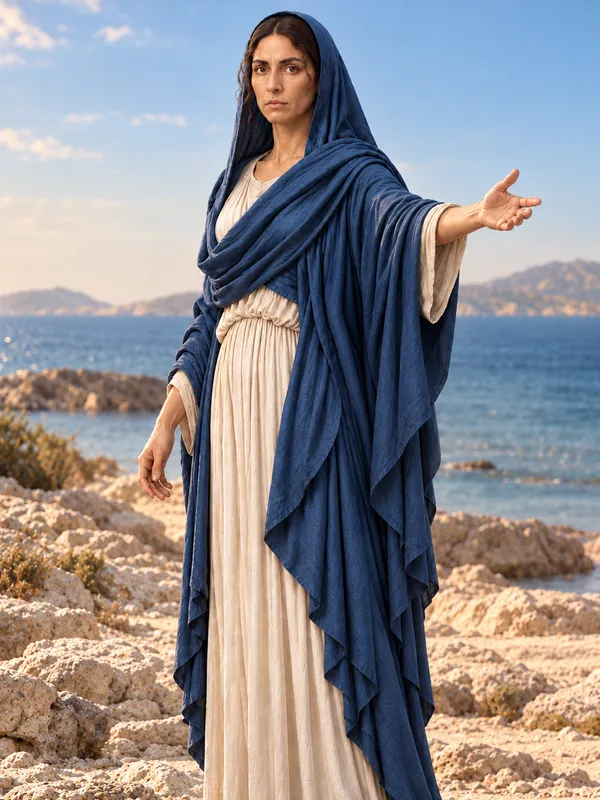
CLOTHO (one of the Fates of Greek mythology)
Divine power · one of the Fates of Greek mythology
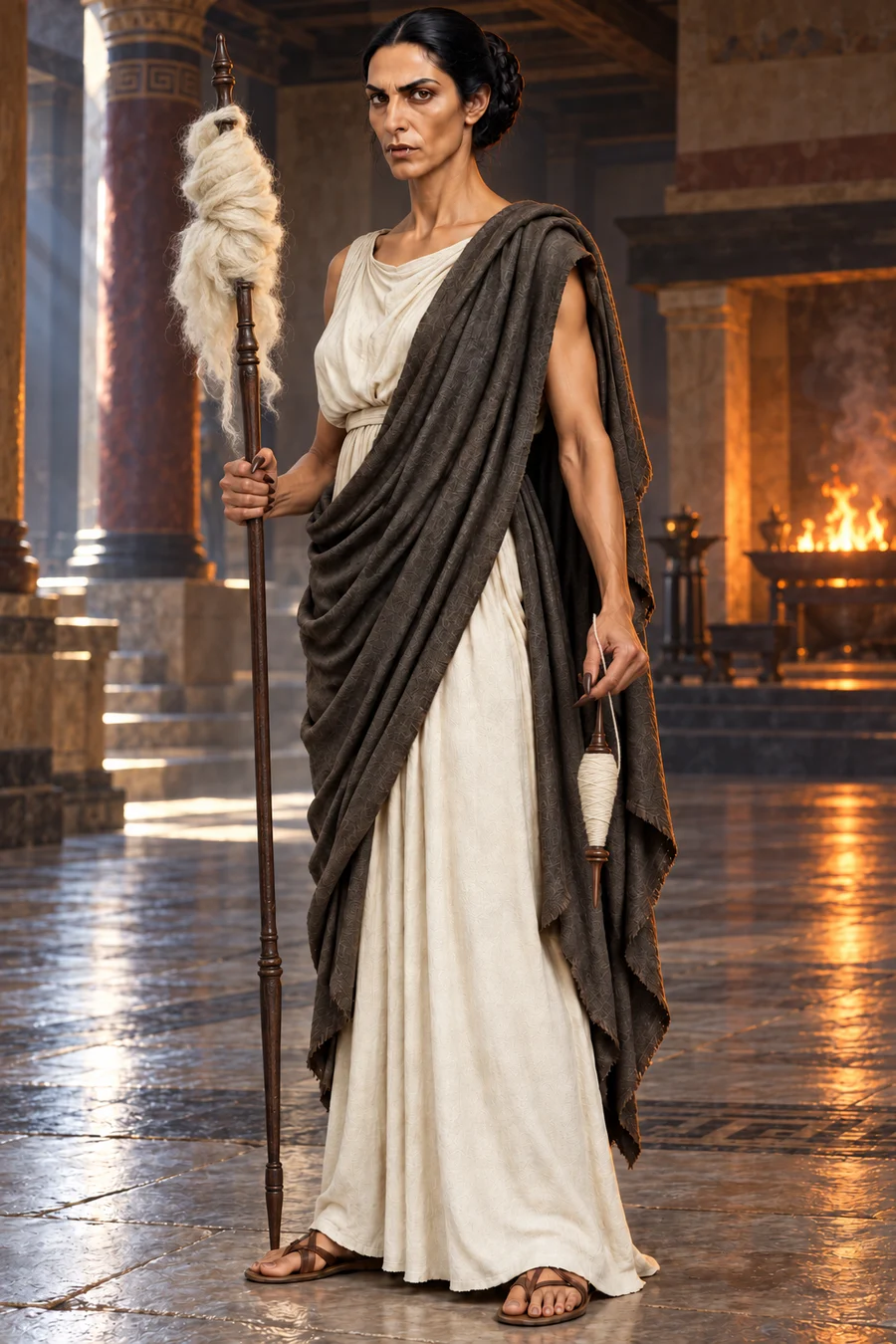
She was the daughter of Zeus and Themis, though some accounts state she was born from Night without a male partner.1,2,3 Zeus granted her the greatest honour among the Fates, and she shared her kinship with her sisters Lachesis and Atropos.1,2 Her nature was iron-hearted, and she possessed knowledge of the Father of the gods' intentions.4
At the birth of every human, Clotho assigned both evil and good to the child, mingles good and ill in her domain.5,6,2 She determined the scene of a person's life's ending, ensuring that the wheel of destiny never remained stationary.4,6 By continuously spinning the wheel, she prevented it from standing still, whirls it around without pause.6 This relentless motion defined her role, as she did not allow the wheel of fate to stop.6
Clotho was one of the ruthless avenging Fates who pursued the transgressions committed by both men and gods.3 She inflicted severe penalties on sinners until they were punished.3 In a fierce struggle over a dying man, she fought using her claws and hands, participating in the battle to seize the souls of the fallen.7 During this conflict, she glared evilly at the other Fates, displaying her intensity.7
Clotho possessed a vessel used for purification, which featured bright ivory furnishment on the shoulder.8 She took Poseidon from this purifying vessel, an act that highlighted her power over the divine.8 However, when faced with the fate of Alcides, she refused to complete his destiny.9 In fear, she threw aside her distaff.9
Clotho stood as the high-throned spinner of human destiny, balancing the good and ill she assigned at birth.5,6,10 Her legacy endured as the force that ensured the wheel of fate never stopped.6
The codex facts behind this entry
Clotho is one of the Fates, also known as the Moerae, and is described as a sister among them. Apollodorus 1.3.1 +2 Clotho is identified as one of the ruthless avenging Fates. The Theogony ll. 211-225
Powers
Clotho assigns both evil and good to humans at their birth. Lucian, Dialogues of the Dead 30 ¶1 +3 Clotho prevents the wheel of fate from remaining stationary. Seneca, Thyestes act 3 ¶10 Clotho is described as holding a distaff in her hand. Seneca, Hercules Oetaeus act 3 ¶3 Clotho is described as potentially having an iron-hearted nature. Statius, Thebaid 3.531-554 ¶2 Clotho is associated with determining the scene of a person's life's ending. Statius, Thebaid 3.531-554 ¶2 Clotho is thought to possess knowledge of the Father of the gods' intentions. Statius, Thebaid 3.531-554 ¶2
In the myths
Klotho took Poseidon from her purifying vessel. Pindar, Olympian 1 ¶3 She glared evilly at the other Fates during the struggle. The Shield of Heracles ll. 237-270 Clotho inflicts severe penalties on sinners until they are punished. The Theogony ll. 211-225 Clotho pursues the transgressions committed by both men and gods. The Theogony ll. 211-225 She fought fiercely over a dying man using her claws and hands. The Shield of Heracles ll. 237-270 She participated in the battle to seize the souls of the fallen. The Shield of Heracles ll. 237-270 She continuously spins the wheel of destiny so it never stops. Seneca, Thyestes act 3 ¶10 Clotho is said to have thrown aside her distaff in fear. Seneca, Hercules Oetaeus act 3 ¶3 Clotho is reported to refuse to complete the fate of Alcides. Seneca, Hercules Oetaeus act 3 ¶3
Worship
Zeus granted Clotho the greatest honour among the Fates. The Theogony ll. 901-906