TLEPOLEMUS (mythical son of Heracles)
Figure of myth · mythical son of Heracles
- Parents
- Heracles, Astyoche
- Consorts
- Polyxo
- Haunts and cult places
- Rhodes
- In the sources
- 24 ancient passages
His paternal lineage traced back to Zeus, while his maternal ancestors descended from the sons of Amyntor and Astydameia. f:1 Astyoche, the daughter of Phylas, was carried off from Ephyra by Heracles, who had previously sacked many cities of valiant warriors. f:2,3,4 Heracles brought Tlepolemus from Ephyra on the river Selleis.5
This act compelled him to flee beyond the sea, as he was menaced by other descendants of Heracles.4 He built a fleet and gathered a large group of followers to flee the Peloponnese, having voluntarily left Argos shortly before the Trojan War.6,4,7 The journey was fraught with hardship, as winds forced the group off their intended course and they made a stop at Crete. f:8,4,9
Tlepolemus eventually landed on the island of Rhodes with his wife Polyxo and a small group of followers. f:4,9,10,7,6 The inhabitants of Rhodes received him kindly and allowed him to settle, leading to his rule over the entire island. f:7,10 He divided the island into three distinct parts and the land into equal portions for the people, who settled in three tribal groups. f:10,7,11,4 Tlepolemus founded the cities of Lindus, Ialysus, and Cameirus, which some accounts say were named after daughters of Danaus. f:10,12,11 Zeus showered great riches upon the Rhodians because of his love for them, and Tlepolemus ruled the island with equity in other matters as well. f:7,4
When the war against Troy began, Tlepolemus commanded the warriors from Rhodes, bringing nine ships filled with warriors to the conflict. f:13,4 He entrusted the rule of Rhodes to Butas before leaving for war.7 Tlepolemus participated in the war alongside Agamemnon and achieved great fame during the campaign. f:10,7 He boasted that his father had sacked the city of Ilius because Laomedon refused to pay for services rendered and withheld horses. f:14,15 Fate compelled him to fight against Sarpedon, an event he verbally challenged regarding the latter's claim to be a son of Zeus. f:15
Tlepolemus predicted that Sarpedon would be vanquished by his hand and raised his spear to attack. f:15,16 Sarpedon's spear pierced Tlepolemus's throat, killing him, and his soul was said to go to Hades. f:7,16,14 The Achaeans carried his body away from the battlefield, and his wife Polyxo later sought to avenge his death. f:17,7,16 He is honored with sheep burnt-offerings as if he were a god and receives awards of honor in games as a form of compensation. f:18 Some accounts state that the people of Tlepolemus eventually settled in the Iberian islands, while others identify him as being from Lycia. f:19,8
The codex facts behind this entry
Tlepolemus is the son of Heracles and Astyochea. Apollodorus, Epitome 3.13 +6
Appearance
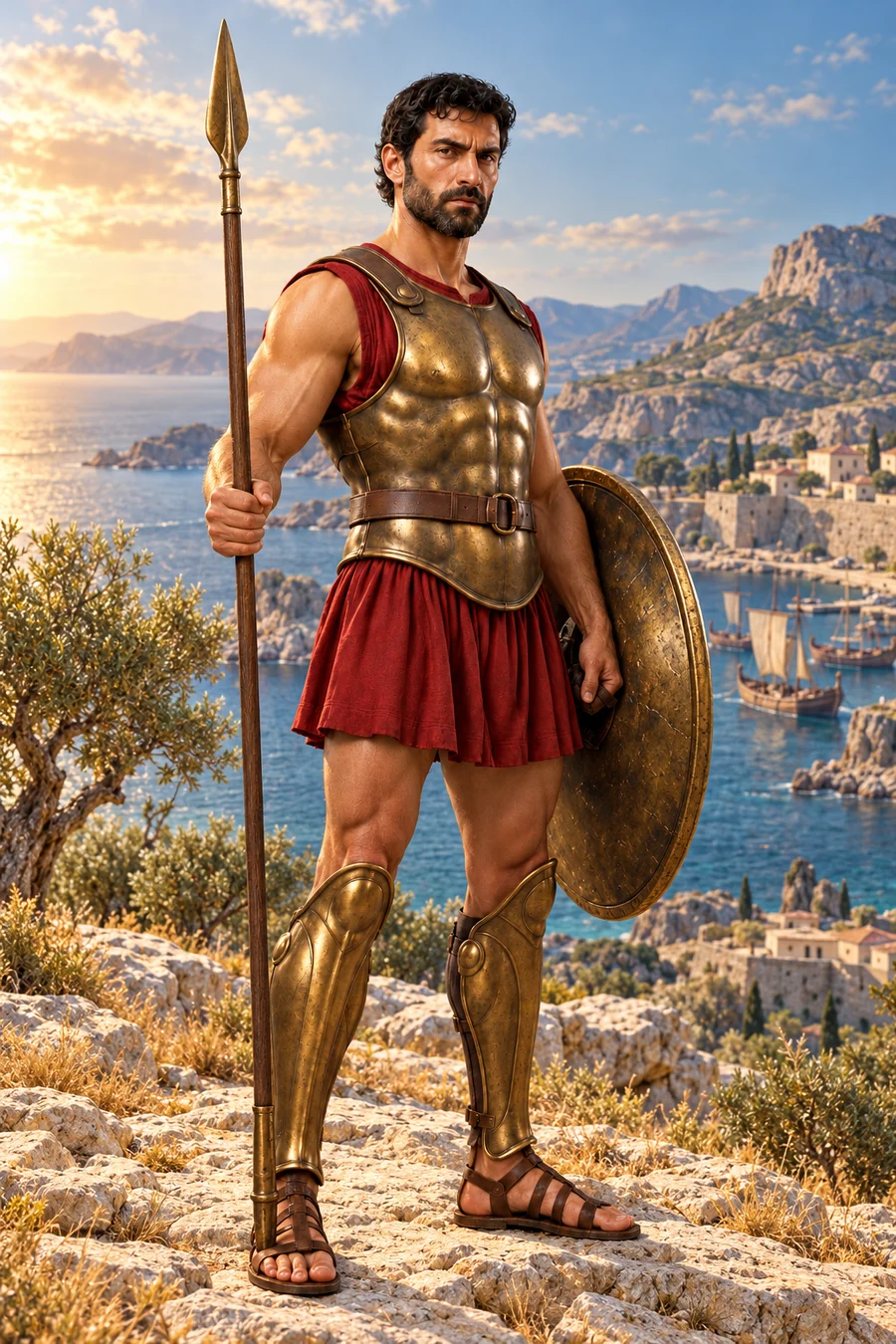
He is described as a man of great stature who was also brave. Iliad 2 ¶51 +1
In the myths
Tlepolemus accidentally killed his father's uncle, Licymnius, son of Electryon, while striking a servant with a stick. Apollodorus 2.8.2 +4 He built a fleet and gathered a large group of followers to flee the Peloponnese after the accidental killing. Apollodorus 2.8.2 +2 Tlepolemus fled to Rhodes with his wife Polyxo after suffering great hardship during the voyage. Iliad 2 ¶51 +2 He participated in the war against Troy alongside Agamemnon. Diodorus 4.58 +1 He divided the island of Rhodes into three distinct parts and the land into equal portions for the people. Diodorus 4.58 +1 Tlepolemus founded the cities of Lindus, Ialysus, and Cameirus on Rhodes. Diodorus 4.58 +1
Fate
Tlepolemus was killed in the Troad by a spear wound to the throat inflicted by Sarpedon, an event his wife Polyxo later sought to avenge. Diodorus 5.59 +3