RHADAMANTHUS (judge of the dead)
Power of the underworld · Greek mythology character, son of Zeus and Europa
- Parents
- Zeus, Hephaestus, Europa
- Siblings
- Minos, Sarpedon
- Consorts
- Alcmene
- Children
- Oenopion, Erythrus, Gortys
- Haunts and cult places
- Crete
- In the sources
- 36 ancient passages
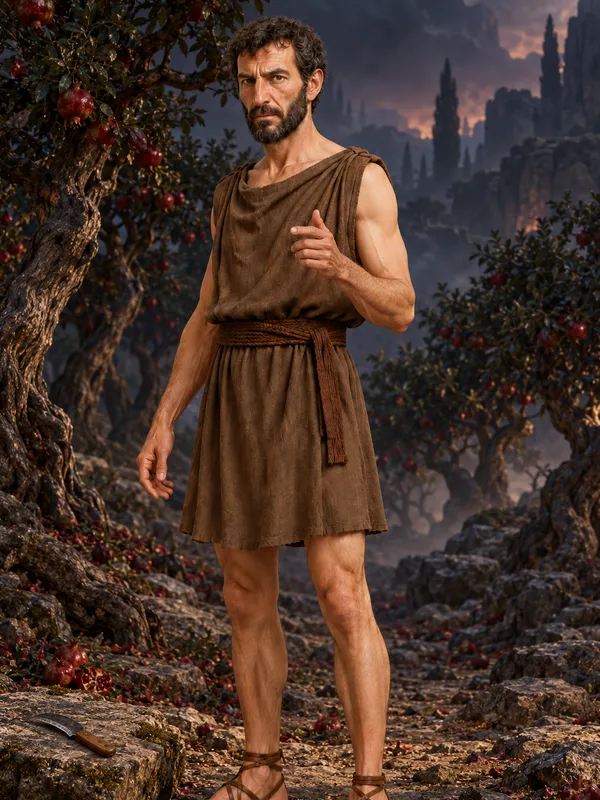
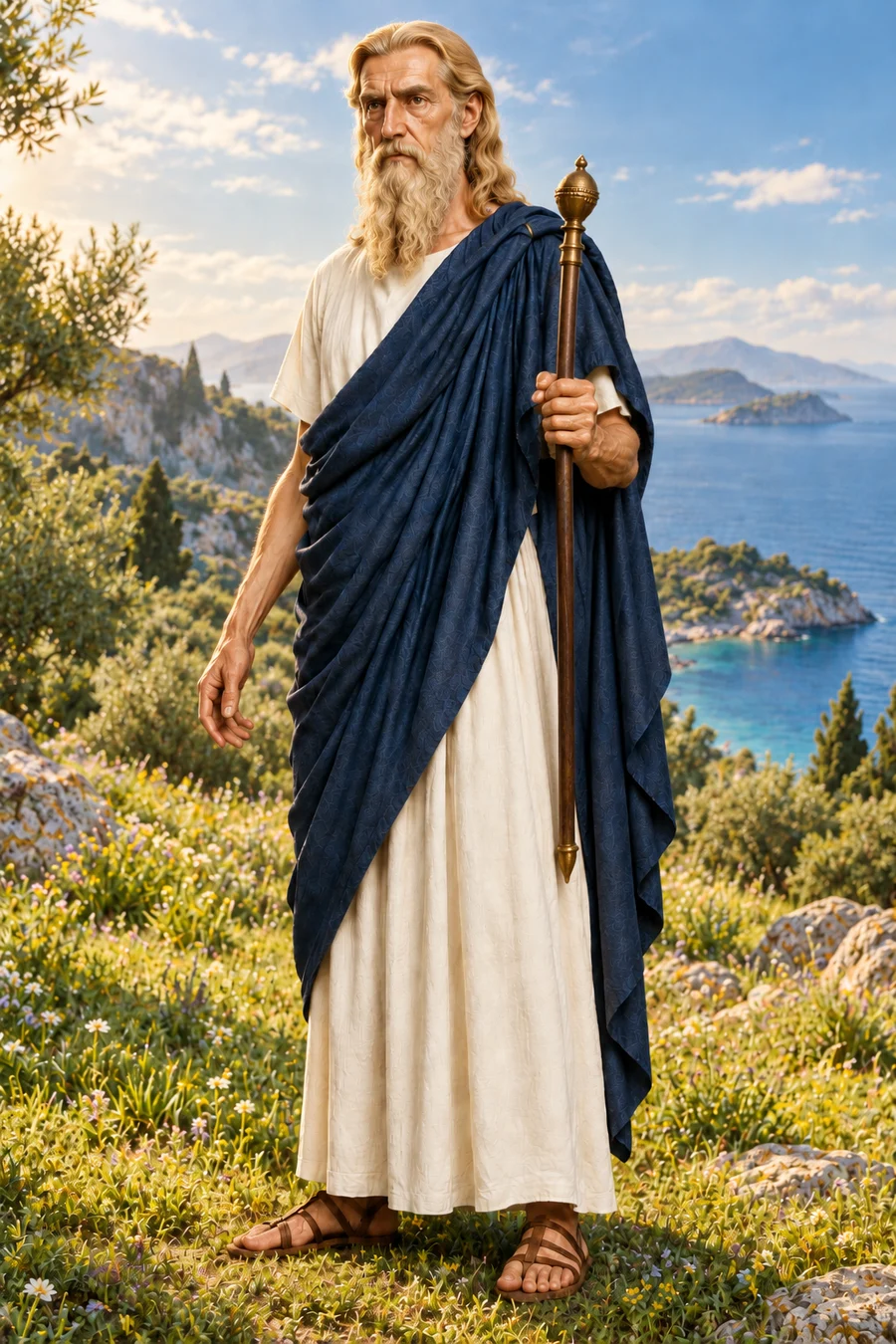
Rhadamanthus, son of Zeus and Europa, was a renowned hero of Crete, known for his justice.1,2,3,4 He was the brother of King Minos and Sarpedon, and together they were listed among the glorious leaders of wealthy men.1,3,5 Accounts of his appearance vary, with some describing him as having fair, golden hair, while others note a thin body that grew weary with years.6,7,8,9 He bore the epithet the Just, a title that reflected his reputation for righteousness and his role as a guardian of legal principles.10,11
Born in Crete after Zeus carried Europa there, Rhadamanthus was adopted by the Cretan king Asterius, who left him the kingdom upon his death.1,12,2 He is credited with being the first to civilize the island, founding cities and establishing forms of government that united the various peoples of Crete into a single group.13,4 To make his laws seem divine, he devised a method of claiming to receive decrees directly from Zeus, a practice his brother Minos later imitated by visiting Zeus's cave every nine years.14,4 He served as a co-ruler and judge under the authority of Minos, acting as a guardian of the principles of justice established by his brother.11,15
His domain extended beyond the island, as he possessed many islands and a large part of the Asian sea coast, including territories off the coasts of Ionia and Caria.16,11 He punished robbers, impious men, and other criminals with inexorable severity, which caused people to voluntarily surrender themselves to his authority.16 Jealous of his brother's success, Minos sent him away to distant parts of their dominion, leading Rhadamanthus to leave his home region and move to Boeotia.17,11 In exile, he lived in Ocaleae in Boeotia, where he married Alcmene after the death of Amphitryon.18,17
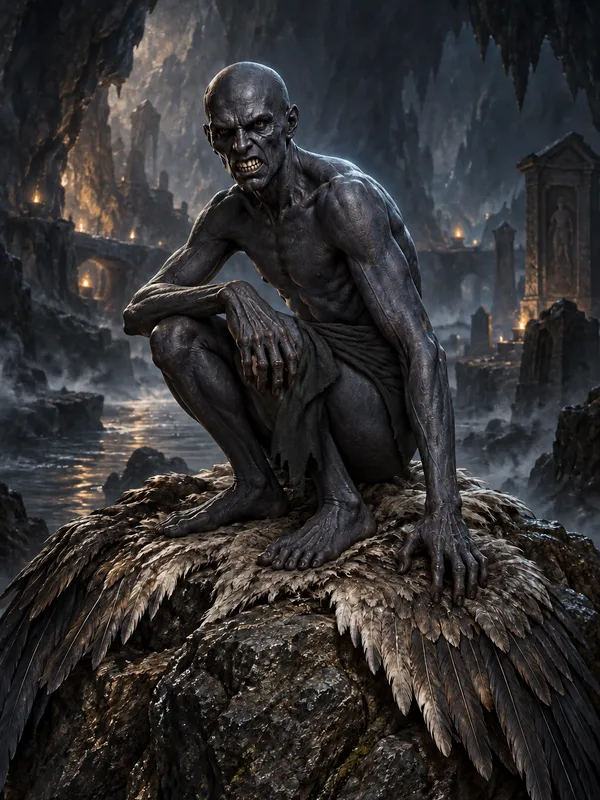
After his death, Rhadamanthus took up a new role as a judge in the underworld, working alongside Minos in the hall of the dead.17,16,19 He rules over the Elysian plain located at the ends of the world, a place where humans enjoy the easiest life.6,20,21 He sits in judgment on a lofty seat, trying trembling culprits for their earthly sins and ensuring that the most just decisions are made.16,22,19 Cretans claimed he did not take pleasure in deceptions held within his heart, and his soul was said to produce truthful fruit.16,22
The Rhadamæi people are believed to have descended from him, linking his legacy to the mortal world even as he reigned in the afterlife.23 His fame for righteousness endured, and he is remembered as a man who brought order to Crete and fairness to the dead.3,4,16,22,11
The codex facts behind this entry
Rhadamanthus is a son of Zeus and Europa. Apollodorus 3.1.1 +3 Rhadamanthus is a just and renowned hero of Crete. Diodorus 5.78 +1 Rhadamanthus served as a co-ruler and judge under the authority of his brother King Minos. Diodorus 5.84 +1
Appearance
Rhadamanthus is described as having fair, golden hair. Odyssey 4 ¶47 +1
In the myths
Rhadamanthys created laws for the people of Crete. Apollodorus 3.1.2 +4 Homer claims the Phaeacians brought Rhadamanthus to Euboea to view Tityus, completing the journey and return in a single day. Odyssey 7 ¶26 +1 He caused Erythrus to found a city in Asia that bears his name and gave his son Erythrus the kingship over the city of Erythrae. Diodorus 5.79 +1 He established Oenopion as the lord of the island of Chios and granted the island to him. Diodorus 5.79 +1 Rhadamanthus devised a method for promulgating laws to make them seem divine by claiming to receive decrees directly from Zeus. Strabo 10.4.19 +1 Cretans claim he made the most just decisions of any man and does not take pleasure in deceptions held within his heart. Diodorus 5.79 +1
Fate
After dying, he serves as a judge in the underworld. Apollodorus 3.1.2 +1