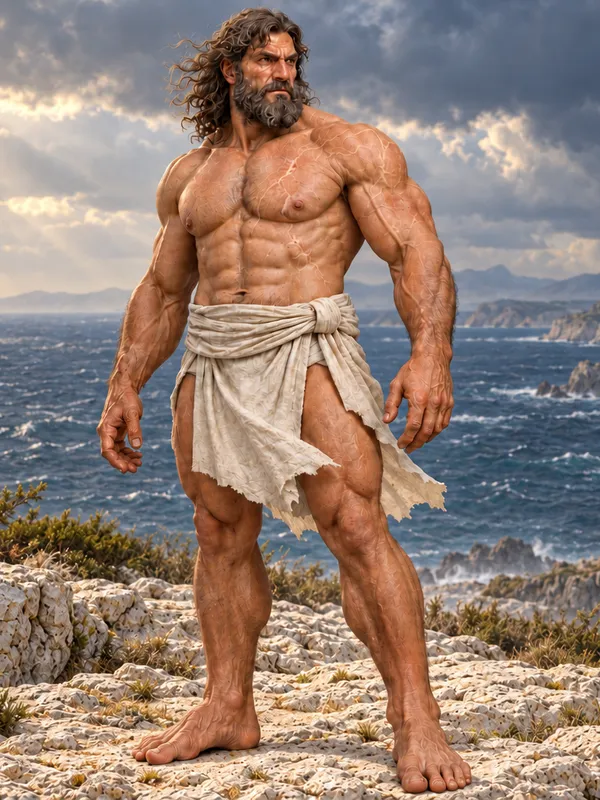
MARSYAS (satyr musician)
Monster · satyr musician in Greek mythology
- Parents
- Hyagnis
- Siblings
- Babys
- Foes
- Apollo
- Haunts and cult places
- Phrygia
- In the sources
- 32 ancient passages
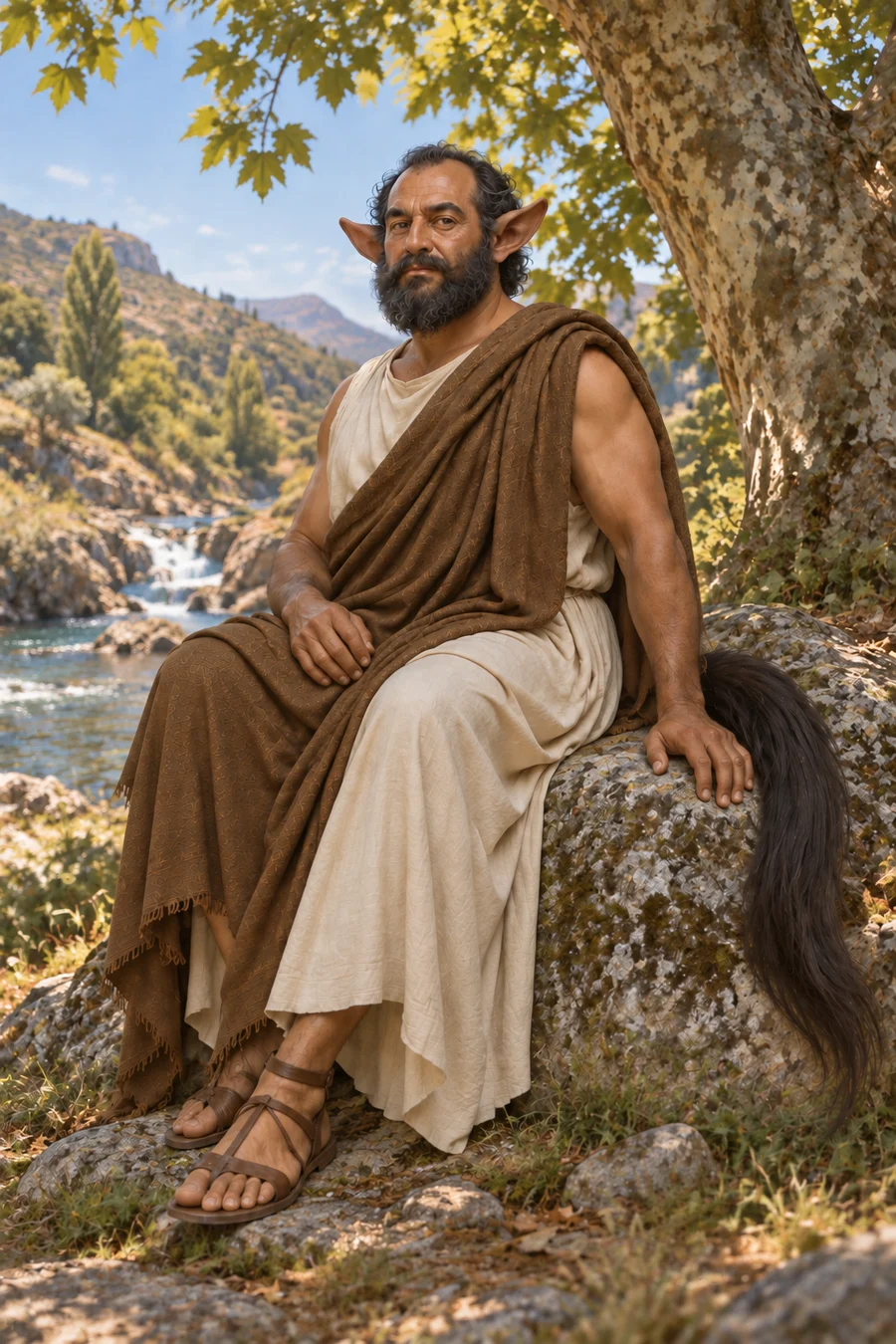
He loved Cybele more than anyone else and followed her out of pity for her distress.1,2 Some accounts describe him as a noisy monster born of a nymph, while others credit him with inventing the double-pipe joined with wax.3,4,5
Marsyas found flutes that Athena had discarded, a transgression she wished to keep permanent.6,7,8 He imitated the sounds of the multi-reed pipe and transferred them to the flute, composing the Song of the Mother.1,9 The Phrygians believed the local river was once Marsyas, and its waters carried his flutes to the Maeander.9,7 He helped the Phrygians repel the Gauls by using river water and the music of his flute against the barbarian army.9
A rivalry with Apollo led to a musical contest in the valley of Aulocrenæ, ten miles from Apamea.10,11 Marsyas initially impressed the judges by surpassing Apollo's first performance with his pipe music.6,2 He argued that combining voice with instrument was unfair, but he ultimately failed to play his instrument upside down as required.2,6 Apollo defeated him in a contest of skill, resulting in an excessive punishment that Hera described as a judicial murder.2,12,13
According to Phrygian tradition, Apollo flayed Marsyas and hung his skin up.14,6 Accounts differ on the tree used for the execution; some say it was a tall pine, while others identify it as a plane tree of exceptional height in the district of Aulocrene.6,15 His skin was displayed in the market-place of Celaenae, though Strabo noted that Euripides incorrectly claimed Marsyas lived in that city.14,16 The flutes belonging to Marsyas were eventually destroyed by fire.7
Marsyas is credited with inventing the Phrygian musical style and the flute alongside Seilenus and Olympus.5,17 He is associated with the combination of Dionysiac and Phrygian religious rites.17 Apollo held a lasting hostility toward flute players because of his conflict with Marsyas.10 The fable of Olympus and Marsyas is set in the area of Apameia.18
The codex facts behind this entry
Marsyas is the name of the clearest river in Phrygia. Ovid Met. 6.382-411 (2) Marsyas was a Silenus who had a rivalry with Apollo. Pausanias 2.22.9 Marsyas was a physician admired for his intelligence and chastity, who adapted pipe sounds to the flute. Diodorus 3.58
In the myths
Marsyas engaged in a musical contest against Apollo, initially impressing the judges with his pipe music by surpassing Apollo's first performance. Apollodorus 1.4.2 +6 Marsyas invented the double-pipe instrument, which was joined together with wax. Athenaeus 4.82 +1 Marsyas is depicted playing the flute on the pedestal of the sanctuary. Pausanias 8.9.1 The river Marsyas carried the flutes of the satyr to the Maeander. Pausanias 2.7.9 Marsyas is credited with inventing the flute alongside Seilenus and Olympus. Strabo 10.3.14 Marsyas is credited with composing the flute air known as the Song of the Mother. Pausanias 10.30.9 Marsyas helped the Phrygians repel the Gauls using river water and flute music. Pausanias 10.30.9 Marsyas picked up flutes that the goddess wanted discarded permanently. Pausanias 1.24.1 A statue depicts Athena striking Marsyas for his actions with the flutes. Pausanias 1.24.1 He imitated the sounds of the multi-reed pipe and transferred them to the flute. Diodorus 3.58
Fate
Marsyas was defeated by Apollo in a contest of skill, leading to an excessive punishment. Diodorus 3.59 +2 The flutes belonging to Marsyas were destroyed by fire. Pausanias 2.7.9 Apollo hanged Marsyas on a tall pine tree. Apollodorus 1.4.2 Apollo stripped the skin off Marsyas. Apollodorus 1.4.2