MAENAD (female follower of Dionysus)
Divine power · female followers of Dionysus
- Symbols and gear
- thyrsus
- Haunts and cult places
- Tmolus, Rome, Nysa
- In the sources
- 19 ancient passages
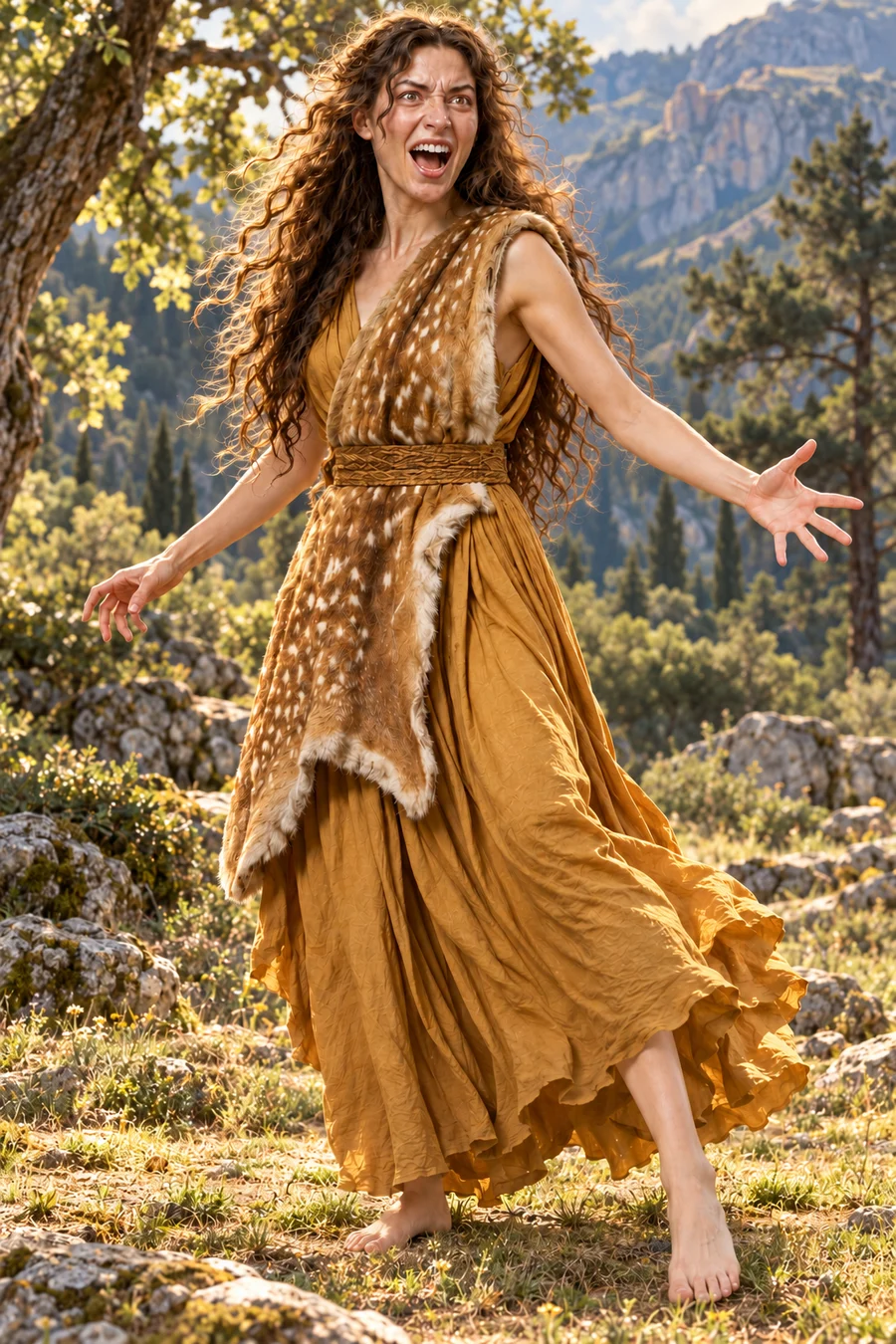
Inspired by Dionysus, the Maenad enters a state of wonder.1,2 These women possessed white feet and streaming locks, wearing garments made of fawn-skin.3,4 They carried thyrsuses in high-waving hands, sometimes holding them aloft in dance.3,4 Their temperament was wild, as they roamed in a distraught state with a raging fire of fury inflamed within them.5,1
The Bacchantes participated in dances associated with the Bromian god, leading him in procession.3,4 They sang praises of Dionysus while drums beat heavily, using loud Phrygian shouts and cries.6 The group danced swiftly and gambolled, rejoicing like a foal.6 They made vast clamour using pipes, horns, tambourines, clapping hands, and yells.7 In some accounts, the Theban women joined the revels with the Bassarids.4
The Maenads caused peasants to flee their fields, leaving behind harrows, rakes, and spades.7 They captured birds, serpents, and wild beasts that had been charmed by Orpheus's singing.7 The Mænades attacked Orpheus with blood-stained hands after killing his animal audience.7 During this violent assault, they hurled their leafy thyrsi at the bard.7 They also threw clods, torn branches, and flint stones at him.7 Some poets claim that Dionysus gave the women lances disguised with ivy leaves instead of thyrsi.8 These disguised lances were used to kill unsuspecting kings who opposed Dionysus.8
Agave is described as a raging Maenad who committed a horrific act.9 She dismembered her own son and held the body parts in her hand.9 The Bacchantes participated in the death of Pentheus, which resembled a hunted hare.10 The women tore Pentheus apart limb by limb in their madness.4 After their fury subsided, the women did not recognize their violent act.4 A Maenad stood in wonder, unsure of which direction to take.2
The inhabitants of a small island opposite the river Loire's outlet were described as Samnite women.11 No men were allowed to land on their island.11 They annually removed and replaced their temple roof before sunset.11 Each woman brought materials for the roof repair.11 A woman who dropped her burden was torn apart by the others.11 The victims' limbs were carried around the temple with wild shouts.11 They appeased their god through specific mysteries and sacrifices.11
The codex facts behind this entry
The inhabitants of this island are described as Samnite women. Strabo 4.4.6 Agave is described as a raging Maenad who committed a horrific act. Seneca, Phoenissae act 3 ¶1
Powers
The Maenad is inspired by Dionysus to enter a state of wonder. Ovid, Heroides 4.40 +1
In the myths
The Bacchantes were led by Bromius in a war against the region. Aeschylus, Eumenides 1-33 The Bacchantes participated in the death of Pentheus, which resembled a hunted hare. Aeschylus, Eumenides 1-33 The group participated in dances associated with the Bromian god. Euripides, The Cyclops 63-81 The group accompanied the speaker in a quest for the queen of love. Euripides, The Cyclops 63-81 The Mænades caused peasants to flee their fields, leaving behind harrows, rakes, and spades. Ovid Met. 11.1-84 (2) Lycurgus ordered his soldiers to attack and kill the Maenads at night in the city of Nysium. Diodorus 3.65 They annually remove and replace their temple roof before sunset. Strabo 4.4.6 The victims' limbs are carried around the temple with wild shouts. Strabo 4.4.6 Each woman brings materials for the roof repair. Strabo 4.4.6 No men are allowed to land on their island. Strabo 4.4.6
Worship
They appease their god through specific mysteries and sacrifices. Strabo 4.4.6
Fate
A woman who drops her burden is torn apart by the others. Strabo 4.4.6